Planting
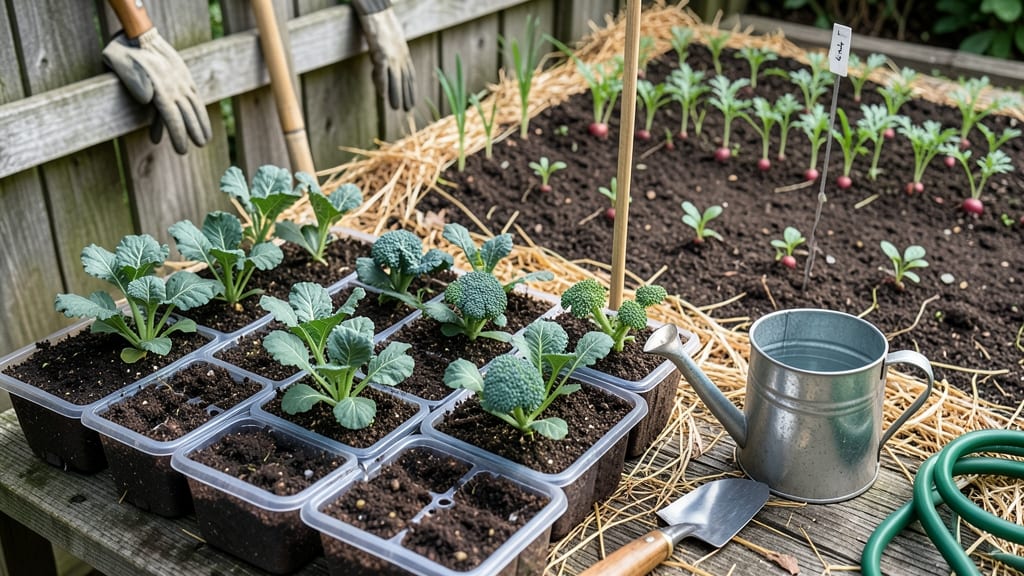
Planting your fall garden in Alabama 4-6 weeks before the first frost is the secret to a harvest that lasts through December.
Here’s the catch: Alabama’s long growing season means you can’t just follow a generic calendar. Too early, and summer heat will bolt your greens before they mature. Too late, and frost will nip your broccoli before it sets heads.
This 7-week schedule aligns with Alabama’s 7b-8b climate, ensuring your 🥬 kale, carrots, and spinach thrive when temperatures drop.
You’ll learn which crops to plant first (fast growers like radishes), how to adjust for your specific region—whether you’re in Birmingham’s heat pockets or the cooler Appalachian foothills—and when to start seeds indoors for a head start. No more guessing games or wasted seed packets.
By the end, you’ll have a step-by-step timeline that accounts for soil warmth, pest pressures, and Alabama’s unpredictable weather shifts. Let’s get those cool-season veggies in the ground the right way.
Alabama’s fall planting zones: when to start based on last frost dates
Alabama’s fall gardening season offers a second chance to grow fresh produce, but your success hinges on understanding last frost dates and heat tolerance thresholds for cool-season crops.
The state’s USDA Zones 7b-8b create distinct planting windows—northern Alabama (like Huntsville) averages its first frost around November 15, while southern Alabama (like Mobile) may see frost as late as December 1. These differences mean your 7-week pre-frost schedule should start earlier in the north than the south.
Cool-season crops like broccoli, kale, and carrots thrive when soil temperatures drop below 80°F. Planting too early—when summer heat lingers—can stress seedlings, while waiting too long risks frost damage before harvest.
For example, ‘Flash’ broccoli matures in 45 days, so northern gardeners should start seeds by September 1, while southerners can wait until September 15.
Microclimates further complicate timing. Urban areas like Birmingham often experience 2-3°F warmer nights than rural zones due to the urban heat island effect. Adjust your planting by 1-2 weeks later in cities if you notice delayed cooling.
Conversely, high-elevation areas (like the Appalachian foothills) may need an earlier start to compensate for cooler soils.
Direct sowing vs. transplanting also affects timing. Fast-growing crops like radishes (ready in 25 days) can be directly sown as late as October 1 in most regions, while slower growers like cauliflower (needing 70 days) require transplanting by September 15 in the north.
Start transplants indoors 4-6 weeks before outdoor planting to give them a head start.
Soil temperature is your best guide for timing. Use a soil thermometer to confirm when readings drop below 80°F—this is your cue to start planting.
For example, in Birmingham, soil temps typically hit this threshold around September 10, while in Mobile, it’s closer to September 20. Test your soil in the morning for the most accurate reading, as afternoon heat can skew results.
Adjust your planting strategy based on crop maturity. Fast growers (like bush beans or turnips) can be sown as late as October 1 in most zones, while slow growers (like brussels sprouts) need to be in the ground by September 1 to mature before frost.
Use this rule of thumb: harvest time = first frost date minus days to maturity. For instance, if your frost date is November 15 and your crop takes 60 days, plant by September 5.
Urban gardeners face unique challenges, including limited space and higher soil compaction. Amend urban soil with compost or aged manure to improve drainage and fertility. Container gardening is ideal for small spaces—just ensure pots have drainage holes and use a lightweight potting mix.
In rural areas, take advantage of looser, nutrient-rich soil by direct sowing larger crops like squash or corn, which benefit from wider spacing.
Don’t overlook succession planting to extend your harvest. Sow leafy greens like lettuce or spinach every 2 weeks from August through October to ensure a continuous supply. This works especially well in southern Alabama, where the growing season lasts longer.
Pair fast-maturing crops (like radishes) with slower ones (like broccoli) to maximize space and yield.
Monitor local weather forecasts in the weeks leading up to your planting window. A cold snap in early October can push frost dates forward, while an unusually warm fall may delay it.
The Alabama Extension Service provides free frost date maps and gardening calendars tailored to your county—check their website for real-time updates. When in doubt, err on the side of planting earlier rather than later, as cool-season crops can often tolerate
7-Week pre-frost schedule: best cool-season crops and planting order
Alabama’s fall garden thrives when you plant cool-season crops in the right order—starting with the fastest growers and spacing them 7 weeks before your first frost. This schedule ensures you maximize harvests before winter sets in.
I’ve prioritized crops based on maturity rates, so you’ll have fresh greens, root vegetables, and brassicas ready to pick just as temperatures drop.
Your 7-week countdown begins when soil temperatures dip below 85°F (ideal for cool-season crops). In Alabama, this typically lands in mid-August to early September, depending on your region.
The key is to stagger plantings so you’re harvesting every 2-3 weeks until frost arrives. This method keeps your kitchen stocked and prevents waste.
⚠️ NUMBERED-HIGHLIGHTS ⚠️
- Week 7 (Early Sept): Direct-sow ‘Flash’ broccoli (45 days) and ‘Straight Eight’ carrots (60 days). These fast growers will mature just before frost.
- Week 6 (Mid-Sept): Transplant ‘Winterbor’ kale (50 days) and ‘Tendercrisp’ lettuce (40 days). Add radishes (25 days) for quick harvests.
- Week 5 (Late Sept): Sow ‘Blue Lake Bush’ beans (50 days) and ‘Red Ruby’ turnips (50 days). These tolerate light frosts.
- Week 4 (Early Oct): Plant ‘Winter Density’ spinach (40 days) and ‘Tokyo Cross’ bok choy (35 days). Use row covers to extend harvests.
- Week 3 (Mid-Oct): Direct-sow ‘Purple Top White Globe’ cabbage (70 days) for late-season harvests. Pair with ‘Garlic’ chives to deter pests.
- Week 2 (Late Oct): Add ‘Sugar Snap’ peas (60 days) and ‘Red Russian’ kale (50 days). These thrive in cooler temps.
- Week 1 (Early Nov): Plant ‘Winterbor’ collards (60 days) and ‘Paris Market’ carrots (70 days). Mulch heavily to protect roots.
Companion planting is your secret weapon for extending harvests. Pair broccoli with dill to repel cabbage worms, or plant radishes near carrots to deter carrot flies. I also recommend interplanting lettuce with strawberries—the lettuce shades the soil, keeping roots cool while the strawberries add sweetness to your fall harvests.
Don’t forget to harden off transplants before moving them outdoors. Start by exposing them to 2-3 hours of sunlight daily, then gradually increase exposure over 7-10 days. This toughens up seedlings so they can handle Alabama’s fluctuating fall temperatures without shock.
For direct-sown crops like carrots and radishes, keep soil moist but not waterlogged to prevent forking.
If frost threatens early, use floating row covers to protect tender crops like lettuce and spinach. These lightweight fabrics trap heat and can push harvests 2-3 weeks later.
I’ve had success with Agribon fabric, which lets light and water through while shielding plants from light frosts (down to 25°F). Just remember to remove covers during the day to prevent overheating.
By following this 7-week schedule, you’ll enjoy a continuous harvest from late September through December—just in time for holiday meals. Start with the fastest crops, then layer in slower growers, and always prioritize soil health with compost or aged manure before planting. Happy gardening! 🌿