
Planting
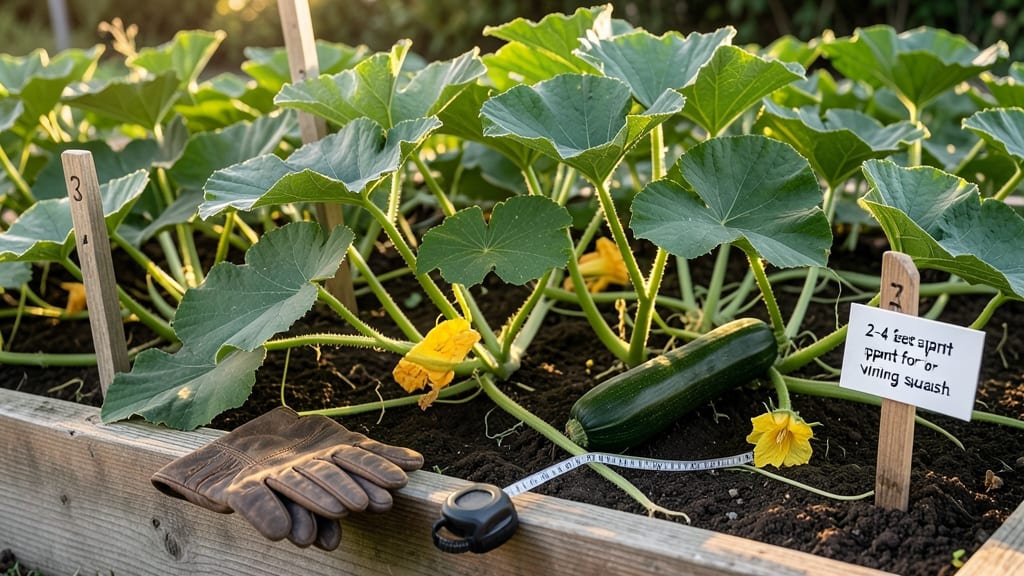
Proper squash spacing in your garden is the difference between a thriving harvest and a battle with disease-ridden vines 🎃.
Struggling with squash plants crowding each other or sprawling uncontrollably? You’re not alone—many gardeners overlook how much room these hungry plants need to grow strong and productive.
Whether you’re growing bush varieties like zucchini or sprawling types such as butternut squash, spacing makes all the difference in yield and plant health.
In this guide, I’ll break down the exact spacing rules for both bush and vining squash, including how to adjust for small gardens or containers. You’ll also discover how to avoid common mistakes that lead to overcrowding, poor airflow, and wasted space.
Ready to maximize your harvest? Let’s dive into the spacing secrets that will transform your squash patch from chaotic to high-yielding.
Optimal squash spacing by variety: bush vs vining types explained
Proper squash spacing directly impacts your harvest—crowded plants yield fewer fruits and attract pests. Bush varieties like zucchini and pattypan grow compactly, while vining types such as butternut and spaghetti squash spread aggressively. Understanding these differences ensures healthy plants and abundant produce.
Spacing isn’t just about fitting more plants; it’s about airflow and sunlight. Poor spacing leads to fungal diseases (like powdery mildew) and stunted growth. For example, zucchini needs 3 feet between plants, while butternut squash requires 5 feet to sprawl comfortably. Let’s break it down by type.
Why spacing matters: Adequate space prevents competition for nutrients, reduces stress on vines, and makes harvesting easier. Vining squash, in particular, benefits from room to stretch—without it, fruits develop unevenly or rot from poor air circulation.
For bush squash, like zucchini, aim for 2–3 feet between plants and 3–4 feet between rows. This compact spacing works perfectly in small gardens or containers, as these varieties stay under 2 feet tall. Use 5-gallon pots for one plant per container, ensuring drainage holes are present.
Vining varieties, such as butternut squash, demand more room—4–6 feet between plants and 5–6 feet between rows. Their sprawling vines can stretch 6 feet or more, so plan accordingly. If space is limited, consider trellising to guide vines upward and save garden real estate.
Container gardening changes the game. Bush squash thrives in 5-gallon pots, while vining types need 15+ gallons per plant (or 2–3 plants per large container). Use lightweight potting mix and place containers where vines can trail safely without tangling with other plants.
Overcrowding leads to disease outbreaks and poor fruit quality. For instance, powdery mildew thrives in humid, shaded conditions created by packed plants. Always prioritize airflow—even if it means leaving empty spaces in your garden layout.
Pro tip: Sketch your garden layout before planting. Mark plant-to-plant distances and row spacing with stakes or string to visualize the final setup. This helps avoid last-minute adjustments that could stress your squash plants.
Adjust spacing based on your climate. In hot, dry regions, slightly wider spacing improves airflow and reduces heat stress. Conversely, in humid areas, extra room helps prevent fungal diseases from spreading rapidly.
Remember: Proper spacing isn’t just about fitting plants into your garden—it’s about giving them the best chance to thrive. With the right layout, you’ll enjoy healthier plants, fewer pests, and a bountiful harvest of homegrown squash all season long. 🎃
Common squash spacing mistakes and how to fix them
Even experienced gardeners sometimes struggle with squash spacing. Overcrowding, uneven rows, or ignoring a plant's mature size can lead to poor yields, disease, and wasted space. I've seen firsthand how 3 feet of space for a zucchini plant can turn into a jungle of tangled vines if ignored.
Let's fix these common mistakes before your garden becomes a squash disaster zone.
One of the biggest issues is planting too closely to save space. While it might seem efficient, squash plants need room to breathe—literally. Poor airflow increases the risk of powdery mildew and other fungal diseases that can devastate your harvest.
I’ve had to pull out entire rows of squash because of this exact problem.
Another frequent mistake is ignoring variety-specific spacing. Bush squash like zucchini need 2-3 feet apart, while vining types like butternut squash require 4-6 feet. Mixing these without planning can lead to uneven growth and competition for nutrients.
Warning: Overcrowding = Disease Magnet
Squash plants left too close together create humid microclimates perfect for fungal growth. Powdery mildew and downy mildew thrive in these conditions, spreading faster than you can say "blight." Prune aggressively and space plants correctly to prevent this—once it starts, it’s hard to stop.
Uneven rows are another spacing sin. Squash vines spread unpredictably, and if you plant them in crooked lines, you’ll end up with gaps in some areas and overcrowding in others.
Use a string guide or garden stakes to mark straight rows before planting. Trust me, your future self will thank you when harvest time comes.
For vining squash, a common fix is pruning techniques. Train vines to grow along a trellis or fence, giving them vertical space instead of sprawling horizontally. This not only saves garden real estate but also improves airflow.
I’ve seen butternut squash vines grow 10 feet up a trellis with perfect spacing and zero disease issues.
If you’ve already planted too closely, don’t panic. Try companion planting to reclaim lost space. Interplant fast-growing crops like radishes or lettuce between squash plants. These shallow-rooted companions won’t compete for nutrients but will help maximize your garden’s potential until the squash matures.
Finally, always consider maturity dates when spacing. Early varieties like zucchini can be harvested quickly, freeing up space for a second planting. Plan your garden layout with a timeline in mind—this is how I’ve managed to grow two squash harvests in one season without crowding issues.