
Tools
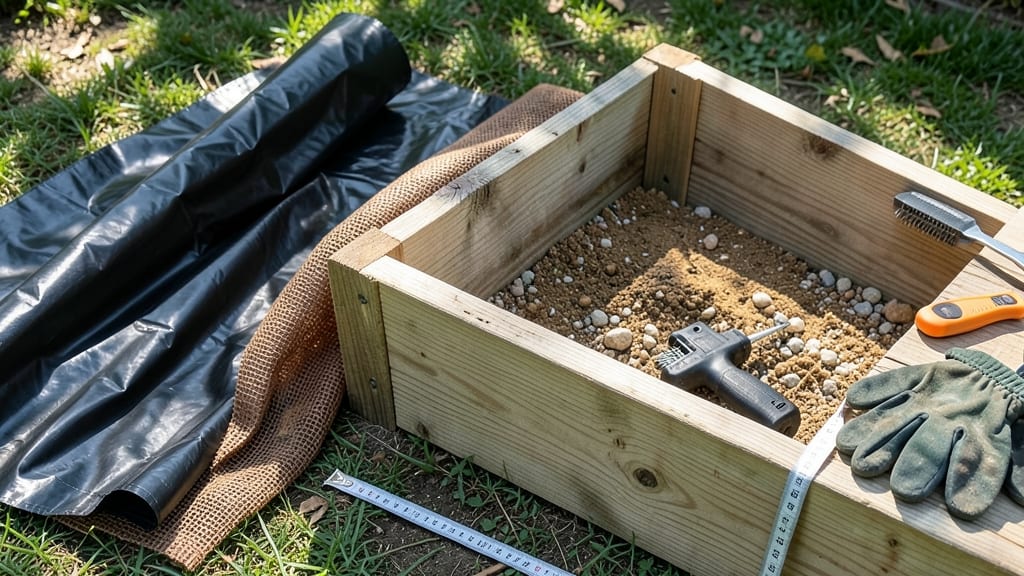
Lining your raised garden bed with plastic may prevent weeds and soil erosion, but it can restrict root growth and degrade soil quality over time by trapping moisture and blocking nutrient flow. Natural options like cardboard or landscape fabric often serve as better long-term solutions.
Plastic's biggest downside is how it creates a waterproof barrier that suffocates roots and disrupts soil ecosystems. 🌱 Without proper drainage, excess moisture leads to anaerobic conditions that stunt plant development, while trapped heat can accelerate decomposition of organic matter.
Many gardeners discover these issues only after years of use, when their plants start showing signs of stress despite weed-free beds.
For a healthier approach, consider biodegradable options like untreated cardboard or woven landscape fabric. These allow water and air to penetrate while still suppressing weeds.
I've found cardboard works especially well when layered with compost—it breaks down naturally and enriches the soil as it decomposes, creating a win-win for both plants and the environment.
💡 In This Article
- How Plastic Affects Soil Health and Root Development
- Best Natural Alternatives for Raised Garden Beds
How plastic affects soil health and root development
Plastic liners create an artificial barrier that fundamentally alters soil behavior. The primary issue is oxygen deprivation—roots need air to breathe, and plastic traps moisture against the bed's base, creating anaerobic zones where roots suffocate.
Studies show that even 0.02 inches of trapped water can reduce oxygen levels by up to 50% in the root zone, stunting growth. This suffocation effect is particularly harmful to deep-rooted plants like tomatoes or carrots, which need to penetrate 12-18 inches deep for stability.
The temperature impact is equally problematic. Plastic acts like a greenhouse, raising soil temperatures by 5-10°F during sunny days while trapping cold at night.
This fluctuation stresses plants and accelerates organic matter breakdown, depleting soil nutrients faster. 🌡️ For example, compost in plastic-lined beds loses 30% more nitrogen through volatilization compared to unlined beds, where natural microbial activity remains balanced.
The heat also promotes weed seed germination in the trapped soil layer, creating a vicious cycle of maintenance.
Nutrient exchange suffers too because plastic prevents beneficial microbes from colonizing the soil interface. Mycorrhizal fungi—critical for 80% of plant species—can't establish proper networks through plastic barriers.
These fungi help plants absorb 70% more phosphorus and water, which is why plants in plastic-lined beds often show yellowing leaves (a classic phosphorus deficiency symptom) despite receiving adequate fertilizer. The root systems themselves become shallow and brittle, unable to anchor properly during storms or wind.
There's also the physical restriction factor. Most plastic liners are 20-40 mils thick, which may seem thin but creates a hard boundary that deflects root growth horizontally rather than downward. This is why you'll often see roots circling the bed's perimeter like a "root prison" instead of growing deep.
For comparison, unlined beds allow roots to explore 3-4 times more volume in the same space, leading to stronger, more resilient plants. The cumulative effect over 3-5 years is visibly stunted growth and reduced yields.
What most gardeners don't realize is how plastic affects the soil's long-term structure. Without organic matter decomposition, the soil becomes compacted and loses its natural crumbly texture.
I've seen beds where the top 2 inches of soil becomes almost cement-like after just 2 years of plastic use, requiring costly soil replacement.
The contrast with organic liners is striking—cardboard, for instance, breaks down in 3-6 months, adding carbon to the soil and improving water retention by 25-30%.
The science behind these issues stems from basic soil physics. Plastic creates a "closed system" where water can't evaporate or percolate naturally. In unlined beds, 10-15% of rainfall evaporates directly, while plastic traps 95% of moisture against the liner.
This saturation leads to leaching of soluble nutrients like potassium and magnesium, which are flushed downward beyond root reach. The result? Plants that look lush but are actually malnourished, as evidenced by poor flowering and fruiting despite regular feeding.