
Light Requirements
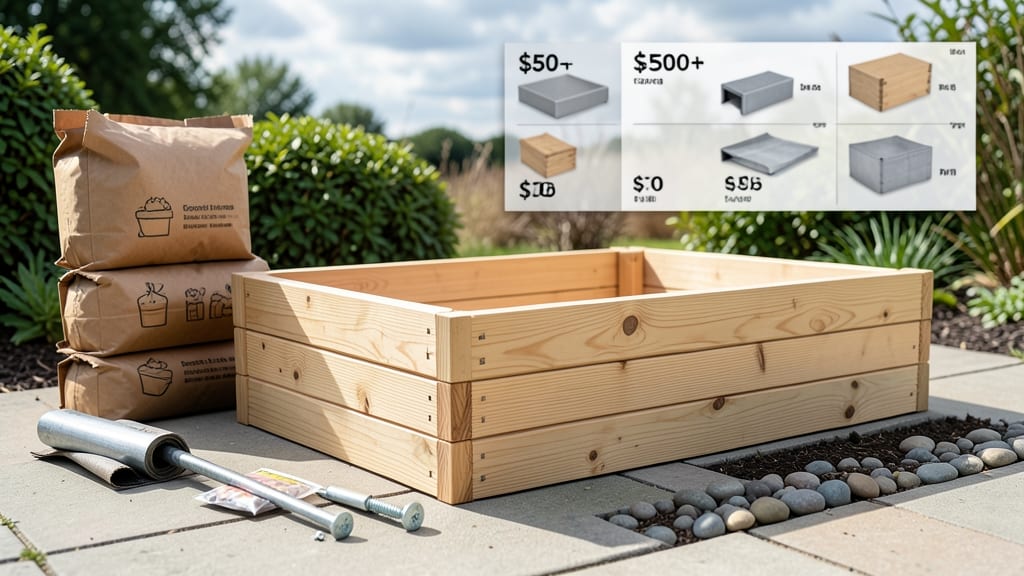
Building a 4x8-foot raised garden bed costs between $100 and $600+, depending on materials: cedar or redwood (mid-range at $200–$400), composite lumber (higher at $300–$600), or untreated pine (budget at $100–$200). Prices also vary by bed height and hardware needs.
A raised garden bed's total price depends more than just the wood—it's about what you prioritize. 🌱 Cedar and redwood last longer (10+ years) but cost twice as much upfront, while pine beds need replacing every 3-5 years.
I've found that adding a simple drainage layer or pre-drilling screws can cut long-term costs by preventing rot. For example, a basic 12-inch-tall pine bed might run $150, but upgrading to cedar with corner brackets jumps to $350—yet the cedar bed lasts twice as long with less maintenance.
Don't forget the extras: bags of quality soil (often $50–$100), hardware (screws, brackets), and tools like a drill or level can add another $50–$150. Prebuilt kits sometimes include these, but DIY builds let you customize—like adding a trellis or built-in irrigation—for under $200 total.
The key is balancing upfront savings with long-term durability, especially if you plan to garden for years.
💡 In This Article
- Cost Breakdown by Raised Garden Bed Materials
- Hidden Costs to Budget for a DIY or Prebuilt Raised Bed
Cost breakdown by raised garden bed materials
When comparing materials for a 4x8-foot raised bed, the price per linear foot reveals a lot about long-term value. Cedar and redwood cost $6–$12 per linear foot for 2x6 boards, translating to $120–$240 for just the framing—before soil or hardware.
These woods resist rot naturally, lasting 10–15 years with minimal sealing, while untreated pine costs only $2–$4 per foot but may need replacement every 3–5 years.
The difference isn't just upfront: a pine bed might cost $80 for framing but require $150–$200 in replacements over a decade, while cedar's higher initial cost pays off in durability.
The height of your bed also impacts material costs significantly. A 12-inch-tall bed uses fewer boards than a 24-inch-tall version, reducing framing costs by 20–30%.
For example, a 12-inch cedar bed might run $250, while the same footprint at 24 inches jumps to $350–$400 due to extra boards and hardware.
Composite lumber—made from recycled plastic—falls in the mid-to-high range at $8–$15 per foot, offering zero maintenance but with a $300–$600 price tag for a full bed. Its lightweight nature simplifies assembly, though the material can degrade under UV exposure if not properly stabilized.
Hardware choices create another cost layer. Galvanized screws ($0.50–$1 each) prevent rust but cost more than basic deck screws ($0.25–$0.50 each). Corner brackets ($2–$5 each) add stability but can double labor time.
I've found that skipping brackets and using 3-inch deck screws at each corner joint saves $10–$20 while maintaining strength—just ensure the wood is pre-drilled to avoid splitting. For a 4x8-foot bed, expect $15–$30 in hardware alone, depending on these choices.
Beyond the framing, soil quality makes a surprising difference in long-term costs. Bagged garden soil ($3–$5 per 2-cubic-foot bag) fills a 4x8-foot bed at 12–18 inches height with 16–24 bags, totaling $50–$120.
Cheaper fill dirt ($10–$20 per yard) cuts costs but lacks nutrients, forcing annual top-ups. Adding compost or aged manure ($20–$40 per cubic yard) improves fertility but raises the initial investment. The trade-off?
A well-amended bed may require 50% less fertilizer over time, saving $20–$50 annually in garden maintenance.
Durability isn't just about the wood—it's about how you use the bed. Untreated pine beds, for instance, rot faster in moist climates unless lined with landscape fabric ($10–$20), which adds a barrier against soil acids.
Cedar, meanwhile, develops a silver-gray patina over time, actually improving its resistance to weather.
This natural aging process turns a $300 cedar bed into a 15-year investment, while a pine bed might need full replacement after 5 years—meaning the cedar's higher upfront cost could save $200–$400 over its lifespan.
One often-overlooked factor is the bed's footprint. A 4x8-foot bed covers 32 square feet, but its outer dimensions (including framing width) can vary. Standard 2x6 boards add 1.5 inches to each side, reducing usable planting space.
For precision, measure the inner dimensions—a "4x8" bed might actually yield 3'6" x 7'6" of planting area. This matters when calculating soil volume or plant spacing, especially for larger crops like tomatoes or squash.
For those prioritizing sustainability, reclaimed wood (e.g., old barn boards) can cut costs to $3–$6 per foot while adding rustic charm. Just ensure the wood is pressure-treated or naturally rot-resistant—untreated reclaimed wood may need extra sealing every 2–3 years.
The environmental payoff? Using reclaimed materials reduces deforestation impact by up to 70% compared to new lumber, making it a win for both wallet and planet.