
Planting
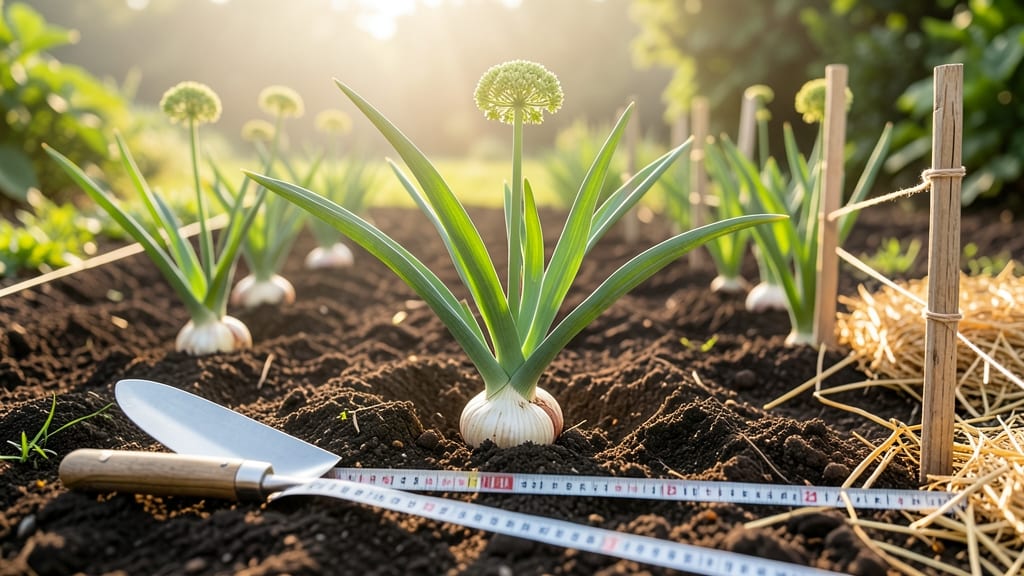
Proper garlic spacing in garden is the hidden key to bulbs so plump they’ll make your neighbors jealous—and the difference between a thriving crop and one that’s stunted or moldy.
Picture this: You’ve prepped the soil, planted your cloves with care, and waited all winter for those green shoots. Then, harvest day arrives, and instead of big, firm bulbs, you’re left with small, weak ones—or worse, a patch of rot.
The culprit? Too much or too little space between each clove.
Getting the spacing right isn’t just about fitting more garlic in; it’s about giving each plant room to breathe, access to nutrients, and airflow to prevent disease. Even a few inches can mean the difference between a meager harvest and a bounty that’ll last through winter.
In this guide, I’ll break down the exact inches to plant for hardneck vs. softneck varieties, how to adjust for your soil type, and the common mistakes that sabotage even the most well-intentioned gardeners.
Optimal garlic spacing by variety: inches that maximize bulb size
Garlic spacing isn’t just about fitting plants into your garden—it’s the foundation for large bulbs and fewer pests. Whether you’re growing hardneck or softneck varieties, precise spacing determines how much room each bulb gets to expand underground.
Too close, and you’ll end up with small, moldy cloves; too far, and you waste precious garden space. Let’s break down the exact inches that work for each type.
Hardneck garlic, known for its flavorful scapes and hard central stems, thrives with slightly more elbow room than softneck varieties. Meanwhile, softneck garlic—often chosen for its long storage life—can handle a tighter arrangement.
Understanding these differences ensures you maximize your harvest while keeping diseases like white rot at bay.
Here’s the key: Row spacing and plant spacing work together to create an environment where bulbs develop properly. For hardneck garlic, aim for 4-6 inches between cloves and 12-18 inches between rows.
Softneck varieties, on the other hand, can handle 3-4 inches between cloves with 10-12 inches between rows. These measurements aren’t arbitrary—they’re based on how much space bulbs need to grow without competing for nutrients or air circulation.
Planting depth also plays a role in spacing success. Bury cloves 2 inches deep, with the pointed end up, to encourage strong root development. This depth, combined with proper spacing, ensures bulbs have room to swell underground without crowding.
Overcrowding leads to smaller bulbs and increased risk of fungal diseases, while proper spacing promotes larger, healthier cloves.
| Variety | Clove Spacing (inches) | Row Spacing (inches) | Planting Depth (inches) | Bulb Size Impact |
|---|---|---|---|---|
| Hardneck Garlic | 4-6 | 12-18 | 2 | Large, flavorful bulbs with scapes |
| Softneck Garlic | 3-4 | 10-12 | 2 | Medium bulbs, long storage life |
| Elephant Garlic | 6-8 | 18-24 | 2-3 | Extra-large bulbs, mild flavor |
Proper spacing also improves air circulation, which is critical for preventing garlic rust and botrytis leaf blight. When plants are too close, moisture lingers between leaves, creating the perfect conditions for fungal spores to thrive.
By spacing your garlic correctly, you reduce humidity levels at the soil surface, making it harder for pathogens to take hold.
Another benefit of optimal spacing? Easier harvesting. When bulbs aren’t crowded, they’re simpler to dig up without damaging neighboring plants. This means less broken stems and cleaner bulbs at harvest time. Plus, well-spaced garlic allows you to weed between rows more effectively, reducing competition for nutrients and water.
For raised beds or container gardening, adjust spacing slightly to account for limited space. In containers, plant cloves 3-4 inches apart in a circle pattern, ensuring the container is at least 12 inches deep.
This setup mimics the natural spacing while working within smaller growing areas. Just remember: even in containers, depth matters—shallow roots mean smaller bulbs.
If you’re growing garlic in succession plantings, space your rows to allow for interplanting with fast-growing crops like lettuce or spinach. This maximizes your garden’s productivity while keeping garlic spacing optimal.
For example, plant lettuce between garlic rows in early spring, then replace it with radishes or green onions as the garlic matures.
Finally, don’t overlook the role of soil preparation in spacing success. Loose, well-draining soil allows roots to spread easily, which is especially important when bulbs are competing for space.
Amend your soil with compost before planting to improve structure and fertility. This step, combined with proper spacing, sets the stage for a bountiful garlic harvest.
With these spacing guidelines, you’ll be well on your way to growing plump, pest-resistant garlic bulbs that rival anything you’ve bought at the store. The key is consistency—stick to the recommended distances, and your garlic will reward you with larger cloves and fewer problems all season long. 🌱
Common garlic spacing mistakes and how to fix them
If your garlic bulbs are smaller than a golf ball or you're battling mold between plants, garlic spacing is likely the culprit. Too close, and your cloves compete for nutrients; too far, and you waste precious garden real estate.
I’ve seen both mistakes lead to disappointing harvests—and I’m here to help you avoid them.
Overcrowding is the #1 spacing mistake gardeners make. When garlic plants grow too close, they steal nutrients from each other, resulting in tiny bulbs and increased disease risk.
Underplanting, on the other hand, leaves gaps that weeds and pests love to fill. The solution? Precision spacing tailored to your garlic variety and growing conditions.
Here’s the kicker: companion plants can also play a role in spacing. Strategic pairings like marigolds or onions deter pests while maximizing your garden’s efficiency. Let’s dive into the fixes so you can grow garlic like a pro.
⚠️ Warning: Overcrowding = Tiny Bulbs
Planting garlic closer than 4 inches forces bulbs to compete for water and nutrients, shrinking them by up to 50%. Even 6-inch spacing can lead to stunted growth if your soil is heavy or moist. The fix? Space hardneck garlic 4-6 inches apart and softneck 6-8 inches apart—and always double-check soil drainage before planting.
Another spacing sin? Uneven rows. When garlic plants are staggered haphazardly, you create shadow zones where air can’t circulate, inviting fungal diseases like white rot. I’ve seen gardens where rows were planted every 12 inches but cloves were lopsided, leaving some plants starved for sunlight.
The solution? Use a string line or garden grid to keep rows straight and cloves evenly spaced.
Don’t forget about companion planting—it’s a game-changer for spacing. For example, marigolds planted between garlic rows deter pests like aphids, while carrots grown nearby loosen the soil naturally.
This multi-layered approach lets you maximize space without sacrificing yield. Just avoid planting garlic near beans or peas, which compete for the same nutrients.
If you’re still struggling, try interplanting garlic with fast-growing greens like lettuce or radishes. The greens mature quickly, giving your garlic room to bulk up later in the season.
This rotational spacing trick works wonders in small gardens or containers. Pro tip: Use container-specific spacing—garlic in pots needs at least 6 inches of diameter per clove.
Remember, garlic spacing isn’t just about inches—it’s about balancing growth, airflow, and pest control. With these fixes, you’ll go from frustrated gardener to garlic-growing champion in no time. Happy planting! 🌱