
Pests
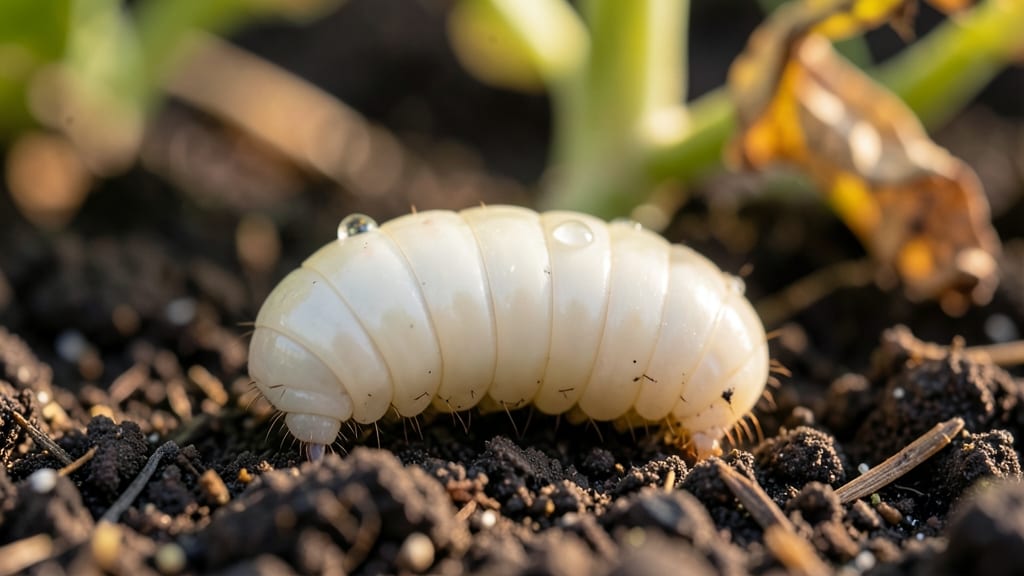
Grub worms are bad for your garden because they chew through grass roots and plant stems, creating unsightly brown patches and weakening your lawn's ability to recover from drought or disease. These destructive larvae thrive in warm-season grasses like Bermuda and Zoysia, turning healthy lawns into patchy, struggling landscapes.
Grub worms don't just damage roots—they create underground tunnels that disrupt soil aeration and water drainage, making your garden more susceptible to fungal infections. 🌱 Their presence often attracts scavengers like birds and raccoons, which dig up your lawn in search of an easy meal.
The worst part? By the time you notice the brown patches, the damage is already deep, and recovery can take months of proper care and treatment.
If you're dealing with a grub worm infestation, early intervention is key.
The longer you wait, the more extensive the damage becomes, and the harder it is to restore your garden's health. Natural solutions like beneficial nematodes or milky spore bacteria can be highly effective without harming your plants or the environment, but they require consistent application for best results.
💡 In This Article
- How Grub Worms Damage Garden Roots and Soil Health
- Natural Grub Worm Control Methods for Organic Gardens
How grub worms damage garden roots and soil health
Grub worms, the larvae of various beetles like the Japanese beetle or June bug, target the roots of your garden plants with surgical precision. These pale, C-shaped larvae burrow just below the soil surface, where they chew through grass roots and plant stems with tiny, serrated mandibles.
A single grub can consume up to 0.5 grams of roots per day—enough to weaken even healthy plants. Their feeding patterns create a network of tunnels that disrupt the root system's ability to absorb water and nutrients, leading to the telltale brown patches that spread across lawns.
The damage doesn’t stop at the roots. As grubs tunnel through the soil, they compact it, reducing aeration and water drainage. This creates an environment where fungal infections like Rhizoctonia or Fusarium thrive, further stressing your plants.
The compacted soil also makes it harder for beneficial microbes to break down organic matter, starving your garden of essential nutrients. 🌱 What’s worse, the tunnels attract scavengers like birds, raccoons, and skunks, which dig up your lawn in search of an easy meal, exacerbating the damage.
Warm-season grasses like Kentucky bluegrass and St. Augustine are particularly vulnerable because their root systems are shallow and less resilient. When grubs feast on these roots, the plants can no longer support the above-ground growth, leading to wilting, yellowing, and eventually death.
Even if you water or fertilize, the damage is already done—roots can’t regenerate quickly enough to compensate for the loss. The result? A lawn that struggles to recover, even with your best efforts.
Grubs also leave behind a secondary problem: their castings and decaying tunnels create an ideal breeding ground for bacteria and pathogens. This weakens the soil ecosystem, making it harder for new roots to establish.
Over time, the cumulative effect of grub damage turns a thriving garden into a patchy, struggling landscape that’s more susceptible to drought, heat stress, and other environmental factors.
One of the most insidious aspects of grub damage is how subtle it starts. You might notice a few small brown spots in early summer, assuming it’s just drought or disease.
But by the time the damage becomes obvious—when entire sections of grass pull up easily like sod—it’s often too late for quick fixes. The grubs may have already pupated into beetles and flown away, leaving your garden to recover on its own. 🌿
To make matters worse, grubs often go undetected until the damage is visible. Their life cycle spans 1-2 years, depending on the species, meaning an infestation can persist for multiple growing seasons if left unchecked.
This prolonged feeding cycle ensures that the harm continues long after the initial signs appear, making early detection and intervention critical for saving your garden.