
Planting
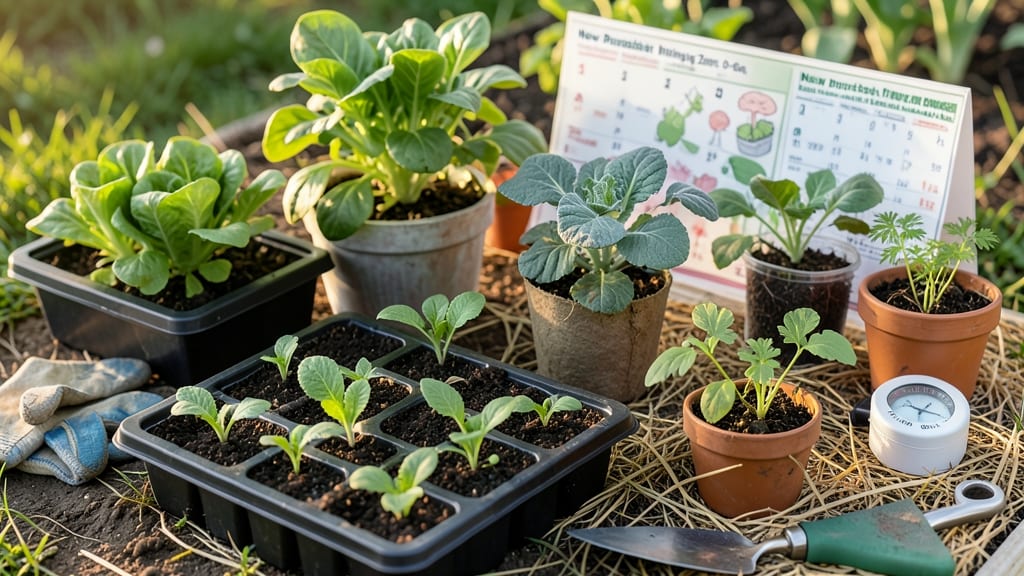
Planting a 🥬 vegetable garden in New Brunswick starts after May 15, when the last frost typically passes — but getting it wrong means watching your seeds rot in cold soil or your tomatoes bolt before they ripen.
Timing matters more than you think. Too early, and a late frost wipes out your hard work. Too late, and summer’s short growing season won’t give your crops enough time to mature.
Even experienced gardeners in Zone 5b can fall into these traps if they don’t adjust for microclimates or soil warmth.
This guide breaks down the exact planting windows for cool-season crops like peas and lettuce (go in April!) and warm-season favorites such as tomatoes and peppers (wait until June).
We’ll also cover how to stretch your season with row covers and which fast-growing veggies to prioritize when frost looms.
By the end, you’ll know not just when to plant, but how to tweak your schedule for your specific corner of New Brunswick — whether you’re in Fredericton’s valleys or Saint John’s coastal breeze.
New Brunswick’s frost-free planting zones: exact start dates for cool vs warm season crops
New Brunswick’s USDA Zones 4-5 mean gardeners must work with a short growing season—just 120-150 frost-free days in most regions. Missing the last frost date can turn seedlings into frostbitten casualties, while planting warm-season crops too early risks stunted growth.
Fredericton, Saint John, and Moncton each have slightly different microclimates, so I’ll break down the exact windows for cool-season vs warm-season crops to help you time your planting perfectly.
For cool-season crops like lettuce, spinach, and peas, the window opens as early as late March to early April in coastal areas (like Saint John) but may wait until mid-April in inland regions (like Fredericton).
These hardy plants tolerate light frosts and can even thrive in spring soil temperatures as low as 40°F (4°C). Meanwhile, warm-season crops such as tomatoes, peppers, and cucumbers must wait until after the last frost, typically mid-to-late May, when soil temperatures consistently reach 55°F (13°C).
Here’s the critical data you need to plan your garden—including exact dates for Fredericton, Saint John, and Moncton, plus the ideal planting windows for both crop types.
| Crop Type | Planting Window (Fredericton) | Planting Window (Saint John) | Planting Window (Moncton) | Soil Temp Requirement | Notes |
|---|---|---|---|---|---|
| Cool-Season Crops | Late March - Early April | Late March - Mid-April | Early April - Early April | 40-50°F (4-10°C) | Spinach, peas, lettuce, kale |
| Warm-Season Crops (Direct Sow) | Mid-to-Late May | Early-to-Mid May | Early-to-Mid May | 55-60°F (13-16°C) | Tomatoes, peppers, beans, cucumbers |
| Warm-Season Crops (Transplant) | Early May (start indoors) | Late April (start indoors) | Late April (start indoors) | 50-55°F (10-13°C) | Tomatoes, peppers, eggplants |
| Fall Cool-Season Crops | Late July - Early August | Late July - Early August | Late July - Early August | 45-50°F (7-10°C) | Kale, spinach, radishes, lettuce |
If you’re in Freder
How to adjust planting times for New Brunswick’s microclimates and soil conditions
New Brunswick’s diverse geography creates distinct microclimates—coastal areas like Saint John experience milder winters, while inland regions near Fredericton face harsher frosts. These differences can shift your planting windows by 2-3 weeks.
Coastal gardeners often plant 2 weeks earlier for warm-season crops like tomatoes, while inland areas may need to wait until mid-May to avoid frost damage.
Soil drainage is another critical factor. New Brunswick’s clay-heavy soils in many areas retain moisture poorly, leading to root rot in heavy rain. If your soil stays soggy for more than 48 hours, consider raised beds or amending with compost and perlite to improve aeration.
A simple percolation test—digging a 12-inch hole and filling it with water—can reveal drainage issues before planting.
⚠️ callout-warning ⚠️
New Brunswick’s unpredictable spring frosts (even after May 15) can wipe out tender seedlings. Warm-season crops like peppers and cucumbers planted before soil reaches 55°F (13°C) will fail. Conversely, delaying cool-season crops like spinach past late August risks harvest before first frost.
🔹 Signs you planted too early: Yellowing leaves, stunted growth, or blackened stems from cold snaps.
🔹 Signs you planted too late: Bolting (flowering prematurely) in lettuce or bitter flavors in greens.
Extend your growing season with seasonal extensions like cold frames or row covers. A simple hoop house with plastic sheeting can push harvests into October or even November for hardy crops like kale or Brussels sprouts.
For coastal areas, sea breezes can delay fall frosts by 1-2 weeks—monitor local weather stations for frost-free guarantees before removing covers.
Adjust planting times based on soil temperature, not just air temperature. Use a soil thermometer to confirm 50°F (10°C) for cool-season crops or 60°F (16°C) for warm-season varieties.
Inland areas may need to wait until late May or early June, while coastal zones can start 2 weeks earlier. Pro tip: Plant radishes or peas as early indicators—they sprout quickly and signal safe soil conditions.
For container gardening, which thrives in New Brunswick’s variable soils, choose fast-draining mixes with 50% compost and 30% perlite. Containers warm up faster in spring, allowing you to plant 1-2 weeks earlier than in-ground beds.
Just ensure pots have drainage holes to prevent waterlogged roots—a common issue in New Brunswick’s rainy springs.
Always track your local frost dates using resources like the Canadian Hardiness Zone Map or Environment Canada’s frost forecasts. Inland Fredericton (Zone 5b) typically has a 165-day frost-free season, while coastal Saint John (Zone 6a) enjoys 180 days.
Use these benchmarks to fine-tune your succession planting schedule for continuous harvests.