
Planting
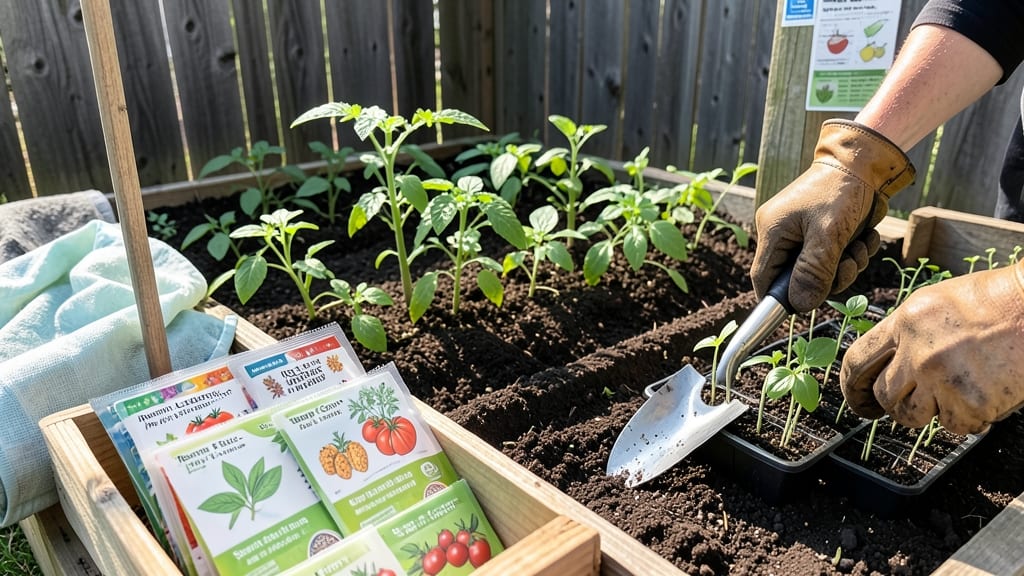
To plant a vegetable garden in Iowa, aim for mid-April to mid-June for spring crops and early August to mid-September for fall, aligning with your county’s last frost dates.
Iowa’s unpredictable spring weather can turn a gardener’s well-laid plans into a gamble—unless you know the exact last frost dates by county. Planting too early risks frost damage, while waiting too long shortens your growing season.
With USDA Zones 5a-6b, your 🥕 vegetable garden thrives when you match crops to the right window: cool-season veggies (like lettuce) go in early, while heat-lovers (tomatoes, peppers) wait until soil warms to 50°F.
Below, I break down county-by-county frost dates, soil prep timing, and the top 5 fast-growing crops for Iowa’s 120–150-day seasons—plus how to stretch harvests with row covers and succession planting.
Iowa’s last frost dates by county: critical planting windows for vegetables
Understanding Iowa’s last frost dates is the key to avoiding frost damage while maximizing your vegetable garden’s growing season. Southern counties like Appanoose and Lee typically see their last spring frost around April 15–20, while northern areas like Plymouth or Lyon often wait until May 5–10.
These dates create a 6-week window difference that can mean the difference between a thriving garden and a failed crop.
For heat-loving vegetables like tomatoes, peppers, and cucumbers, planting too early—before the last frost—means risking death. Meanwhile, cool-season crops such as spinach, kale, and peas can handle light frosts and may even taste sweeter after a chill.
Knowing your county’s average first frost in fall (typically October 10–20) helps you plan for fall plantings of hardy greens and root vegetables.
Use this county-by-county guide to determine your planting windows. For precise timing, check the Iowa State University Extension’s frost date maps or use a local weather station for real-time updates. Below, I’ve organized Iowa’s counties into three frost zones—early, mid, and late—to simplify your planning.
Early Zone (April 1–15 last frost): Adair, Adams, Appanoose, Audubon, Benton, Cedar, Clarke, Clinton, Davis, Decatur, Des Moines, Fremont, Guthrie, Harrison, Henry, Jefferson, Johnson, Keokuk, Lee, Louisa, Lucas, Madison, Mahaska, Marion, Monroe, Muscatine, Polk, Ringgold, Scott, Van Buren, Warren, Washington, Wayne, and Wapello.
Mid Zone (April 16–30 last frost): Buchanan, Calhoun, Carroll, Cass, Cerro Gordo, Cherokee, Chickasaw, Clarke, Clayton, Dubuque, Emmet, Fayette, Franklin, Grundy, Hamilton, Howard, Iowa, Jackson, Jasper, Jones, Linn, Marion, Marshall, Mills, Mitchell, Page, Pocahontas, Poweshiek, Sac, Taylor, Union, and Webster.
Late Zone (May 1–15 last frost): Allamakee, Benton, Black Hawk, Bremer, Butler, Cerro Gordo, Chickasaw, Clayton, Delaware, Dickinson, Floyd, Franklin, Grundy, Hamilton, Hancock, Hardin, Ida, Kossuth, Lyon, Mitchell, Monona, Montgomery, Muscatine, O’Brien, Osceola, Palo Alto, Plymouth, Pocahontas, Sac, Sioux, Story, Tama, Winneshiek, and Wright.
| County | Avg. Last Spring Frost | Avg. First Fall Frost | Best for Warm-Season Crops | Best for Cool-Season Crops |
|---|---|---|---|---|
| Adair | April 10 | October 18 | Tomatoes, Peppers | Spinach, Kale |
| Plymouth | May 5 | October 5 | Bush Beans, Corn | Radishes, Lettuce |
| Polk | April 20 | October 15 | Cucumbers, Squash | Peas, Broccoli |
| Allamakee | May 1 | October 10 | Fast-Maturing Varieties | Brussels Sprouts |
| Story | April 25 | October 12 | Eggplant, Okra | Swiss Chard |
*Frost dates vary yearly; use row covers for early plantings.
For southern Iowa counties, where the growing season starts earlier, prioritize warm-season crops like tomatoes, peppers, and sweet corn. Plant seeds 2–3 weeks before your last frost date for direct sowing or 4–6 weeks before if starting indoors.
In northern Iowa, focus on fast-maturing varieties or use row covers to extend the season.
Fall planting is just as critical. In southern counties, you can often plant cool-season crops like lettuce and spinach until September 15, while northern counties should aim for August 15 to avoid early frosts.
Use black plastic mulch to warm soil in spring or straw mulch to protect fall crops from temperature swings.
Pro tip: Succession planting every 2–3 weeks ensures a continuous harvest. For example, plant bush beans every 10 days from late May through early July to enjoy fresh pods all summer. Similarly, radishes mature in just 30 days, making them perfect for quick turnarounds.
For real-time updates, bookmark the Midwestern
How to Adjust planting times for Iowa’s microclimates and soil conditions
Iowa’s diverse landscapes—from urban heat islands in Des Moines to sandy soils near the Mississippi River—create unique growing challenges. Even within the same county, your microclimate (like a south-facing slope or shaded patio) can shift planting windows by 2–3 weeks.
Understanding these variations helps you extend harvests and protect tender seedlings.
For example, northern Iowa’s shorter growing season (USDA Zone 4a) demands early starts with cold frames or row covers, while southern Iowa’s Zone 5b allows later plantings.
Sandy soils, common in western Iowa, drain quickly—requiring daily watering and organic matter amendments like compost to retain moisture for root crops like carrots or beets.
- 1 Use row covers for 2–3 weeks after last frost to warm soil and protect cool-season crops like lettuce or spinach from late frosts. Remove covers when plants flower to prevent pollination issues.
- 2 Succession plant fast-maturing crops like radishes (25 days) or bush beans (50 days) every 2 weeks to stagger harvests and maximize space. Example: Plant radishes in early May, then again in mid-June for a fall crop.
- 3 Adjust for urban heat: Cities like Cedar Rapids can be 5–10°F warmer than rural areas. Plant heat-tolerant varieties (e.g., ‘Heatmaster’ tomatoes) and use shade cloth (30–50%) for lettuce in July–August.
- 4 Test soil pH and amend sandy soils with peat moss or compost to improve water retention. Aim for pH 6.0–7.0 for most vegetables. Clay soils? Add coarse sand to prevent compaction.
- 5 Start warm-season crops indoors (e.g., peppers, eggplants) 8–10 weeks before last frost. Use grow lights for 14–16 hours/day to compensate for Iowa’s short spring daylight (12–14 hours in April).
If you’re gardening in northern Iowa’s Zone 4a, prioritize cold-hardy crops like kale, peas, and potatoes for early spring. Use black plastic mulch to warm soil 5–10°F faster and plant warm-season crops (tomatoes, peppers) 1–2 weeks earlier than the county average.
For urban gardens, container planting offers flexibility—choose self-watering pots for sandy soils and dwarf varieties (e.g., ‘Tiny Tim’ tomatoes) to fit small spaces. Group plants with similar water needs (e.g., basil + lettuce) to simplify care and conserve water.
Remember: Iowa’s fall planting window (early August–mid-September) is just as critical as spring. Cool-season crops like spinach and carrots thrive with 60–70 days to maturity before the first frost. Use straw mulch to insulate soil and extend harvests into October or November.