
Vegetables
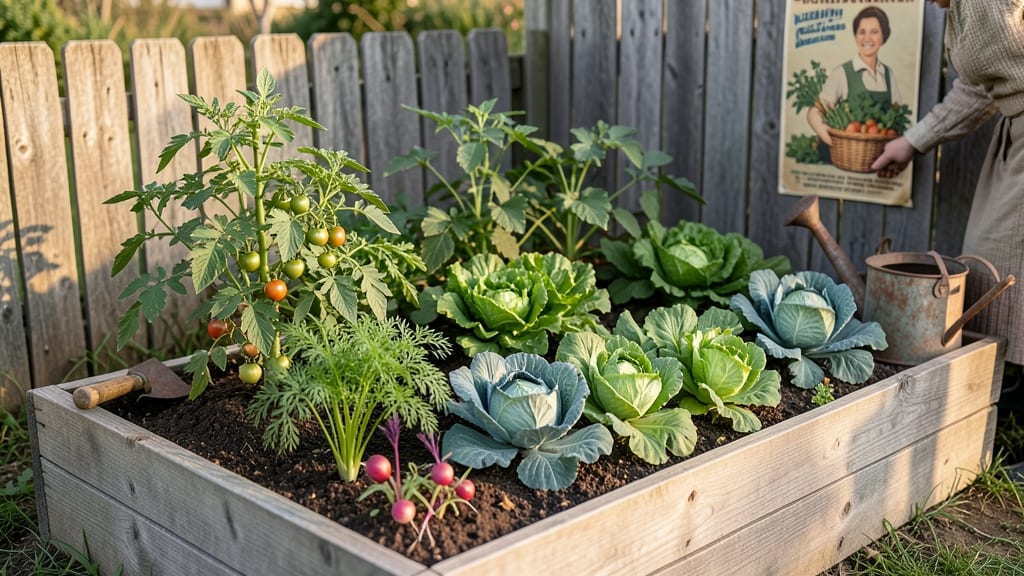
The history of victory gardens traces back to World War II, when they became a nationwide movement to grow vegetables, fruits, and herbs in backyards and community plots, helping America produce 40% of its vegetables during the war while conserving shipping resources for military needs. This tradition has evolved into today's sustainable gardening movement.
The concept began as a patriotic response to wartime food shortages, with the U.S. government encouraging citizens to cultivate gardens through posters, radio broadcasts, and even school programs. 🌱 These gardens weren't just practical—they symbolized unity and resilience during a time of national crisis.
What's fascinating is how these wartime practices directly inspired modern urban farming initiatives, proving that the principles of self-sufficiency and community collaboration remain relevant today.
Modern victory gardens often incorporate techniques like square-foot planting and heirloom seed selection to maximize yield in limited spaces, making them accessible for city dwellers and suburban families alike.
The movement has also expanded to address contemporary challenges like climate change and food insecurity, showing how history's lessons continue to shape our present.
💡 In This Article
- How WWII Victory Gardens Revolutionized Home Food Production
- Modern Victory Gardens: From War-Era Roots to Today’s Sustainable Movement
How WWII victory gardens revolutionized home food production
The U.S. government launched victory gardens in 1943 as part of the "Food for Freedom" campaign, urging citizens to grow their own produce to free up commercial supplies for troops. 🌱 The program was so effective that by 1944, these gardens produced 40% of all U.S. vegetables, including 8 million tons of food annually—equivalent to feeding the entire population of New York City three times over!
At the heart of this movement was rationing, which limited access to meat, sugar, and fats, pushing families toward vegetable-based diets.
The government distributed free seeds, provided gardening guides, and even created radio programs like "Garden Time" to teach techniques. 📻 Urban spaces like rooftops and vacant lots were transformed into productive plots, with cities like Detroit and Philadelphia leading the charge.
The average garden yielded 2,000-3,000 pounds of food per year, proving that small-scale production could make a massive national impact.
Beyond food production, victory gardens played a psychological role.
They gave families a sense of purpose and control during uncertain times, while also fostering community through shared gardening efforts. 🌿 The government's "Victory Garden Bureau" even tracked progress with posters showing how many gardens were planted nationwide—turning personal effort into a collective achievement.
This dual focus on practicality and morale made the movement uniquely effective.
What's often overlooked is how these gardens addressed shipping shortages. With 75% of commercial shipping diverted to military use, homegrown food reduced the strain on transportation networks. The success of victory gardens even influenced post-war agriculture, with many gardeners continuing their practices long after the war ended.
This legacy laid the foundation for today's sustainable farming movements.
The techniques used were surprisingly modern. Gardeners employed crop rotation to prevent soil depletion, used composting to enrich soil, and grew high-yield varieties like tomatoes and beans. 🌱 These methods weren't just practical—they were scientifically sound, proving that even small plots could produce significant results with the right approach.
The wartime gardens also demonstrated how urban areas could contribute to food security, a concept that resonates strongly in today's discussions about food deserts and local agriculture.
One of the most striking examples came from New York City, where rooftop gardens on buildings like the Empire State Building produced thousands of pounds of vegetables.
The city's Victory Garden Committee even organized competitions for the best gardens, turning gardening into a civic duty—and sometimes even a source of pride. This blend of patriotism, practicality, and community engagement created a model that still inspires modern urban farming initiatives.
The impact of victory gardens extended beyond food production.
They demonstrated how decentralized agriculture could strengthen national resilience, a lesson that's being rediscovered today as communities seek ways to build food security in an era of climate uncertainty. 💫 The wartime gardens weren't just about growing vegetables—they were about growing a more self-sufficient society.