
Light Requirements
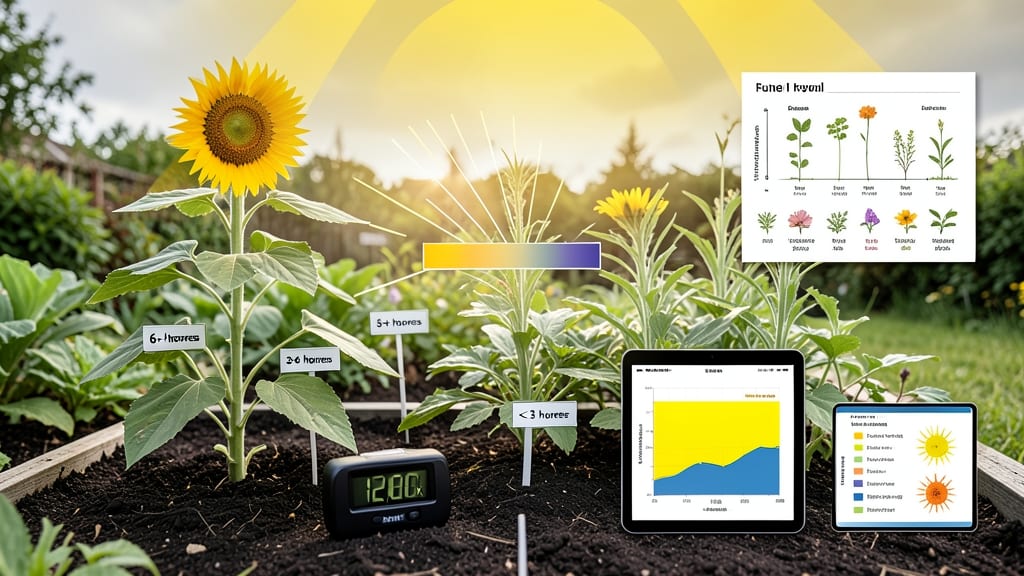
How much sunlight a garden needs depends entirely on plant types: full-sun varieties thrive with 6+ hours daily, partial shade plants do best with 3-6 hours, and shade-loving species require less than 3 hours. Proper sunlight exposure directly impacts plant health and productivity.
A garden's sunlight needs aren't one-size-fits-all—different plants have unique requirements that affect everything from leaf production to flowering. 🌱 For instance, sun-loving tomatoes and peppers will wilt without strong afternoon light, while delicate ferns and hostas can scorch in direct sun.
Even within categories, some plants like rosemary tolerate more sun than others, so checking specific varieties is key. The right balance prevents stress, pests, and poor yields while maximizing your harvest or floral display.
What's interesting is how sunlight affects growth patterns: full-sun plants develop stronger stems to support their weight, while shade plants often grow taller and leggier in search of light.
This is why gardeners often combine plant types—placing taller sun-lovers at the north end of beds and shorter shade plants in front. The goal is to create a thriving ecosystem where every plant gets exactly what it needs to flourish.
💡 In This Article
- Sunlight Requirements by Plant Type
- Adjusting Garden Layout for Sunlight Balance
Sunlight requirements by plant type
Sunlight acts as a plant's energy source, driving photosynthesis—the process where chlorophyll converts light into glucose for growth. Full-sun plants, like tomatoes and marigolds, need 6+ hours of direct sunlight daily to produce enough energy for robust fruit or flower development.
Their leaves often have thick, waxy coatings to prevent water loss under intense light, while their roots grow deep to access moisture. In contrast, partial-shade plants such as coleus or astilbe thrive with 3-6 hours of filtered light, balancing energy production with moisture retention through softer, thinner leaves.
The difference becomes clear when you compare growth patterns: sun-loving peppers develop firm, thick walls in their fruit due to high sugar production, while shade-tolerant impatiens grow taller stems with smaller leaves to stretch toward light.
Even within categories, varieties vary—sunflowers need full sun, but their dwarf cousins can handle partial shade. 🌿 This is why gardeners often group plants by sunlight needs, creating "sun zones" in their layouts.
Flowering cycles also depend on light exposure. Many vegetables, like cucumbers, require full sun to trigger flowering, while shade plants like ferns produce spores instead of flowers. The intensity of light matters too: morning sun is gentler, while afternoon rays can scorch delicate leaves.
This is why east-facing beds often work well for partial-shade plants—they get morning light without harsh afternoon heat.
Herbs offer a great example of diversity: rosemary and thyme thrive in full sun, while parsley and cilantro prefer partial shade. The wrong exposure leads to problems—too much sun causes leaf burn (visible as crispy brown edges), while too little results in weak stems and pale, leggy growth.
Even soil temperature plays a role: full-sun areas heat up faster, which can stress shade-loving plants if planted incorrectly.
To visualize this, imagine a garden bed where sunflowers stand tall in the back (full sun), coleus thrives in the middle (partial shade), and hostas spread at the front (shade). This layering mimics natural forest understory patterns, where light filters through canopies.
The key is observing your plants: if leaves turn yellow or stems stretch excessively, they're likely not getting the right light balance. 🌱
For beginners, start by mapping your garden's sunlight patterns using a simple app or observing shadows at different times of day. Most gardens have microclimates where sunlight varies by just a few feet—this is why even experienced gardeners test plant placements before committing to permanent beds.