
Tools
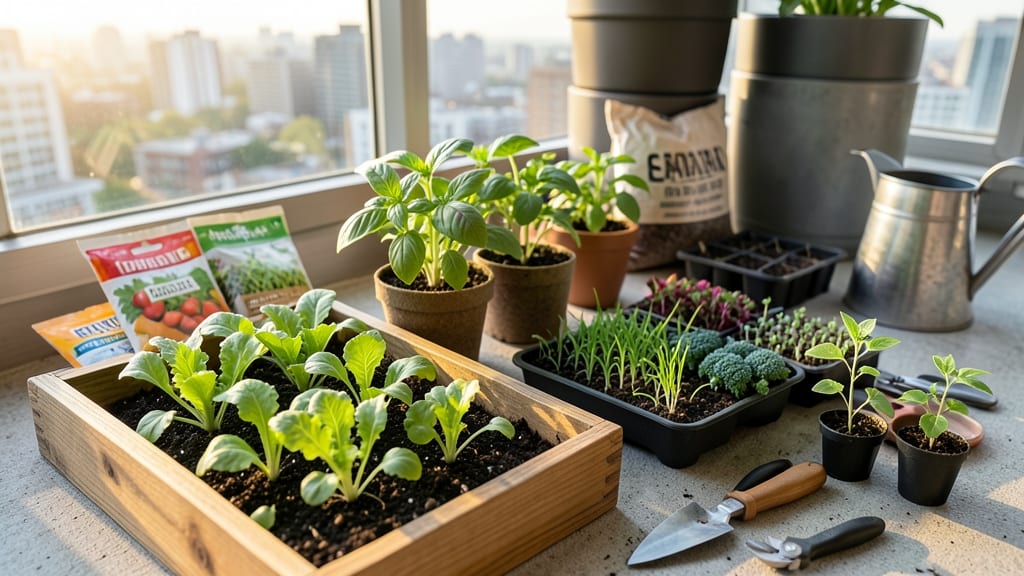
Urban garden seeds for fast-growing varieties thrive in small spaces with quick harvests like lettuce (30 days), radishes (25 days), and green onions (45 days), ideal for balconies or containers with minimal sunlight needs.
Fast-growing urban garden seeds are your secret weapon for turning tiny spaces into productive harvest zones. 🌱 The key lies in selecting varieties with rapid germination rates and compact growth habits—think dwarf tomatoes, bush beans, or microgreens that mature in just 10-14 days.
These plants don't just save space; they also deliver fresh produce within weeks, perfect for city dwellers with limited time or sunlight. I've found that focusing on leafy greens and herbs maximizes yield while minimizing maintenance, making urban gardening both rewarding and sustainable.
What makes these seeds particularly effective is their adaptability to container gardening. Most fast-growing varieties thrive in 5- to 10-gallon pots, allowing you to stack plants vertically or arrange them on patios.
The real magic happens when you combine them with companion plants—like planting basil near tomatoes to deter pests—while still keeping the whole setup within arm's reach. This approach turns even the smallest balconies into thriving edible gardens.
💡 In This Article
- How to Choose Fast-Growing Urban Garden Seeds
- Best Urban Garden Seed Varieties for Containers
How to choose fast-growing urban garden seeds
Fast-growing urban garden seeds rely on three core factors: optimal temperature, consistent moisture, and proper seed size. The science behind rapid germination starts with warmth—most urban-friendly seeds sprout best between 60-75°F.
For example, radish seeds germinate in just 3-5 days when soil stays at 70°F, while lettuce takes 5-7 days at 65°F. Moisture triggers enzymatic activity in the seed, breaking down stored nutrients for early root development.
Smaller seeds like microgreens (e.g., broccoli sprouts) germinate faster because they have less mass to convert into energy—some varieties emerge in 2-3 days!
The growth cycle comparison between leafy greens, herbs, and microgreens reveals why they dominate urban gardens.
Leafy greens like spinach or kale mature in 30-40 days with minimal vertical space needs (6-12 inches tall), while herbs such as cilantro or dill reach harvest in 20-30 days but require slightly more sunlight (4-6 hours daily).
Microgreens are the speed champions—ready in 10-14 days—but demand precise moisture control to prevent mold. The trade-off? Microgreens pack 40% more nutrients per square inch than mature greens, making them ideal for nutrient-dense urban harvests.
For compact spaces, prioritize seeds labeled as "dwarf," "bush," or "compact" varieties. These traits result from selective breeding to reduce plant height by 30-50% while maintaining productivity.
For instance, 'Tiny Tim' tomatoes grow just 18-24 inches tall compared to 4-6 feet for standard varieties, yet produce 100+ fruits per plant. Similarly, bush beans like 'Blue Lake' mature in 50-60 days in 2-foot-tall containers, while pole beans need trellises. The secret?
These compact varieties allocate more energy to fruit/leaf production rather than vertical growth, perfect for stacked containers or window boxes.
Seed size matters more than most gardeners realize. Larger seeds (like beans or peas) contain more stored energy, giving them a 2-3 day head start over tiny seeds. However, they often require deeper planting (1-2 inches deep) to access moisture, while microgreens need only ¼ inch of soil coverage.
This size difference explains why radish seeds (medium-sized) germinate faster than carrot seeds (tiny) but slower than bean seeds (large). For urban gardens, I recommend pre-sprouting larger seeds in damp paper towels to shave off 24-48 hours of germination time before transplanting.
Light requirements create another critical distinction. Leafy greens tolerate partial shade (3-4 hours of sunlight), making them ideal for north-facing balconies, while herbs like basil need full sun (6+ hours). The solution?
Stratify your containers by placing sun-loving plants on southern exposures and shade-tolerant greens on northern sides. This zoning maximizes space efficiency while ensuring all plants receive their ideal light conditions. For example, a 5-gallon container can hold both lettuce (shade) and basil (sun) when positioned correctly.
Don't overlook seed coatings—many urban seeds come treated with fungicides or growth promoters that accelerate germination by 1-2 days. These coatings create a protective barrier that prevents moisture loss and fungal attacks during the critical first 48 hours of growth.
While organic gardeners may prefer untreated seeds, the trade-off is 5-10% slower germination. For city gardeners with limited time, treated seeds offer a practical advantage without sacrificing organic principles if you choose certified organic coatings.