
Tools
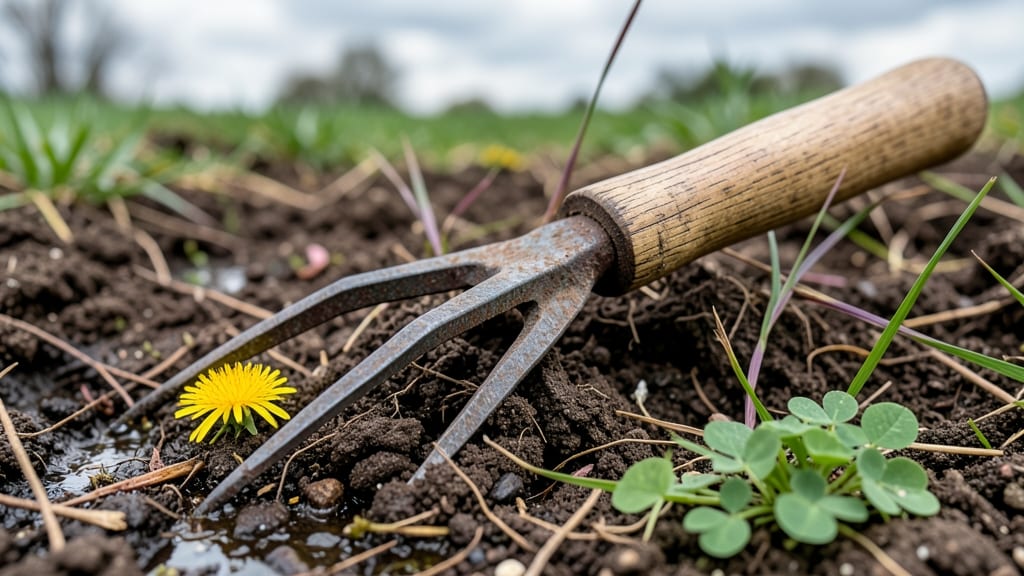
A three-pronged gardening tool efficiently removes weeds and aerates soil by inserting the prongs deep into the ground, then twisting or pulling to extract roots and loosen compacted earth. Use it for weeding, soil prep, and seedbed cultivation in gardens and lawns.
A three-pronged weeder stands out because its design targets the root system rather than just slicing weeds at the surface. The prongs—typically spaced 1-2 inches apart—create leverage to pull weeds from their base, preventing regrowth.
This tool also breaks up compacted soil layers, improving drainage and root penetration for new plants. I've found it especially effective in areas with thick mulch or dense grass, where hand tools struggle to reach deep enough. 🌱
For best results, angle the prongs slightly and insert them 1-2 inches deep before twisting to loosen the soil. The key is patience—rushing can snap weeds at the surface instead of removing the entire root.
I recommend using this tool in dry conditions for easier extraction, and always clean the prongs afterward to prevent rust or debris buildup.
💡 In This Article
- How Three-Pronged Weeders Work: Mechanics and Soil Benefits
- 5 Pro Techniques for Using a Three-Pronged Weeder
How three-pronged weeders work: mechanics and soil benefits
The three-pronged weeder's effectiveness comes from its ergonomic design, where the prongs (typically 3-4 inches long) are spaced 1-2 inches apart. This spacing creates a triangular leverage system that targets weed roots at their base rather than just slicing the foliage.
When you press down, the prongs penetrate the soil and wedge between the weed's root and surrounding earth, allowing you to twist or pull the entire plant out in one motion.
Unlike hoes that chop weeds at the surface, this tool mimics the action of a small cultivator but with precision for individual weeds.
The material matters too—most high-quality models feature hardened steel prongs that resist bending, while the handle is often made from durable rubber or wood for grip. The prongs' slight taper helps them slide between soil particles, reducing resistance.
This design also makes it easier to work in compacted soil, where traditional tools would struggle. For example, in a clay-heavy garden bed, the prongs can break up 1-2 inch deep layers of compacted earth with just a few twists, improving aeration and water penetration for plant roots. 🌿
What sets this tool apart is its dual functionality: weeding and soil aeration. When used for soil prep, the prongs create small channels that enhance drainage and encourage beneficial microorganisms to thrive.
Studies show that aerating soil just 1-2 inches deep can increase root growth by up to 30% in compacted areas. The twisting motion also disrupts weed seed dormancy in the topsoil, reducing future weed pressure.
Unlike a fork or hoe, the three-pronged weeder's focused leverage means you can target specific weeds without disturbing surrounding plants.
For deep-seated weeds like dandelions or bindweed, this tool outperforms hand-pulling because it reaches roots that can extend 12-18 inches deep. The prongs' rigidity allows you to apply consistent pressure, while the handle's length provides leverage to extract stubborn roots without straining your back.
In my experience, this tool is particularly effective in mulched beds, where weeds often take hold beneath the organic layer. The prongs slip under mulch easily, lifting weeds and loosening soil simultaneously.
One often overlooked benefit is how the tool's design prevents soil compaction from foot traffic. When you step on garden beds, your weight can compress the top 1-2 inches of soil, reducing oxygen availability to roots.
The aerating action of the three-pronged weeder counteracts this by creating tiny air pockets. This is especially valuable in high-traffic areas like vegetable gardens or around raised beds, where compaction is a common issue. 💫
Consider the soil type when choosing your technique. In sandy soil, the prongs will glide through easily, requiring less force to extract weeds. In loamy or clay soil, you'll need to apply more pressure to break up the soil's natural adhesion to weed roots.
The key is to match your grip and insertion depth to the soil's resistance—this ensures you're removing the entire root system without unnecessary effort.
For advanced gardeners, upgrading to a tool with adjustable prong spacing can make a noticeable difference. Wider spacing (2-3 inches) works better for large weeds or soil aeration, while narrower spacing (1 inch) is ideal for precision weeding in tight spaces.
The right choice depends on your specific gardening challenges and the types of weeds you're tackling. 🌱