
Picking
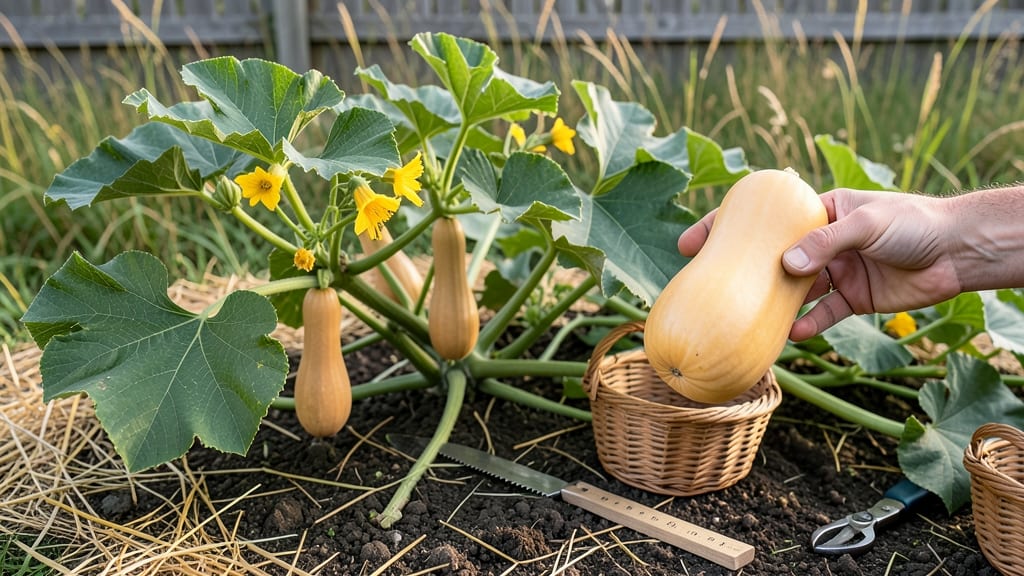
You’ve nurtured your plants all season, and now the moment of truth arrives: when to pull that squash from the vine. Miss the window, and you’ll end up with either a tough, underripe fruit or one that’s overripe and past its prime.
The key is knowing the three unmistakable signs that your butternut squash is ready for harvest.
First, look for a hard rind that can’t be dented with your thumbnail—a sure sign the sugars have fully developed. Next, check the stem: it should dry up and shrink near the fruit, signaling maturity.
Finally, the color shifts from green to a rich tan or orange, and the fruit feels heavy for its size.
In this guide, I’ll walk you through these visual cues, how long butternut squash takes to mature, and what happens if you pick too early or too late. By the end, you’ll know exactly when to harvest for the best flavor and longest storage life.
3 Visual cues to identify perfectly ripe butternut squash
Butternut squash is a garden favorite, but knowing when to pick butternut squash can be tricky if you're not looking for the right signs. Unlike some squash varieties, butternut squash doesn’t soften as it ripens—instead, it develops a hard, glossy skin and a few other telltale clues.
Miss these visual cues, and you might end up with squash that’s either too soft or too woody. Let’s break down the three key indicators that your butternut squash is ready for harvest.
First, pay attention to the color transformation of the squash. When ripe, butternut squash transitions from a pale green or yellow to a rich, golden-orange hue. This color change signals that the sugars have fully developed, giving your squash that sweet, nutty flavor we all love.
However, don’t rely solely on color—some squash can look ripe but still be underdeveloped.
Next, examine the stem and skin condition. A perfectly ripe butternut squash will have a stem that’s dried out and shriveled near where it attaches to the fruit. The skin should also feel thick and tough, almost impossible to puncture with your thumbnail.
If you can easily dent the skin, your squash needs more time on the vine.
Finally, consider the weight and size of the fruit. A ripe butternut squash feels surprisingly heavy for its size, almost as if it’s packed with dense, flavorful flesh. If the squash is still growing rapidly or feels lightweight, it’s not ready yet.
These three visual cues combined will help you avoid the common mistake of harvesting too early or too late.
🌱 3 Key Visual Cues for Harvest-Ready Butternut Squash
- 1. Color Change: Skin shifts from pale green/yellow to golden-orange. This indicates full sugar development and peak flavor. 🎃
- 2. Stem Shrivel: The stem near the fruit dries and shrinks. A green, flexible stem means the squash isn’t ready yet. ✂️
- 3. Skin Hardness: The rind should be thick and unyielding—you shouldn’t be able to dent it with your thumbnail. If it gives slightly, wait a few more days. 💪
Pro Tip: Check these cues in the morning when the skin is cool and firm. Avoid harvesting after rain, as excess moisture can make the skin appear softer than it is. ☀️
One common mistake gardeners make is waiting until the squash looks overripe. While butternut squash can handle a little extra time on the vine, leaving it too long can lead to woody texture and shriveled seeds.
If you notice the skin developing rough spots or the stem detaching on its own, it’s a sign the squash has overstayed its welcome. Harvest it immediately to preserve its quality.
Another tip is to gently tap the squash while it’s still on the vine. A ripe butternut squash will produce a deep, hollow sound, similar to knocking on a wooden door.
This sound indicates that the seeds inside are fully developed, which is another sign of ripeness. If the sound is dull or muffled, the squash needs more time.
If you’re growing butternut squash in a region with early frosts, don’t wait for perfect ripeness. Harvest before the first frost, even if the squash isn’t fully colored or hard.
You can finish ripening it indoors by placing it in a warm, dry spot for a week or two. This is especially useful if you’re aiming for a long-term storage solution.
Once you’ve confirmed your butternut squash is ripe, use a sharp knife or pruning shears to cut the stem about an inch above the fruit. Leave a small portion of the stem attached to help the squash cure and store longer.
After harvesting, let the squash cure in a dry, shady place for about 10 days. This curing process thickens the skin and concentrates the sugars, ensuring the best flavor and storage life.
Remember, the goal is to harvest your butternut squash when it’s at its peak flavor and texture. By paying attention to these three visual cues—color, stem condition, and skin hardness—you’ll avoid the disappointment of a subpar harvest.
With practice, you’ll become a pro at spotting the perfect moment to pick your butternut squash, ensuring a bountiful and delicious yield every season. 🌿
How long butternut squash takes to mature: timeline and growth stages
Butternut squash is a patient gardener's reward, taking 80 to 100 days from planting to harvest under ideal conditions. This warm-season crop thrives when planted after the last frost, typically in late spring, and requires consistent warmth to develop properly.
Understanding its growth stages helps you anticipate when to expect those tan, velvety-skinned gems ready for picking.
Your butternut squash journey begins with seed germination, which usually occurs within 7 to 14 days after planting, depending on soil temperatures. Once sprouted, the vines spread rapidly, reaching their 1-3 foot mature height by week 6.
During this time, focus on providing consistent moisture and full sun exposure to encourage strong vine development.
Here's a detailed breakdown of the growth timeline to help you track progress:
| Stage | Timeframe | Key Actions | Environmental Needs |
|---|---|---|---|
| Germination | 7-14 days | Keep soil warm (70°F+), maintain moisture | Warm soil, 6+ hours sun |
| Seedling | Weeks 2-4 | Thin seedlings to 2-3 ft apart, fertilize lightly | 65-75°F soil temps |
| Vine Establishment | Weeks 4-6 | Support vines, monitor pests, water deeply | Full sun, consistent water |
| Flowering | Weeks 6-8 | Hand-pollinate if needed, reduce water slightly | 75-85°F daytime temps |
| Fruiting | Weeks 8-12 | Check for ripeness weekly, reduce fertilizer | Warm nights, no frost risk |
| Harvest Ready | Days 80-100 | Pick when skin is hard, stem dried | Cool nights, before frost |
Environmental factors play a crucial role in your squash's development. Daytime temperatures between 75-85°F and warm nights (above 60°F) create ideal growing conditions. If temperatures drop below 50°F during flowering, pollination may fail, leading to poor fruit set.
Additionally, consistent moisture is vital—drought stress can cause bitter flavors or cracked squash.
Pay close attention to the last frost date in your area. Butternut squash cannot tolerate frost, so plan to harvest before October 30 in most zones. If frost threatens before your squash is ready, consider using row covers to extend the growing season by 2-3 weeks.
This gives you more time to achieve that perfect tan-orange skin and hard rind that signals harvest readiness.
Remember, the 80-100 day timeline assumes ideal conditions. Cooler climates or shorter growing seasons may require starting seeds indoors 3-4 weeks before the last frost or choosing faster-maturing varieties like 'Waltham Butternut', which matures in 85 days.
With proper planning, you'll enjoy homegrown butternut squash that's sweeter and more flavorful than store-bought.