
How To
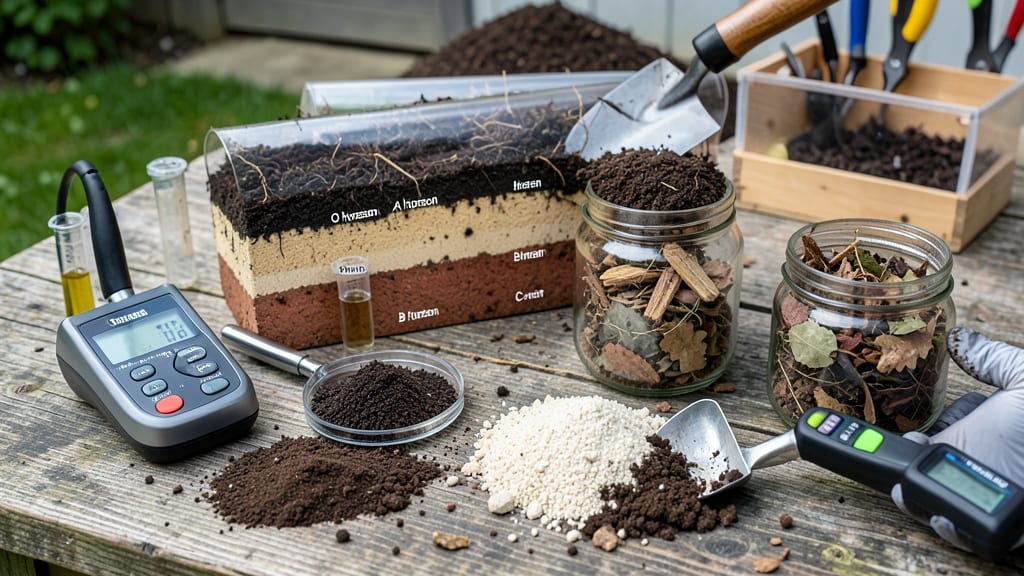
Soil science for gardeners means mastering how soil composition, structure, and nutrient cycles work together to create the perfect growing environment for plants, focusing on organic matter, pH balance, and proper drainage to ensure strong roots and maximum yield.
Understanding soil science isn't just about dirt—it's the foundation of every healthy garden. 🌱 The right mix of minerals, organic material, and microbial activity determines how well your plants absorb water and nutrients. For instance, sandy soil drains quickly but lacks nutrients, while clay holds moisture but can suffocate roots.
Testing your soil's pH and nutrient levels helps you make smart adjustments, like adding compost for organic matter or lime to adjust acidity. This knowledge turns guesswork into science-backed success for your garden.
Most gardeners overlook the role of soil microbes, which break down organic matter and make nutrients available to plants. A thriving soil ecosystem reduces the need for chemical fertilizers while improving plant resilience.
I always recommend starting with a simple soil test kit to identify your garden's specific needs—this is where the real magic happens for long-term growth.
💡 In This Article
- Key Soil Components Affecting Plant Growth
- Testing and Amending Garden Soil for Success
Key soil components affecting plant growth
Soil isn't just dirt—it's a complex ecosystem where three primary components—minerals, organic matter, and pore space—work together to support plant life. The mineral portion, made up of sand, silt, and clay particles, determines soil texture.
Sand (0.05-2mm) drains water quickly but holds few nutrients, while clay (<0.002mm) retains moisture and nutrients but can compact easily. Silt (0.002-0.05mm) offers a middle ground, balancing drainage and nutrient availability.
The ideal garden soil often contains about 40% sand, 40% silt, and 20% clay—this loamy texture provides both aeration and water retention.
Organic matter, like decomposed plant material and compost, acts as a glue that binds soil particles while providing essential nutrients. It improves soil structure by increasing pore space for roots and microbes, which is why adding 3-5% organic matter annually can transform poor soil into a thriving garden bed.
For example, compost adds carbon-rich material that feeds beneficial microbes, which in turn break down nutrients into forms plants can absorb. Without sufficient organic matter, soil becomes compacted and nutrient-poor, stunting root growth and reducing yields.
Microbial life in soil—including bacteria, fungi, and earthworms—plays a critical role in nutrient cycling. These tiny organisms decompose organic matter, releasing nitrogen, phosphorus, and potassium that plants need to grow. A single teaspoon of healthy soil can contain billions of microbes!
Earthworms, for instance, aerate soil by tunneling, which improves water infiltration and root penetration. When soil lacks microbial activity, plants struggle to access nutrients even if they're present, leading to deficiencies like yellowing leaves (chlorosis) or stunted growth.
Water retention and drainage depend heavily on soil structure. Sandy soils drain so quickly that plants may dry out between waterings, while clay soils can become waterlogged, cutting off oxygen to roots.
The key is achieving a balance where water moves through soil at about 0.5-1 inch per hour, allowing roots to access moisture while preventing suffocation. Amending heavy clay with compost or gypsum can improve drainage, while adding organic matter to sandy soil helps it hold moisture longer.
Consider this real-world example: Tomatoes thrive in well-draining soil with a pH between 6.0-6.8. In a clay-heavy garden, adding 2-3 inches of compost annually can create pockets of loamy soil where roots can spread.
Meanwhile, in sandy soil, incorporating 1-2 inches of peat moss or coconut coir helps retain moisture and nutrients. The right soil composition isn't just about what's in the ground—it's about creating an environment where roots can access air, water, and nutrients simultaneously.
One common mistake gardeners make is assuming all soil is the same. For instance, a vegetable garden in loamy soil might require minimal amendments, while a flower bed in sandy soil could need regular compost additions.
Testing your soil's texture by rubbing it between fingers—smooth and silty feels like flour, gritty is sandy, and sticky is clay—gives you a quick starting point for adjustments. Understanding these components lets you tailor your garden's soil to the specific needs of your plants.