
How To
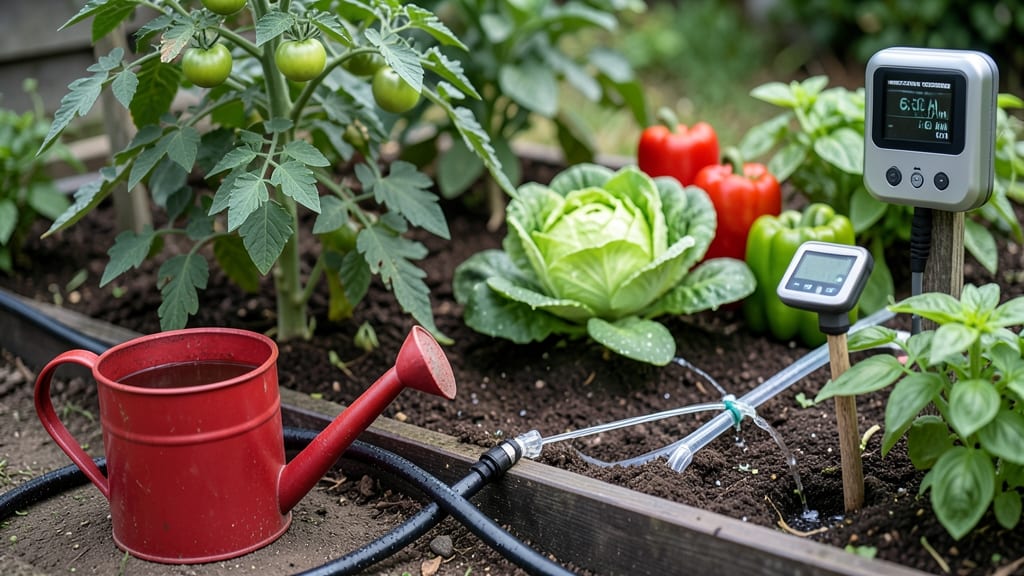
Watering your vegetable garden the right length of time—whether it’s 10 minutes or 30 minutes—makes the difference between thriving plants and wasted effort.
Overwatering or underwatering your 🥬 vegetable garden can stifle growth—or worse, kill your plants—yet most gardeners struggle to find the perfect balance. The key lies in understanding soil depth, plant types, and environmental factors to determine the ideal watering duration.
For example, a sandy soil drains quickly, so 5-10 minutes of watering may suffice, while clay soil holds moisture longer, requiring 20-30 minutes to soak deeply. Seedlings need gentle, frequent hydration, while mature crops like tomatoes thrive with deep, infrequent watering to encourage strong roots.
In this guide, I’ll break down how to adjust watering time based on your soil, climate, and plant stage—plus smart tips to save water and keep your garden lush all season long.
Optimal watering duration by soil type and plant stage
Determining how long to water your vegetable garden isn't about guesswork—it's about science. Your soil type and plant stage dictate how long you should run your hose or irrigation system.
For example, sandy soil drains quickly, requiring 5-10 minutes per session, while clay soil holds moisture longer, needing 20-30 minutes. Even the same plant (like tomatoes) needs different watering durations as it matures from seedling to fruit-bearing stage.
Climate plays a huge role too. In arid regions, you might need 30-minute watering sessions every other day, while humid climates often require shorter, more frequent sessions (like 10-15 minutes daily).
The goal? Deep-soil hydration—not just wetting the surface. Shallow watering encourages weak roots and fungal diseases, while deep watering strengthens plants and conserves water.
Here’s the game-changer: most gardeners water for too short a duration because they focus on frequency instead of depth. A 15-minute session might feel sufficient, but if your soil is clay-heavy, that water barely reaches the root zone (2-4 inches deep).
The solution? Use a deep-soil moisture checklist to adjust your watering clock based on real-time conditions.
Let’s break down the science behind these durations. Sandy soil drains water like a sieve, so shorter sessions prevent runoff. Meanwhile, clay soil acts like a sponge, holding water for days—overwatering here leads to root rot.
For seedlings, shorter durations (like 5-12 minutes) prevent stem collapse, while mature plants with deeper roots can handle longer sessions (up to 30 minutes) to encourage robust growth.
Your climate zone also shifts the scale. In arid regions, plants lose moisture faster due to high evaporation, so you’ll need longer sessions but less frequent watering.
Conversely, humid climates slow evaporation, but excess moisture lingers, increasing disease risk. The trick? Morning watering (before 10 AM) maximizes absorption and minimizes waste, regardless of your zone.
Don’t forget about plant-specific needs. Leafy greens like lettuce prefer shorter, frequent watering (10-15 minutes daily), while tomatoes and peppers thrive with deeper, less frequent sessions (20-30 minutes every other day).
Always adjust based on visual cues: wilting leaves or soil crusting mean you’re underwatering, while yellowing leaves or mushy stems signal overwatering.
For a deep-soil moisture checklist, start by inserting a screwdriver or trowel 2-4 inches
The 3-Step deep-soil checklist to determine watering needs
Most gardeners water based on guesswork, but your vegetable garden thrives when you check the root zone—not just the surface. A deep-soil moisture test reveals whether your plants are getting enough water to grow strong roots.
Skip this step, and you risk overwatering (which causes rot) or underwatering (which stresses plants).
I’ve used this 3-step method for years, and it’s saved my tomatoes and peppers from wilting during heatwaves. The key is testing 2-4 inches deep, where most vegetable roots live. Ready to master it? Let’s dive in.
-
Step 1: Finger Test (Surface Check)
Stick your index finger 1-2 inches into the soil. If it feels dry, water immediately. If damp, wait 1-2 days before checking again. -
Step 2: Trowel Check (Deep Test)
Use a small trowel to dig a 3-inch hole. If the soil clumps easily, it’s moist enough. If it crumbles or feels bone-dry, water for 15-20 minutes per plant. -
Step 3: Weight Analysis (Soil Health)
Pick up a handful of soil. If it’s light and fluffy, it’s underwatered. If it’s heavy and compacted, it’s overwatered. Adjust your watering schedule based on this feel.
Adjust your watering duration based on what you find. For example, if your lettuce leaves are wilting but the soil feels moist at 2 inches, the roots might be too shallow.
Water for 10-15 minutes to encourage deeper growth. Conversely, if the soil is soggy and your cucumbers have yellowing leaves, cut back to 5-10 minutes every other day.
Watch for plant-specific signals too. Tomato leaves curling at the edges? That’s often a sign of underwatering or overwatering. Check the soil first—if it’s dry, water deeply.
If it’s muddy, let it dry out before watering again. Peppers, on the other hand, droop when thirsty but recover quickly with a 15-minute soak.
Pro tip: Keep a watering journal to track how long you water each day. Note the soil type (sandy, clay, loamy), plant type, and weather conditions.
Over time, you’ll spot patterns—like needing 20 minutes on hot days but only 10 minutes on cooler mornings. This saves water and keeps your garden thriving.
Remember, deep watering is always better than frequent light watering. Aim to moisten the root zone thoroughly, not just the top inch. Your vegetable garden will thank you with healthier plants and bigger harvests. Happy digging! 🌱