
Companion Plants
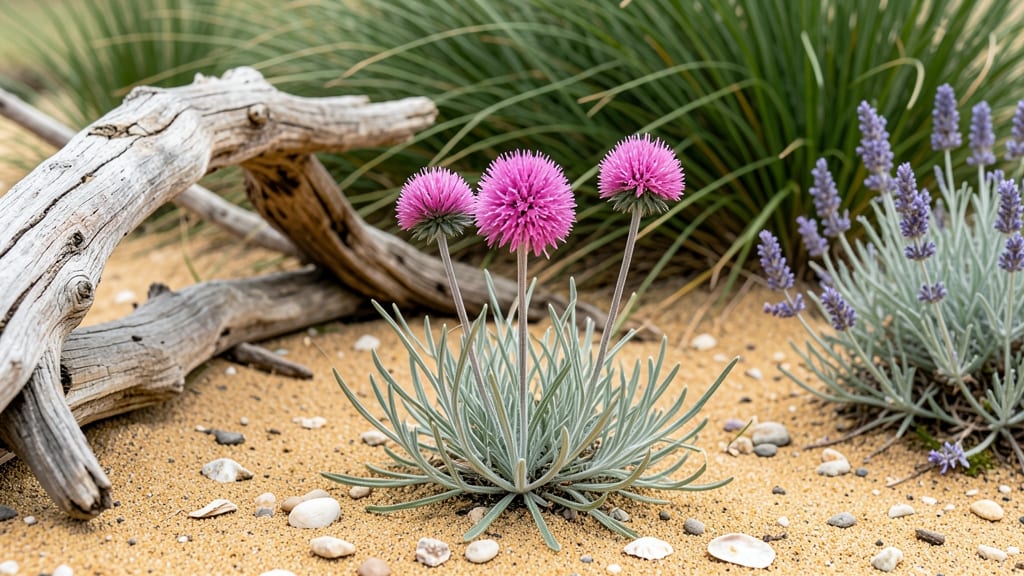
For seaside gardens, salt-tolerant plants like sea oats, beach roses, and saltmarsh cordgrass thrive in windy, salty conditions while adding coastal charm. Drought-resistant varieties such as muhly grass and beach heather also perform exceptionally well.
Creating a beautiful seaside garden starts with choosing plants that can handle harsh coastal conditions. 🌊 These hardy varieties not only survive salt spray and sandy soil but also enhance the natural beauty of shoreline landscapes.
For instance, sea oats provide excellent erosion control while their feathery plumes add texture, while beach roses offer vibrant blooms that attract pollinators.
The key to their success lies in their specialized adaptations—many can filter out salt through their roots or store it in non-essential tissues, allowing them to focus energy on growth rather than survival.
When planning your seaside garden, consider the specific challenges of your location. Wind exposure often requires low-growing plants near the shore, while drought conditions call for native species with deep root systems.
I recommend starting with a mix of ground covers like creeping thyme and shrubs such as wax myrtle, which provide both visual interest and functional benefits. These plants not only beautify your space but also create a resilient ecosystem that can withstand the unique pressures of coastal living.
💡 In This Article
- How Salt-Tolerant Plants Survive Coastal Conditions
- Best Salt-Resistant Plants by Garden Zone and Use
How salt-tolerant plants survive coastal conditions
Salt-tolerant plants have evolved remarkable physiological adaptations to thrive where most would perish. One key mechanism is salt exclusion, where species like sea lavender (Limonium spp.) actively pump excess salt out through specialized glands in their leaves.
This process, called salt excretion, prevents toxic buildup in their cells. For example, sea lavender can process up to 10% salt concentration in its environment without damage, while most garden plants wilt at just 0.5%. 🌊
Their root systems play a crucial role too. Plants like saltmarsh cordgrass (Spartina alterniflora) develop extensive, fibrous roots that spread horizontally to stabilize sandy soil while anchoring deep. These roots also create microhabitats that filter saltwater before it reaches the plant's core tissues.
Interestingly, some species like dune grass (Ammophila arenaria) grow 12-18 inches per year to outpace rising sand levels, burying themselves naturally. This adaptation explains why dunes often appear "alive" with plants constantly reshaping the landscape.
Water management is another critical factor. Coastal plants use osmotic regulation to maintain proper hydration despite salty conditions. For instance, beach morning glory (Ipomoea pes-caprae) stores water in its thick, succulent leaves while excluding salt through its roots.
This allows it to survive 90% humidity fluctuations between tides. The trade-off? Many of these plants grow slowly—sea oats take 3-5 years to reach maturity—because they prioritize survival over rapid growth in such harsh conditions.
Native species often outperform non-natives because they've co-evolved with local conditions. Take wax myrtle (Morella cerifera) versus boxwood: the former thrives in 10,000+ parts per million (ppm) salt (equivalent to seawater), while boxwood shows leaf burn at just 2,000 ppm.
The difference lies in their cellular membranes, which native species modify to remain fluid in salty environments. This biological flexibility explains why coastal plant nurseries often charge 20-30% more for native stock—you're paying for proven resilience.
One surprising adaptation is how these plants handle wind. Flexible stems and low centers of gravity prevent uprooting, while some species like beach heather (Erica cinerea) grow in dense mats that reduce wind speed at ground level by 40%.
This creates microclimates where other plants can establish. The result? A self-sustaining ecosystem where each species plays a role in protecting the next. 🌿
For gardeners, understanding these mechanisms means avoiding common mistakes. For example, overwatering dilutes soil salinity, which can actually harm salt-tolerant plants by disrupting their osmotic balance. Instead, let nature guide you: observe how native plants grow in wild dunes and mimic those conditions.
The payoff? A garden that not only survives but thrives with minimal intervention, year after year.