
Watering
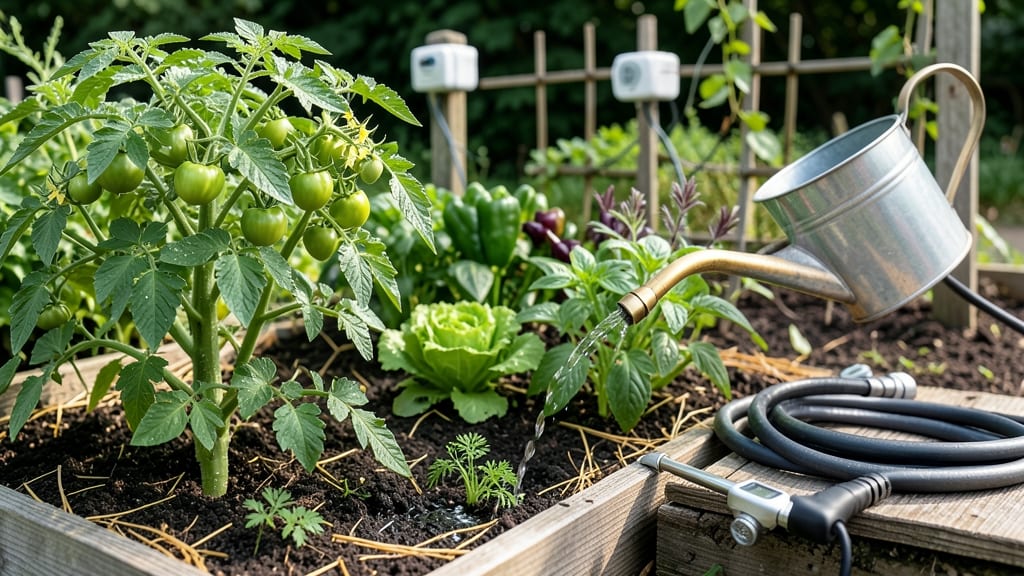
You should water your veggie garden 🥬 deeply 1-2 times per week, but the exact schedule depends on soil, plant type, and weather—because what works for leafy greens can drown root crops.
Overwatering or underwatering your vegetable garden can mean the difference between a bountiful harvest and wilted disappointment—yet most gardeners get it wrong because they don’t account for plant type, soil conditions, or climate.
Leafy greens like lettuce need frequent, shallow watering to stay crisp, while tomatoes and peppers thrive with deep soaks that encourage strong roots. In Zone 6a, spring showers might cut your watering in half, while summer heat can demand daily checks.
Below, I break down the science-backed schedule by plant type, plus how to adjust for drought, clay soil, and seasonal shifts—so you never guess again.
Watering frequency by plant type: a soil-tested schedule
Not all vegetables thirst the same way—leafy greens like spinach need frequent sips, while root vegetables such as carrots prefer deep hydration less often. Understanding these differences prevents wilting or rot and maximizes your harvest.
The key lies in soil moisture levels, plant maturity, and even the time of day you water. Let’s break down the science-backed schedule for your veggie patch.
Start by testing your soil’s moisture retention. Stick your finger 1-2 inches deep—if it feels dry, it’s time to water. For container gardens, check daily since pots dry out faster. In-ground plants typically need water every 2-3 days in summer, but this varies wildly by plant type.
Herbs like basil and cilantro wilt quickly, signaling they need water, while tomatoes and peppers benefit from consistent moisture to prevent blossom-end rot.
For leafy greens, shallow but frequent watering keeps them crisp. Aim for 1 inch of water per week, splitting it into daily or every-other-day sessions. Overhead watering works, but drip irrigation keeps foliage dry, reducing fungal diseases like powdery mildew.
Test soil moisture by squeezing a handful—if it crumbles easily, hold off on watering.
Root vegetables like carrots and beets need deep, infrequent watering to encourage straight growth. Water every 3-4 days in summer, ensuring moisture reaches 6-8 inches deep. Dry spells can cause forked roots, so mulch heavily to retain moisture. Avoid wetting the leaves, as this can lead to rot.
Fruiting plants such as tomatoes and peppers are the most demanding. They require 1-2 inches of water weekly, delivered deeply to the roots. Morning watering is ideal—it reduces evaporation and prevents blossom-end rot, a common issue when soil moisture fluctuates wildly. Use a moisture meter for accuracy, especially in container gardens.
Herbs like basil and cilantro are finicky—they wilt fast but recover quickly if soil stays moist. Water every 1-2 days in containers, as they dry out faster.
For ground-planted herbs, 2-3 days is usually sufficient. Avoid soggy soil, which causes root rot. A light mulch layer helps maintain even moisture without suffocating the plants.
Adjust your watering based on weather patterns. During heatwaves, increase frequency to daily watering for fruiting plants, while fall and spring may only require weekly checks. Always water early in the morning to minimize evaporation and fungal risks.
Overwatering is just as harmful as underwatering—yellowing leaves or mushy stems are red flags to cut back.
Pro tip: Group plants with similar water needs together. This makes your routine more efficient and reduces stress on your veggies. For example, pair basil with lettuce and tomatoes with peppers. With this schedule, you’ll avoid the guesswork and enjoy a thriving, productive garden all season long.
How to adjust watering for climate, soil, and seasonal changes
Your vegetable garden’s watering needs aren’t static—they shift with seasonal temperatures, soil composition, and even local rainfall patterns. What works for sandy soil in Arizona won’t cut it for heavy clay in Michigan.
The key is flexibility: adjusting your routine based on real-time conditions rather than sticking to a rigid schedule. Start by checking your soil moisture 2 inches below the surface—this is where roots actively seek hydration.
Climate plays a huge role. In drought-prone areas, deep watering every 3-4 days with mulch retention can save your plants, while humid regions may need morning watering only to prevent fungal diseases.
Even within seasons, young seedlings need frequent, light watering, whereas mature tomatoes thrive with deep, infrequent soaks. Let’s break down how to fine-tune your approach.
💡 Adjust Your Watering Routine Based On:
- 1. Soil Type: Sandy soil drains fast—water daily in heat; clay holds moisture—water every 3-4 days.
- 2. Season: Summer = deep watering every 2 days; Spring/Fall = every 4-5 days.
- 3. Rainfall: Skip watering if 1 inch of rain falls in 24 hours; adjust for droughts.
- 4. Plant Maturity: Seedlings = light daily water; Mature plants = deep weekly soaks.
- 5. Mulch: 2-3 inches of mulch reduces evaporation by 30-50%—cut watering by 20%.
Heavy clay soil is notorious for waterlogging or drought stress. If your garden sits in clay, improve drainage by amending with compost or sand and watering less frequently but deeply.
Test your soil’s moisture by squeezing a handful—if it forms a tight ball, it’s too wet; if it crumbles, it’s dry. For sandy soil, water more often but shallower to prevent runoff, and always water at the base of plants to avoid evaporation.
Seasonal shifts demand proactive adjustments. In extreme heat (above 90°F), increase watering to every other day and water early morning or late evening to minimize evaporation. During spring rains, reduce watering by 30-50% and monitor for puddling or fungal spots on leaves.
Fall brings cooler temps—taper off watering to once a week and focus on root development rather than leaf growth.
Mulch isn’t just decorative—it’s a water-saving powerhouse. Apply 2-3 inches of organic mulch (straw, wood chips) around plants to retain moisture and regulate soil temperature. This can reduce your watering needs by 20-40%, especially in hot, dry climates.
Just avoid piling mulch against plant stems to prevent rot. Pair mulch with drip irrigation for precision, delivering water directly to roots where it’s needed most.
Troubleshooting watering issues starts with observation. Yellowing leaves often signal overwatering or nutrient deficiency, while crispy edges point to underwatering or high salt buildup. Fungal growth (like powdery mildew) thrives in wet foliage, so always water at the soil level and avoid evening watering.
Keep a watering journal to track adjustments—note when you water, how much, and how your plants respond. Over time, you’ll spot patterns and refine your routine for peak efficiency. 🌱