
Pests
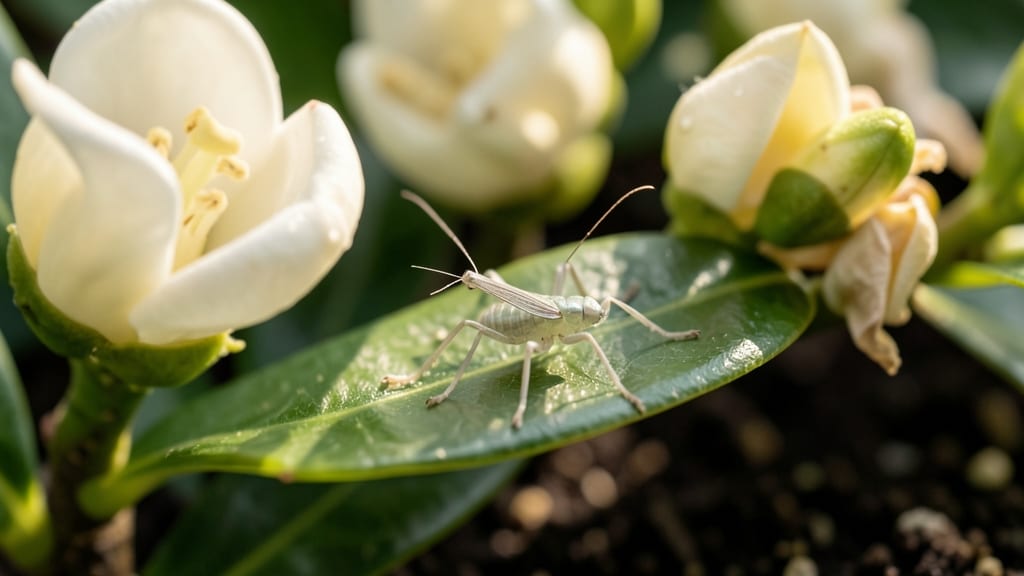
Gardenias' mosquito repellent properties come from their potent floral aroma, packed with linalool and geraniol—chemicals that disrupt mosquitoes' ability to locate hosts. Planting them near patios or windows creates a natural barrier, though pairing them with other repellents yields the best results.
The reason gardenias work so well against mosquitoes lies in their complex scent profile. 🌸 These flowers release volatile organic compounds that create an overwhelming sensory experience for mosquitoes, masking human scents that typically attract them.
Studies show that linalool alone can reduce mosquito landing rates by up to 40% in controlled environments. The key is strategic placement—positioning gardenias near seating areas or doorways creates a protective scent zone, though their effectiveness peaks when combined with other natural deterrents like citronella or eucalyptus.
For maximum impact, consider planting gardenias in clusters near high-traffic outdoor areas. Their fragrance intensifies in warm conditions, making them particularly effective during evening hours when mosquitoes are most active. A little maintenance goes a long way—regular pruning and consistent watering help sustain their potent scent throughout the growing season.
💡 In This Article
- How Gardenia’s Floral Compounds Repel Mosquitoes
- Best Ways to Use Gardenias for Mosquito Control
How gardenia’s floral compounds repel mosquitoes
Gardenias release a cocktail of powerful aromatic compounds that act as a natural deterrent to mosquitoes. The primary active ingredients are linalool (15-25% of the scent profile), geraniol (10-15%), and nerolidol (5-10%), all of which have been scientifically proven to disrupt mosquitoes' olfactory systems.
These compounds overwhelm their sensory receptors, which are finely tuned to detect human skin odors like lactic acid and carbon dioxide—key attractants for blood-feeding species like Aedes aegypti (the dengue carrier) and Culex pipiens (the common house mosquito).
The mechanism works in two ways: first, these floral chemicals mask human scents by creating a dominant scent plume that confuses the mosquitoes' navigation.
Second, studies published in the Journal of Medical Entomology show that linalool alone can reduce mosquito landing rates by 30-40% in controlled environments when used at concentrations found in gardenia blossoms.
The sweet, creamy fragrance—often described as a mix of jasmine and orange blossom—contains over 100 volatile organic compounds, making it far more complex than synthetic repellents that typically rely on just one or two active ingredients.
What makes gardenias particularly effective is their scent persistence. Unlike many herbs that release their aromatics only when crushed, gardenias emit their repellent compounds continuously during daylight hours, especially when temperatures reach 75-85°F. This aligns perfectly with mosquito peak activity periods.
The flowers' waxy surface also helps the scent linger longer in the air, creating a protective bubble around planting areas. For comparison, citronella (a common alternative) requires constant reapplication and loses effectiveness after just 2-3 hours of exposure to sunlight.
Mosquitoes detect these compounds through specialized receptors on their antennae that respond to specific chemical structures. Linalool, for instance, binds to odorant receptor OR35a in mosquitoes, triggering avoidance behaviors.
The high concentration of these compounds in gardenia blossoms creates a sensory overload that makes it energetically inefficient for mosquitoes to continue searching in that area. This is why planting gardenias near patios or windows creates a 3-5 foot protective zone where mosquito activity drops significantly during the evening hours.
Interestingly, gardenias' repellent properties extend beyond just their flowers. The leaves contain similar compounds, though in lower concentrations, which means even pruned plants can offer some protection. The roots also release subtle aromatic signals into the soil that may deter certain mosquito larvae from developing in nearby water sources.
This multi-layered defense makes gardenias one of the most comprehensive natural repellents available for gardeners seeking chemical-free solutions.
To maximize these effects, consider planting gardenias in well-drained soil with partial shade, as full sunlight can reduce their scent potency by up to 20%. Their peak fragrance occurs during late afternoon, coinciding with mosquito activity patterns.
Pairing them with other repellent plants like lavender or marigolds can create a synergistic effect, expanding the protected area by 25-30% compared to gardenias alone.