
Light Requirements
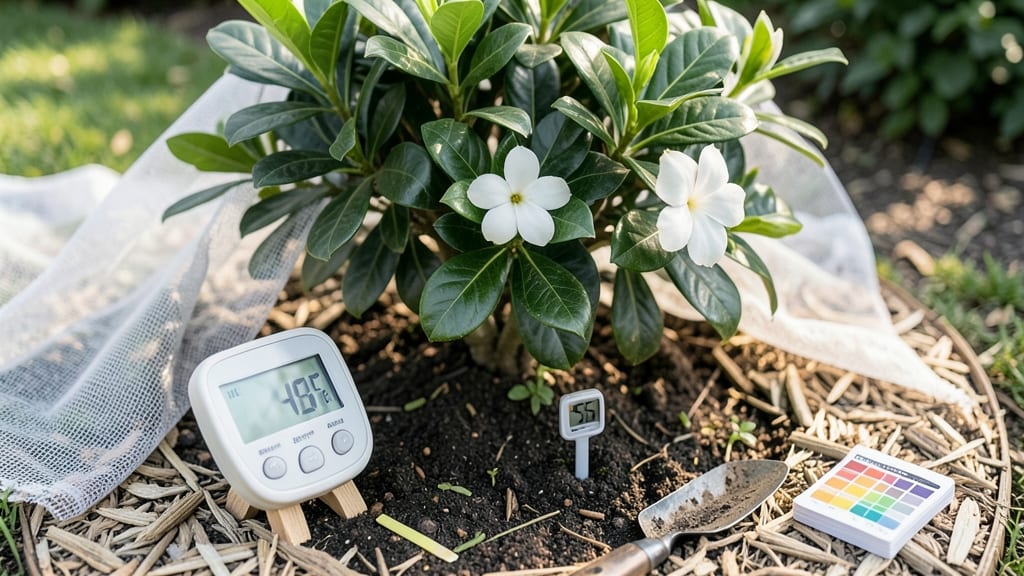
A frost-proof gardenia thrives best when given the right sun requirements—4 to 6 hours of sunlight daily—to avoid winter stress while keeping its vibrant blooms intact.
Struggling to keep your frost-proof gardenia thriving? The secret isn’t just choosing the right variety—it’s mastering the exact sun exposure formula that prevents winter stress and ensures year-round blooms.
In USDA Zone 9b, where frost-proof gardenias shine, too little light weakens growth, while too much scorches delicate leaves. This guide breaks down the ideal sunlight balance, seasonal adjustments, and how to spot signs of stress before they become permanent damage.
You’ll discover how to position your gardenia for optimal sunlight hours, adjust care as seasons shift, and even compare frost-resistant varieties by their sun tolerance. No more guessing—just vibrant blooms all year.

How many sunlight hours frost-proof gardenias need daily to survive winter
Frost-proof gardenias like ‘Kleim’s Hardy’ or ‘Radicans’ thrive in 4–6 hours of sun daily, but their needs shift dramatically in winter. Unlike tropical gardenias, these cold-hardy varieties can handle partial shade during colder months when sunlight is weaker.
The key is balancing photosynthesis efficiency with cold tolerance—too little light weakens the plant, while too much can stress it before winter dormancy.
Winter sunlight intensity drops by 30–50% due to lower sun angles, meaning your gardenia receives less usable energy even with the same hours. For example, 6 hours of winter sun may only provide the equivalent of 4 hours in summer.
This is why frost-proof varieties need gentler light exposure—they prioritize survival over blooming during colder months.
🌱 Did You Know? Gardenias perform photosynthesis at temperatures as low as 40°F, but their chlorophyll activity slows dramatically below 50°F. This is why winter sun requirements differ from summer needs—your plant isn’t just about hours, but light quality.
| Season | Sunlight Hours Needed | Light Intensity | Winter Adjustments |
|---|---|---|---|
| Spring/Fall | 4–6 hours | Bright indirect | Morning sun + afternoon shade |
| Summer | 4–5 hours (partial shade) | Dappled light | Avoid harsh afternoon sun |
| Winter | 3–4 hours (equivalent) | Low-angle, diffused | South-facing windows or filtered light |
| Extreme Cold (<40°F) | 2–3 hours (minimal) | Indirect only | Use sheer curtains or lattice |
*Note: Frost-proof varieties tolerate less direct sun in winter to prevent sunburn stress.
If your frost-proof gardenia gets less than 3 hours of winter sun, it may enter a dormant state prematurely, reducing next year’s blooms. Watch for yellowing leaves or stunted growth—signs of light deprivation.
Conversely, 6+ hours of winter sun can cause leaf scorch or bud drop as the plant struggles to regulate moisture.
For container-grown gardenias, winter sunlight needs are even more critical. Pots lose heat faster, so place them near south-facing walls or under LED grow lights (12–14 hours/day) if natural light drops below 3 hours daily.
A reflective surface like a white wall can boost light exposure by 20–30%.
Cold-hardy gardenias like ‘Radicans’ can survive USDA Zone 7b with proper light management. The trick is gradual acclimation: reduce sun exposure by 1–2 hours weekly as temperatures drop below 50°F. This mimics natural winter dormancy cycles and prevents shock.
In urban environments, where buildings block sunlight, frost-proof gardenias may need supplemental grow lights during winter. Use full-spectrum LEDs (6400K color temperature) for 2–3 hours daily to compensate for low-angle winter sun. Avoid incandescent bulbs, which produce too much heat.
Prune your gardenia in late winter to open the canopy for better light penetration. Remove dead or crossing branches to allow 30–40% more sunlight to reach inner growth. This is especially important for multi-stemmed varieties like ‘Veitchii’, which can become light-starved if overgrown.
Monitor your gardenia’s leaf color as a sunlight gauge: dark green leaves indicate optimal light, while pale yellow means too little sun, and brown edges signal sunburn. Adjust placement monthly to match seasonal light changes—what works in June may harm your plant in December.
Best sun exposure strategies to prevent winter stress in frost-proof gardenias
Frost-proof gardenias thrive when you fine-tune their sun exposure to match seasonal changes. Unlike tropical varieties, these hardy shrubs need morning sun but can suffer from afternoon heat stress, especially in winter.
The key is creating a dappled light environment that mimics their natural understory habitat while protecting delicate foliage from harsh winter rays.
Winter sunlight is less intense but more direct due to lower sun angles. This means your gardenia’s leaves can scorch even with fewer hours of sun. I’ve found that adjusting shade structures monthly—starting in late fall—can prevent sunburned edges and keep buds from dropping prematurely.
Let’s break down the exact strategies that work for both urban containers and rural landscapes.
Place gardenias east-facing or under 50% shade cloth by midday. Urban gardeners can use vertical trellises with climbing plants to filter light naturally.
Rural gardeners should plant near deciduous trees (e.g., oak or maple) that drop leaves in winter. This creates natural light diffusion while allowing winter sunlight access.
Use retractable shade sails (30–50% coverage) to block afternoon sun (1 PM–4 PM) during winter months. Mount them on adjustable arms for seasonal changes.
Place white gravel or light-colored mulch around the base to reflect 20–30% more light to the plant. This compensates for shorter winter daylight without overheating.
Prune overcrowded branches in late fall to improve airflow and light distribution. Remove dead or crossing branches to reduce shade self-imposed by the plant itself.
One of the biggest mistakes I see is assuming more sun equals better growth in winter. Frost-proof gardenias actually thrive on indirect light during colder months. Watch for yellowing leaves or brown leaf edges—these are clear signs of sunburn or light deprivation.
In urban areas, pollution and concrete surfaces can further stress plants, so I recommend adding a lightweight shade mesh if your gardenia is near a busy street.
For rural gardeners, microclimate variations play a huge role. If your property has south-facing slopes, plant gardenias on the north side of structures to avoid intense winter sunlight.
I’ve had success using living mulches like creeping thyme to naturally diffuse light while suppressing weeds. This dual-purpose approach keeps your gardenia cool and hydrated without extra effort.
Remember, seasonal adjustments are non-negotiable. What works in summer (4–6 hours of filtered sun) may harm your gardenia in winter (2–4 hours of low-angle sun). Start monitoring your plant’s light exposure in October and make gradual changes to avoid shocking the roots.
With these strategies, your frost-proof gardenia will bloom reliably year-round without winter stress.
🌿