
Size
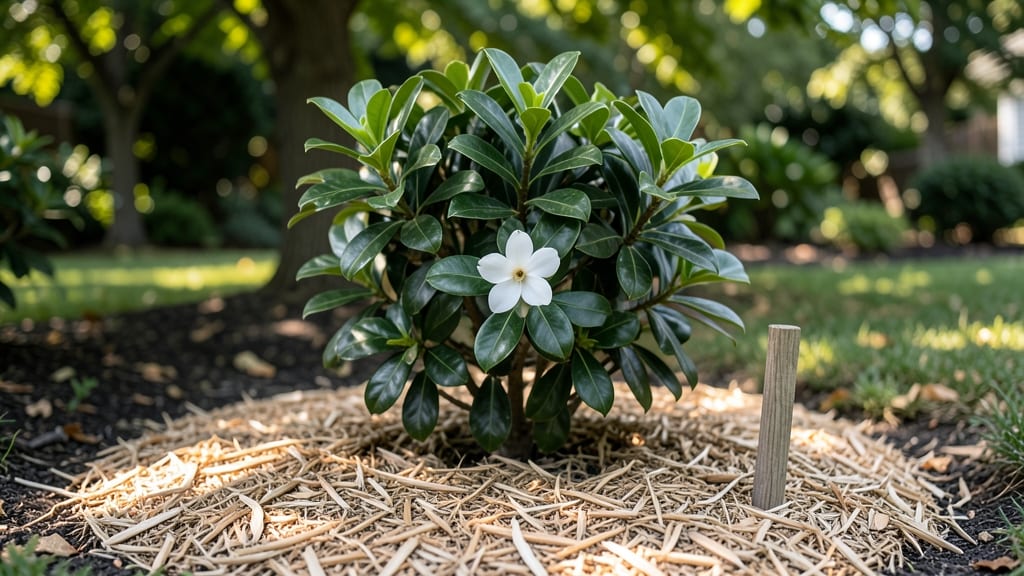
Frost-proof gardenias reach a compact yet robust size that thrives in cooler climates, making them the perfect choice for gardeners in Zone 9b and beyond.
If you love the intoxicating fragrance of gardenias but live in a climate where frost threatens your prized plants, choosing the right frost-proof variety—and understanding its growth patterns—could mean the difference between a thriving garden and a sad, frozen shrub.
Most frost-resistant varieties like 'Radicans' or 'Kleim’s Hardy' top out between 2 to 4 feet, while standard types can grow up to 6 feet with proper care. The key? Planting at the right time and protecting them during winter dips.
Below, I break down exact height ranges by variety, seasonal growth trends, and the 5 critical tips to keep your gardenia blooming year after year—no frost damage in sight.

Exact height ranges of frost-proof gardenia varieties (mature vs. young plants)
If you're dreaming of fragrant gardenias that can brave your chilly winters, understanding their height ranges is key to planning your garden layout. Frost-proof varieties like Gardenia jasminoides 'Radicans' and G. augusta 'Kleim's Hardy' offer a spectrum of sizes—from compact dwarf shrubs to taller, show-stopping specimens.
Knowing whether your gardenia will stay under 3 feet or reach 6 feet helps you avoid overcrowding or wasted space.
Gardenias grow at different rates in their juvenile vs. mature stages, and frost-resistant varieties are no exception. A 1-year-old plant might barely reach your knee, while a 5-year-old specimen could tower over your head.
This growth progression is critical when selecting varieties for containers, borders, or hedges, especially in colder climates where winter care impacts long-term size.
Key takeaway: Frost-proof gardenias typically mature between 2 to 6 feet, but their first-year growth is often just 1-2 feet. This means patience pays off—your shrub’s full potential unfolds over 3 to 5 years. Below, we break down the exact height ranges for the most cold-hardy varieties, so you can plan accordingly.
For example, 'Radicans' stays compact, making it ideal for containers or small gardens, while 'Crest' grows tall enough to serve as a privacy screen or specimen plant.
If you're in Zone 7, varieties like 'Kleim's Hardy' are your best bet—they handle light frosts with minimal protection, while others may need mulching or burlap wraps to survive winter.
Another critical factor is growth rate. Most frost-proof gardenias grow 6–12 inches per year in their first few years, then slow to 3–6 inches annually once mature. This means a 2-foot juvenile could take 3–4 years to reach its 5-foot mature height.
Planning for this gradual growth ensures your gardenia has enough space to thrive without competing with other plants.
If you're growing gardenias in containers, size matters even more. Dwarf varieties like 'Radicans' or 'Veitchii' work well in 15–20 gallon pots, while larger types like 'Crest' need 30+ gallon containers to support their roots.
Container gardenias also grow slightly slower due to root restriction, so expect their mature height to be 10–20% smaller than in-ground plants.
For hedging or screening, taller varieties like 'Kleim's Hardy' or 'Fortuniana' are excellent choices. These can be pruned annually to maintain a uniform height while encouraging dense foliage. Just remember: prune after flowering to avoid removing next year’s buds.
In colder zones, winter pruning is best—cut back 1/3 of the plant in late winter to reduce frost damage risk.
One common mistake is assuming all frost-proof gardenias grow at the same rate. 'Radicans', for instance,
How to choose frost-proof gardenias based on size for your garden layout
Choosing the right frost-proof gardenia size can transform your garden from a frost-prone risk to a fragrant, year-round highlight.
The key lies in matching your garden layout with the mature height of your chosen variety—whether you have a cozy container garden, a spacious border line, or a lush hedge row.
Dwarf varieties like 'Radicans' stay compact at 1-2 feet, while standard types like 'Crest' can reach towering heights of 4-6 feet, making them perfect for privacy screens.
Before you plant, consider your garden’s microclimate and how much space your gardenia will need to thrive. Frost-hardy gardenias like 'Kleim’s Hardy' (2-3 feet tall) are ideal for smaller spaces, while larger varieties may need pruning to prevent overcrowding.
Pruning isn’t just about size control—it’s also about frost resilience. Strategic cuts in late winter encourage bushier growth, which helps the plant recover faster from cold snaps.
Frost-Proof Gardenia Size Guide
Dwarf Varieties (1-2 ft)
Pros: Perfect for containers, small borders, or window boxes. Thrives in Zone 8-9 with minimal frost protection.
Cons: Limited blooms compared to larger varieties. Needs regular pruning to maintain shape.
Semi-Dwarf (2-3 ft)
Pros: Balances size and fragrance. Great for hedges or foundation plantings. Handles light frost better than standard types.
Cons: Requires well-draining soil to prevent root rot. Needs annual pruning for dense growth.
Standard (4-6 ft)
Pros: Stunning privacy screens and abundant blooms. More frost-resistant with proper care.
Cons: Needs ample space (6+ feet apart). Pruning can be labor-intensive for large shrubs.
Tip: Mulch heavily in fall to protect roots from frost—especially for taller varieties.
For container gardening, dwarf varieties are your best bet. A 15-gallon pot can comfortably house a 'Radicans' gardenia, allowing you to move it indoors during frost warnings. If you’re planting in the ground, space semi-dwarf varieties 3-4 feet apart to allow airflow, which reduces frost damage.
Standard varieties need even more room—6 feet apart—and may require winter wraps in colder microclimates.
Pruning plays a crucial role in frost resilience. After the last frost date, cut back any dead or damaged branches to encourage new growth. For larger varieties, shape-prune in early spring to open the center of the shrub, allowing sunlight to reach inner branches and preventing frost pockets.
Always use sterilized shears to avoid disease spread, and never prune in late fall—this can stimulate new growth that’s vulnerable to frost.
If your garden layout includes a hedge row, semi-dwarf gardenias like 'Kleim’s Hardy' are excellent choices. They grow densely enough to create a fragrant barrier while staying manageable for pruning. For a border line, mix dwarf and semi-dwarf varieties to create visual interest and varying heights.
Just remember: the smaller the variety, the more frequent pruning it may need to maintain its compact form.
Finally, don’t overlook the power of microclimates. A sunny, sheltered spot near a south-facing wall can extend the growing season for frost-proof gardenias.
Combine this with mulching (3-4 inches of organic mulch) and winter protection (burlap wraps or frost cloth), and you’ll give your gardenia the best chance to thrive—no matter its size. With the right variety and care, your frost-proof gardenia will reward you with year-round fragrance and lush greenery.