
Container Gardens
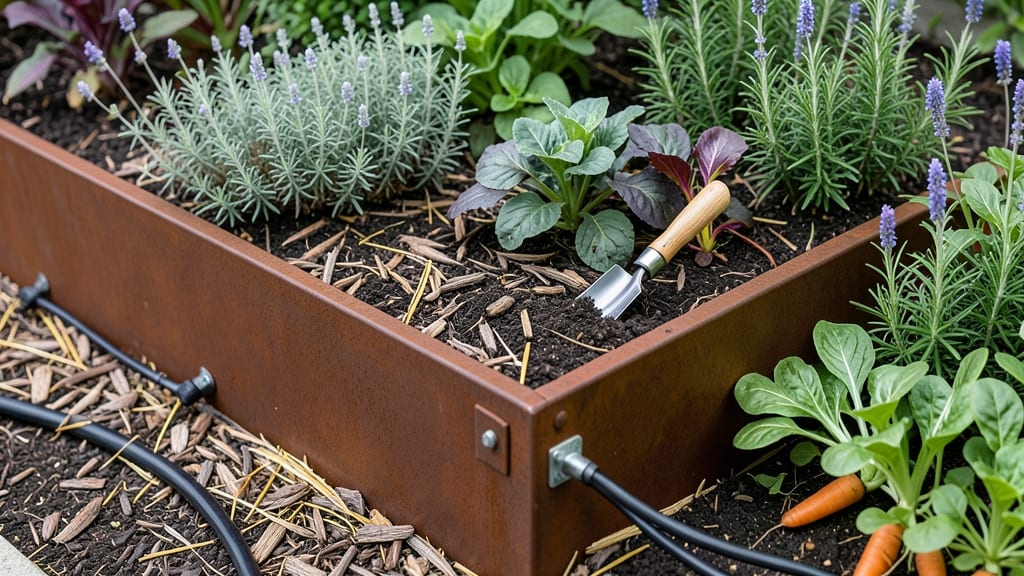
Corten steel raised garden beds provide long-lasting outdoor durability and natural rust resistance, thanks to their self-protecting weathering steel that forms a protective patina over time. These beds demand little upkeep while promoting excellent root development and proper drainage for thriving plants.
These garden beds are perfect for gardeners who want a low-maintenance solution that lasts decades. The unique weathering process creates a stable, rust-colored coating that actually protects the steel from further corrosion. 🌱 Unlike regular steel, corten steel doesn't need painting or sealing—just occasional cleaning to maintain its appearance.
I've seen these beds hold up beautifully in coastal areas where regular steel would quickly degrade, making them ideal for both urban and rural gardens.
What makes them particularly appealing is how they combine strength with aesthetic appeal. The distinctive patina gives your garden a modern, industrial look while the raised design improves accessibility and soil quality.
Plus, the heavy-duty construction means you won't need to replace them for years, making them a smart long-term investment for any gardener.
💡 In This Article
- How Corten Steel Resists Rust and Corrosion
- Planting and Maintenance Tips for Corten Steel Garden Beds
How corten steel resists rust and corrosion
Corten steel's rust resistance comes from its unique alloy composition—typically containing 0.4-0.65% copper, 1.0% chromium, and 0.25-0.5% nickel. These elements create a self-protecting mechanism when exposed to moisture and oxygen.
Unlike regular steel that corrodes uniformly, corten steel develops a stable, rust-colored patina that actually shields the underlying metal. This patina is denser than regular rust, preventing further oxidation from reaching the core material.
The patina formation begins within 3-6 months of outdoor exposure, with the process accelerating in humid or coastal climates. The initial surface rust transforms into a layer of iron oxides (hematite and magnetite) that's 10-20 times thicker than regular rust.
This protective layer is what makes corten steel ideal for garden beds—it doesn't flake off like regular rust, instead forming a permanent barrier. For comparison, standard galvanized steel relies on zinc coatings that degrade over 5-10 years, while corten steel lasts decades without maintenance. 🔥
What's fascinating is how this patina actually improves with age. The initial rust formation might look unsightly at first, but once fully developed, it becomes a stable, self-repairing layer. This is why corten steel structures often look better after years of exposure rather than deteriorating.
The alloy's design creates a controlled corrosion process that stops at the patina stage, unlike regular steel which continues corroding until structural failure.
For gardeners, this means no need for paint or sealants—just occasional cleaning to remove debris that might trap moisture. The patina's porosity allows water to evaporate while blocking further corrosion.
In coastal areas where salt air accelerates rust, corten steel outperforms other metals by 3-5 times the lifespan of standard galvanized steel. The only maintenance required is an occasional hose-down to prevent organic buildup that could trap moisture against the patina.
This self-protecting quality makes corten steel particularly valuable for raised garden beds. The beds' elevated design means they're exposed to more weather elements than in-ground planters, yet corten steel handles this exposure better than wood or plastic alternatives.
The material's strength-to-weight ratio also means you get durable construction without the weight of traditional metal beds, making them easier to position and maintain. 💛
One common misconception is that corten steel's rust appearance means it's constantly corroding. In reality, the patina formation is a controlled process that stops once the protective layer reaches its optimal thickness.
This is why you'll often see corten steel used in architectural applications like bridges and sculptures—it maintains structural integrity while developing an attractive, weathered look over time.
The science behind this involves electrochemical reactions where the copper and chromium in the alloy accelerate the formation of stable iron oxides. These oxides create a dense layer that's less permeable to moisture and oxygen than regular rust.
For garden beds, this translates to 90% less maintenance compared to painted metal beds that require touch-ups every 2-3 years. The material's ability to self-protect makes it one of the most durable options for outdoor gardening structures. ✨