
Container Gardens
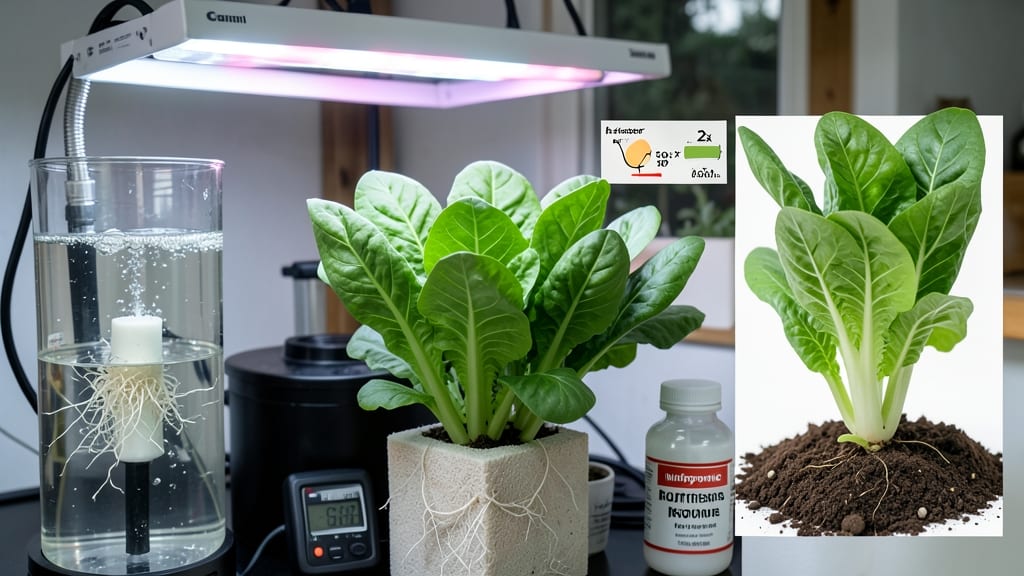
Hydroponic gardens are worth it for beginners who want faster growth and space efficiency, but they demand upfront equipment investment and regular maintenance. With proper setup, you can achieve yields comparable to or even better than soil gardens, though long-term costs might reduce your savings over time.
If you're short on space or eager to see plants grow at lightning speed, hydroponics delivers—literally. 🌱 The system delivers nutrients directly to roots, cutting growth time by up to 50% compared to soil. That means tomatoes in 45 days instead of 90, and leafy greens ready in weeks.
The trade-off? Initial costs for pumps, lights, and nutrient solutions can run $100-$300 for a basic setup, plus ongoing electricity and pH testing supplies. For city dwellers or those with limited outdoor space, though, the space savings alone often justify the investment.
What really sets hydroponics apart is the precision—you control every variable from light cycles to nutrient levels, which eliminates many soil-borne problems like pests or nutrient deficiencies.
However, beginners often underestimate the learning curve: pH balance and nutrient ratios require regular testing, and power outages can devastate a system without backup pumps. I've seen firsthand how a single misstep (like forgetting to check pH) can turn a thriving garden into a sad, nutrient-burned mess overnight.
💡 In This Article
- How Hydroponics Compare to Soil Gardens in Yield and Space
- Hidden Costs and Setup Tips for Beginner Hydroponic Systems
How hydroponics compare to soil gardens in yield and space
Hydroponic systems outperform traditional soil gardens in yield per square foot by 20-30% thanks to direct nutrient delivery. Roots absorb water and minerals 10-20 times faster than in soil because they're suspended in nutrient-rich solutions rather than searching through dense mediums.
For example, a 4'x8' hydroponic bed can produce 15-20 pounds of lettuce annually, while the same soil area yields just 8-12 pounds due to competition for nutrients and space.
The growth acceleration comes from perfect oxygenation—hydroponic roots bathe in oxygenated water, eliminating the anaerobic pockets that stunt growth in compacted soil. Leafy greens like kale or spinach reach harvest size in 3-4 weeks hydroponically versus 6-8 weeks in soil, while tomatoes develop 20-30% faster.
This speed advantage is especially valuable for urban growers with limited time or space. The trade-off? You'll need LED grow lights (costing $50-$200) to replicate sunlight, since most hydroponic setups can't rely on natural light alone.
Water efficiency is another major advantage—hydroponic systems use 90% less water than soil gardens. A traditional garden loses 60% of water to evaporation and runoff, while hydroponics recirculates the same 10-20 gallons continuously. This makes hydroponics ideal for drought-prone areas or those monitoring water bills closely.
However, the initial setup requires precise calibration: EC (electrical conductivity) levels must stay between 1.2-2.0, and pH must hover around 5.5-6.5—any deviation stresses plants or causes nutrient lockout.
Space efficiency shines in vertical setups like NFT (nutrient film technique) systems, where plants grow in stacked channels. A 3-foot-tall tower can yield the same as a 10-foot soil row, making it perfect for apartments. The downside?
Root systems are more vulnerable without soil's natural buffering—power outages or pump failures can lead to rapid plant death within 24-48 hours if not addressed immediately. This fragility requires backup power solutions or manual intervention during disruptions.
Consider these key factors when comparing:
- Yield density: Hydroponics delivers 3-5x more produce per square foot than soil for leafy greens
- Growth speed: 30-50% faster maturation for most vegetables compared to soil
- Water use: 90% reduction in consumption, but requires precise monitoring
- Space savings: Vertical systems replace 10:1 horizontal space ratios in soil gardens
The science behind these advantages lies in root zone control. Unlike soil, where roots compete for oxygen and nutrients, hydroponics provides a sterile, optimized environment where every plant gets equal access. This eliminates the 20-30% yield loss common in soil gardens due to disease or nutrient imbalance.
For beginners, the biggest hurdle is mastering this control—nutrient solutions must be mixed to 0.01% accuracy, and light spectra must match plant needs precisely.