
Landscaping
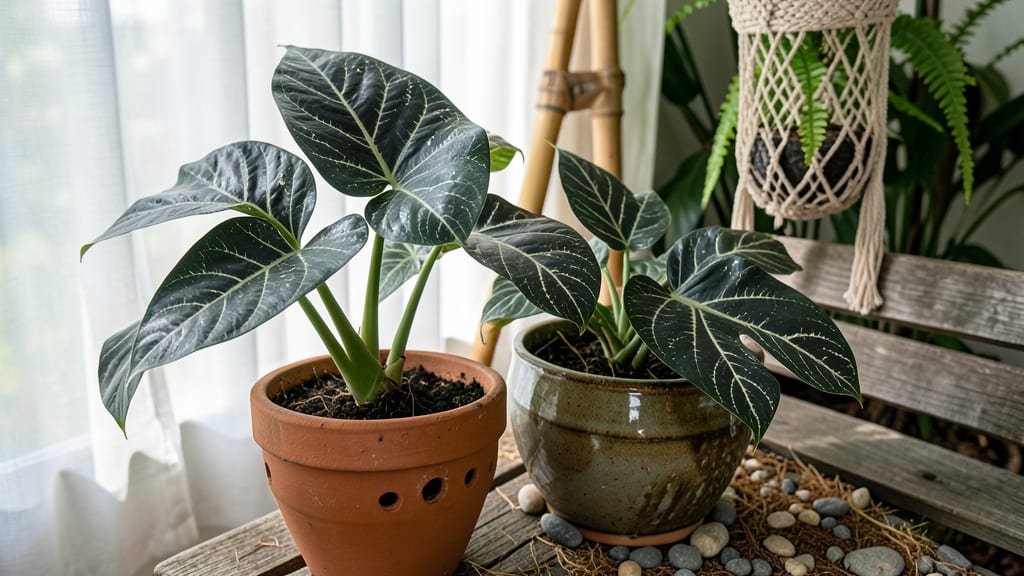
Garden ideas featuring alocasia 🌿 can turn any space into a vibrant, tropical escape with minimal effort.
Picture this: bold, elephant-ear leaves framing a patio, cascading over containers, or anchoring a shady garden bed. The key is pairing them with the right plants and lighting to make their dramatic foliage truly shine.
Whether you’re working with containers, borders, or a full jungle-themed garden, alocasia thrives in bright, indirect light and pairs beautifully with calatheas, ferns, or even bold-colored foliage for contrast.
Below, I’ll share styling tricks for height variation, shade-loving combinations, and how to keep your alocasia looking lush year-round—even in cooler zones.
How to style Alocasia plants for maximum visual impact in gardens
Creating a stunning alocasia display starts with understanding their natural tropical beauty and how to highlight their dramatic foliage. These plants thrive in shade to partial sun, making them perfect for layered garden designs where their large, glossy leaves become the star.
The key is to play with height variation, leaf size contrasts, and strategic pairings to create depth and visual interest.
I’ve found that grouping alocasia by size—placing taller varieties like Alocasia sara (up to 5 feet) at the back—creates a natural focal point. Smaller varieties like Alocasia polly (1-2 feet) can spill over edges or fill gaps in front.
This height stratification mimics a jungle understory, where sunlight filters through layers of foliage.
For maximum impact, pair alocasias with complementary textures. Their velvety leaves contrast beautifully with the spiky fronds of ferns or the ruffled edges of calatheas. Even a few dwarf bamboo clumps can add a ground-hugging contrast that frames your alocasias perfectly.
Think of your garden as a living art installation—every plant should enhance the next.
Here’s how different alocasia styling techniques compare in terms of visual effect, maintenance, and best use cases:
| Styling Technique | Visual Effect | Maintenance Level | Best For |
|---|---|---|---|
| Height Variation Grouping | Dramatic vertical layers; jungle-like depth | Moderate (prune leggy stems) | Shady garden beds, indoor-outdoor transitions |
| Leaf Size Contrast | Bold focal points with small accents | Low (minimal pruning) | Container gardens, patio pots |
| Shade-Loving Pairings | Soft, moody textures with ferns/calatheas | High (consistent moisture) | Woodland gardens, conservatories |
| Mixed Containers | Portable tropical vignettes | Moderate (rotate pots for even light) | Balconies, patios, indoor spaces |
| Solo Specimen Planting | Statement centerpiece | Low (minimal care) | Modern minimalist gardens |
One of my favorite alocasia styling tricks is creating a "moonlight garden" effect by placing them near dappled sunlight. Position taller varieties like Alocasia zebrina (with its striking purple stems) where their leaves will catch filtered light, making the veining patterns glow.
Add a few white-flowering impatiens at their base to reflect light upward and amplify the drama.
Don’t overlook the power of container styling—even if you’re limited to a patio or balcony. A large ceramic pot with a single Alocasia micholitziana (the "Elephant Ear") becomes an instant conversation piece. Pair it with a trailing pothos to soften the edges and add movement.
For smaller spaces, try a tiered planter with Alocasia polly at the top, Calathea orbifolia in the middle, and fittonia (nerve plant) cascading over the sides.
When styling alocasias in larger garden beds, I recommend clumping 3-5 plants together in odd-numbered groups for a natural, organic look. Space them 12-18 inches apart to allow their leaves to spread without crowding.
If you’re working with a modern garden design, opt for monochromatic schemes—think deep greens, blacks, and purples—while cottagecore gardens can mix in silver foliage like Ctenopsis 'Silver Queen' for contrast.
Pro tip: Rotate your containers every few weeks to ensure even light exposure on all sides. Alocasias grow toward the light, so if one side becomes leggy or sparse, it’s a sign they’re reaching for more brightness.
A simple quarter-turn keeps them compact and lush year-round. This small effort makes a huge difference in their long-term health and appearance.
For cooler climates, bring potted alocasias indoors before temperatures drop below 50°F (10°C). Place them near bright, indirect light (like an east-facing window) and reduce watering slightly in winter.
With the right styling and care, your alocasias will continue to thrive and wow—even as houseplants—through the colder months.
Remember, the goal is to celebrate their natural beauty while creating a harmonious, high-impact display. Whether you’re a minimalist, maximalist, or somewhere in between, alocasias offer endless creative possibilities for transforming any space into a tropical sanctuary. 🌿
Best Alocasia varieties for different garden zones and climates
Choosing the right alocasia varieties depends on your USDA hardiness zone and climate conditions. While most alocasias thrive in zones 10-12, some varieties adapt well to indoor growing in cooler regions. Let’s explore the top picks for different environments and their unique care needs.
For tropical climates (zones 10-12), Alocasia zebrina and Alocasia macrorrhizos shine with their bold foliage and heat tolerance. In cooler zones (7-9), Alocasia 'Polly' (Alocasia x amazonica 'Polly') becomes the star, thriving indoors or in protected outdoor spaces.
| Variety | Hardiness Zone | Sunlight Needs | Foliage Highlights | Care Tips |
|---|---|---|---|---|
| Alocasia 'Polly' | 7-11 (indoors or protected) | Bright indirect light | Dark green, glossy leaves with striking veins | Keep soil moist; avoid cold drafts |
| Alocasia zebrina | 10-12 (outdoors) | Partial shade | Velvety black-purple leaves with white veins | Water deeply; mulch to retain moisture |
| Alocasia macrorrhizos | 9-12 (outdoors) | Partial shade to full sun | Large, arrowhead-shaped green leaves | Tolerates humidity; avoid waterlogging |
| Alocasia 'Dragon Scale' | 10-12 (outdoors) | Bright indirect light | Dark green leaves with metallic sheen | High humidity; mist leaves regularly |
| Alocasia 'Black Stem' | 7-11 (indoors or protected) | Bright indirect light | Dark green leaves with deep purple stems | Well-draining soil; avoid overwatering |
If you live in cooler climates, Alocasia 'Polly' is my top recommendation—it’s compact, hardy, and perfect for indoor gardening. Place it near an east-facing window to ensure it gets enough bright indirect light without risking leaf burn.
For tropical gardens in zones 10-12, Alocasia zebrina and Alocasia macrorrhizos are showstoppers. Their dramatic foliage thrives in partial shade, making them ideal for shady garden corners or under broadleaf trees. Just remember to mulch heavily to keep roots cool and moist.
For humid climates, varieties like Alocasia 'Dragon Scale' love the extra moisture. Group them with other tropical plants like ferns or calatheas to create a jungle-like vibe. If your climate is drier, consider using a pebble tray or humidifier to mimic their natural habitat.
No matter your garden zone, alocasias reward you with stunning foliage when given the right care. Experiment with different varieties to find the perfect fit for your space—your garden will thank you! 🌿