
Planting
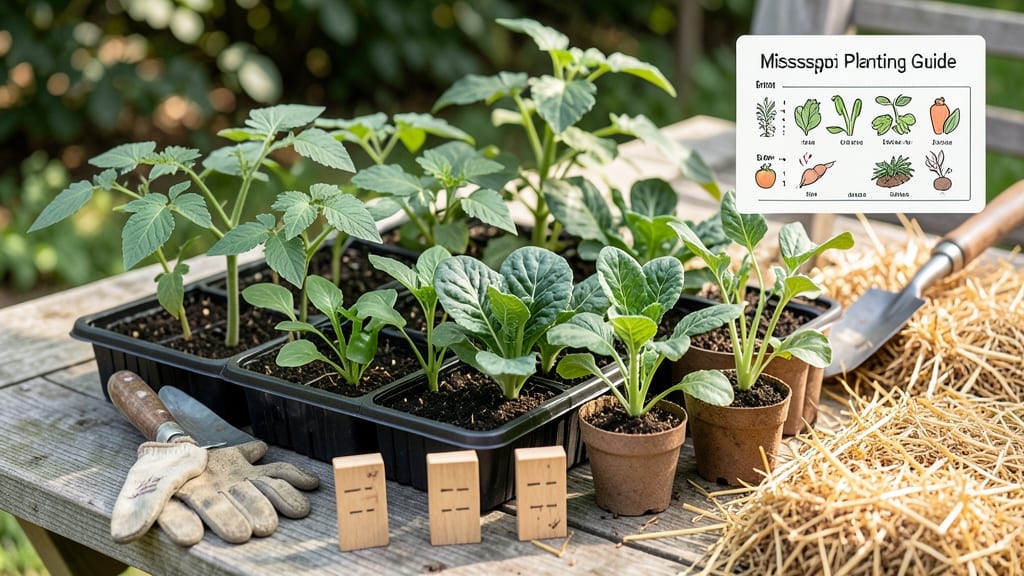
Planting a vegetable garden in Mississippi at the right time means the difference between a bountiful harvest and seeds that never sprout—or worse, bolt in the heat.
Mississippi’s long, hot summers and mild winters create a unique gardening window—but planting too early or late can mean wasted seeds and stunted crops. Timing your 🥬 vegetable garden based on soil temperature and frost dates is the secret to a thriving harvest.
Cool-season crops like lettuce and spinach thrive when soil temps dip below 70°F, while tomatoes and peppers need warmth to germinate. Skipping the soil thermometer? Use the back-of-your-hand test—if it feels cool, it’s ready for greens; if it’s toasty, it’s time for heat lovers.
Below, I break down the exact month-by-month schedule for Mississippi’s USDA Zone 8a, plus how to adjust for late frosts, early heat, and regional quirks like the Delta’s shorter growing season.
Mississippi planting zones & soil temperature requirements for vegetable germination
Mississippi spans USDA Hardiness Zones 7a-8b, meaning your planting schedule must account for both cool-season crops in early spring and warm-season vegetables after the last frost. The key to success? Soil temperature, which dictates when seeds will germinate and seedlings thrive.
Unlike air temperature, soil warmth triggers growth—planting too early in cold soil can leave seeds sitting dormant for weeks.
In Zone 7a (North MS), average last frost dates range from March 15-30, while Zone 8b (South MS) sees frost-free conditions by February 15-March 1. However, don’t rely solely on calendar dates—soil temperature is your real guide.
Most cool-season crops like lettuce and spinach need soil temps between 40°F-50°F to germinate, while warm-season favorites like tomatoes and peppers won’t sprout until soil reaches 65°F-75°F.
Here’s the critical rule: Test soil temperature with a soil thermometer (or DIY method—see below) before planting. A 5°F difference can mean the difference between rapid germination and seed rot. For example, beans and squash need 60°F+ soil, while kale and broccoli tolerate 45°F-55°F soil.
🌱
If you don’t have a soil thermometer, use this DIY method: Press your hand into the soil (about 2 inches deep) for 5 seconds. If it feels cool but not freezing, it’s likely 45°F-55°F—safe for cool-season crops.
For warm-season plants, the soil should feel warm to the touch (like a sunny sidewalk), indicating 60°F+. Pro tip: Black plastic mulch warms soil 5°F-10°F faster than bare earth.
Mississippi’s humid subtropical climate adds complexity—high humidity can slow germination, while sudden heat waves (even in spring) can stress seedlings. For example, cucumbers and melons need soil temps above 70°F to avoid blossom-end rot.
Meanwhile, broccoli and cabbage planted in 50°F+ soil will bolt (flower prematurely) if days get too warm.
For Zone 7a gardeners, focus on late February–early March for cool-season crops, while Zone 8b growers can start as early as January. Warm-season planting begins 2–3 weeks after your last frost date—check the Mississippi State Extension for your county’s average.
Remember: Soil temperature > air temperature is your golden rule. Planting tomatoes in 55°F soil might work in air temps of 70°F, but the roots will struggle.
🌡️
To extend your growing season, use season extenders like row covers (for early cool-season starts) or shade cloth (to protect seedlings from 90°F+ heat). For example, lettuce can be planted in
Best month-by-month planting schedule for Mississippi gardens
Mississippi’s frost-free window spans roughly 210 days, but timing your vegetable garden means more than just counting days. The North Delta (Zone 7b) and Gulf Coast (Zone 8b) have different frost dates, so adjust accordingly.
For example, North MS typically sees its last frost around March 15, while the South may be frost-free by February 28.
To maximize harvests, focus on cool-season crops in early spring and fall, and warm-season crops during summer. Succession planting—sowing seeds in 2-3 week intervals—extends harvests and prevents gluts. For instance, planting bush beans every 10 days from May to July ensures a steady supply.
🌱 numbered-highlights
- 🌱 January-February: Start cool-season crops indoors or under row covers. Plant spinach, lettuce, and peas in North MS; South MS can add kale and broccoli.
- 🌱 March: Direct-sow carrots, radishes, and onions 4-6 weeks before last frost. Transplant cabbage and cauliflower seedlings.
- 🌱 April: Plant warm-season crops like tomatoes and peppers 2-3 weeks after last frost. Use black plastic mulch to warm soil.
- 🌱 May-June: Sow squash, cucumbers, and corn. Succession plant beans and zucchini every 2 weeks.
- 🌱 July-August: Begin fall cool-season crops like collards and turnips in North MS. South MS can start broccoli and Brussels sprouts.
- 🌱 September-October: Plant garlic and onions for next year. Direct-sow spinach and arugula for late fall harvests.
For warm-season crops, wait until soil temperatures reach 60°F+—use a soil thermometer to check. In North MS, this usually happens by mid-April, while South MS can start earlier. Tomatoes and peppers thrive with consistent warmth, so avoid transplanting until nighttime temps stay above 55°F.
Fall planting is often overlooked but offers a second harvest. Start cool-season crops like kale and carrots in August for a November-December harvest. Use lightweight row covers to protect young plants from early frosts, which can hit as soon as October 15 in North MS.
Pro tip: Keep a gardening journal to track your frost dates and soil warmth trends. Over time, you’ll refine your schedule to match your microclimate. For example, garden beds near ponds warm up faster than those in open fields.