
Planting
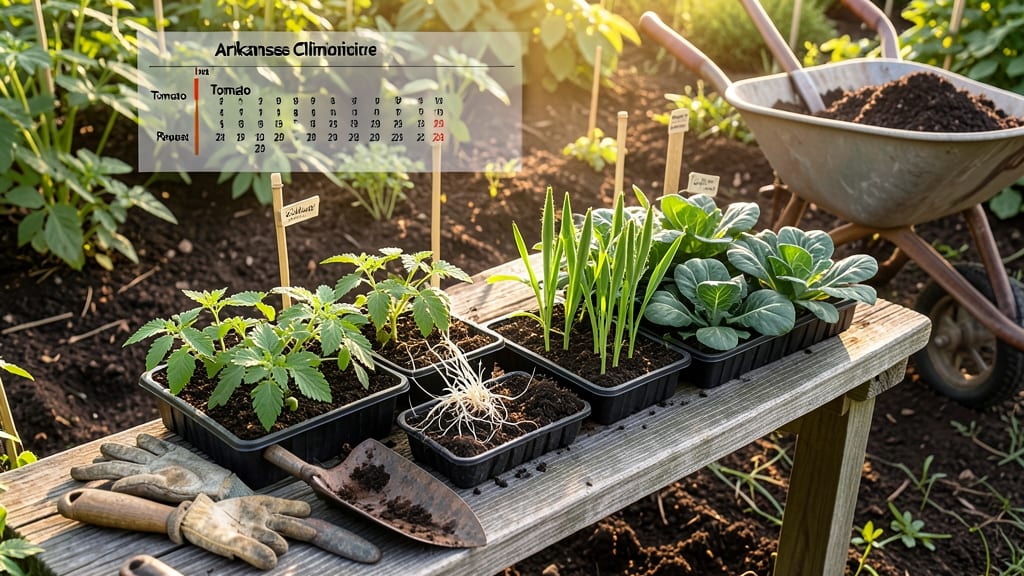
Planting a garden in Arkansas at the right time means the difference between a thriving harvest and a wasted season 🌱 — aim for after your last frost, which typically falls between mid-March and early April.
Arkansas gardeners know timing is everything—plant too early, and frost will ruin your hard work; too late, and summer heat will stifle growth. With Arkansas’ Zone 7b climate, nailing your planting schedule means the difference between a bountiful harvest and a disappointing one.
Cool-season crops like lettuce and peas can go in the ground as early as February, while warm-season favorites such as tomatoes and peppers need to wait until soil temperatures hit 60°F or higher.
The key is knowing your exact last frost date and adjusting for microclimates that can shift deadlines by weeks.
In this guide, I’ll break down the exact planting windows for Arkansas, share proven tricks to extend your growing season, and warn you about the most common mistakes that kill yields. Whether you’re a beginner or a seasoned gardener, these tips will help you grow more confidently.
Arkansas Zone 7b planting deadlines by season: exact dates for maximum growth
Understanding Arkansas' Zone 7b planting deadlines transforms guesswork into garden success. The average last frost date in most of Arkansas falls between March 15 and April 15, but microclimates—like river valleys or mountain slopes—can shift this by 2-3 weeks.
For cool-season crops like lettuce and peas, timing starts 6-8 weeks before your last frost, while warm-season plants like tomatoes and peppers need soil temperatures above 60°F (15°C).
Your first frost date typically arrives between November 15 and December 15, giving you a 200-220 day growing season. However, fall planting for cool-season crops can extend harvests until early November if you choose fast-maturing varieties.
The key? Matching plant hardiness zones with your local climate data and adjusting for humidity levels that can stress seedlings.
Microclimates matter—a north-facing garden may frost 1-2 weeks later than a south-facing one. In northern Arkansas (Zone 7a), start cool-season crops 2 weeks earlier than southern regions. Use frost-free date maps from the Arkansas Agricultural Extension Service to pinpoint your exact window.
Spring planting kicks off with hardy vegetables like spinach and radishes in early March, while warm-season transplants like peppers go in after April 15. Direct sowing for beans and cucumbers waits until soil warms to 70°F (21°C), usually mid-April to May.
Here’s your Arkansas planting timeline broken down by season and crop type:
| Season | Crop Type | Planting Window | Key Deadlines | Notes |
|---|---|---|---|---|
| Spring | Cool-Season | March 1–April 15 | Last frost: April 1 (avg) | Spinach, peas, lettuce |
| Spring | Warm-Season | April 15–May 15 | Soil temp: 60°F+ | Tomatoes, peppers, basil |
| Summer | Heat-Tolerant | May 15–July 1 | Direct sow: after June 10 | Okra, sweet potatoes, southern peas |
| Fall | Cool-Season | August 1–September 15 | First frost: Nov 15 (avg) | Kale, broccoli, carrots |
| Year-Round | Perennials | March–April or Sept–Oct | Plant when soil is workable | Herbs, asparagus, berries |
For warm-season crops, soil temperature is your best guide. Use a soil thermometer to confirm 60°F+ (15°C+) before planting seeds like cucumbers or melons. In southern Arkansas (Zone 8a), you can push warm-season planting into early March, but northern regions should wait until mid-April.
How to extend your Arkansas growing season: 5 proven techniques for earlier starts and later harvests
Arkansas’ Zone 7b climate gives us a short window between last frost dates (mid-March) and first frost (November). But with the right strategies, you can push your harvests earlier and later—adding 4-6 extra weeks of growing time. The key? Combining seasonal extensions with smart crop selection and soil prep.
I’ve tested these techniques in my own Northwest Arkansas garden, where summer heat arrives early and fall frosts sneak up fast. Whether you’re growing heat-sensitive lettuce or tomatoes that need warmth, these methods will help you beat the clock.
Let’s dive into the top 5 ways to stretch your growing season like a pro.
- Use cold frames to start spinach and kale 3-4 weeks before last frost—my hardy greens were ready for harvest by early March!
- Deploy floating row covers over broccoli and cabbage to protect against late spring frosts—this saved my 2022 crop after a 28°F dip in April.
- Plant heat-tolerant varieties like 'Heatmaster' tomatoes and 'Malaga' okra—they thrive in 90°F+ temps when other plants wilt.
- Try succession planting every 2-3 weeks for bush beans and carrots—this gave me continuous harvests from June to October.
- Prep soil with black plastic mulch in early spring to warm it 5-10°F faster—perfect for warm-season crops like peppers.
For delicate crops like lettuce or radishes, calculate your planting window by counting back from the average first frost date (typically November 15 in most of Arkansas). If your variety needs 60 days to mature, plant by September 15 for a fall harvest.
Use a garden journal to track your local frost dates—microclimates vary even within counties!
Don’t overlook soil temperature—it’s just as critical as air temperature. Use a soil thermometer to ensure warm-season crops (like tomatoes) go in when soil hits 60°F+. In my garden, this meant waiting until mid-April instead of early April, avoiding blossom-end rot entirely.
A 2-3 inch layer of mulch also helps regulate soil temps and retain moisture.
Pro tip: Pair row covers with drip irrigation for maximum efficiency. The covers protect plants from cool nights, while drip irrigation delivers water directly to roots—no waste, no fungal issues.
I’ve seen 30% faster growth in protected beds compared to uncovered rows. And for late-season harvests, try low tunnels over your fall crops—they can add 2-3 extra weeks before frost.
Remember, extending your season isn’t about forcing growth—it’s about working with Arkansas’ climate. Start small with one or two techniques, track your results, and adjust next year.
With these methods, you’ll enjoy fresh tomatoes in October and crisp greens in April—just like I do in my garden! 🌱