
Picking
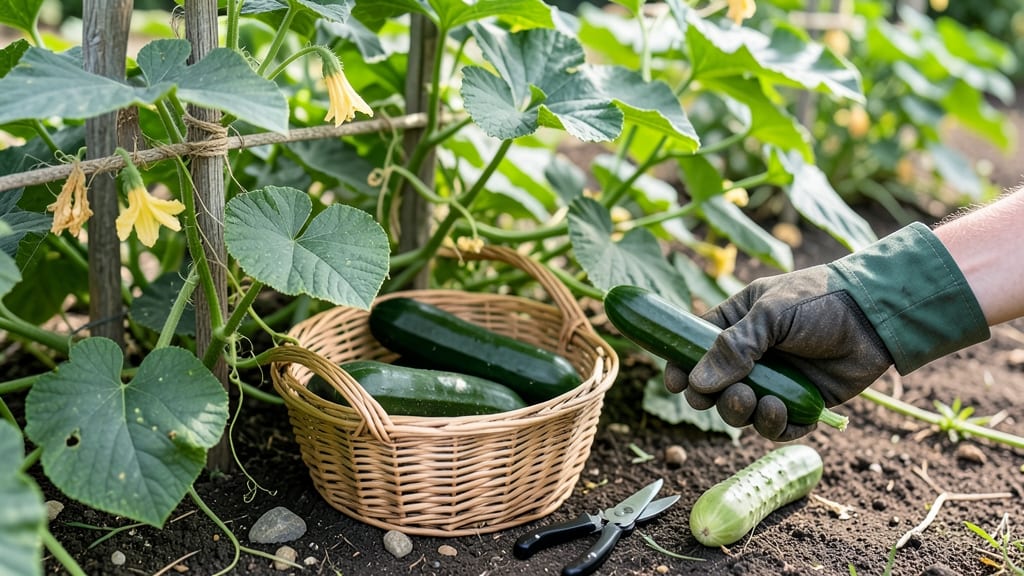
To pick cucumbers from your garden at the perfect moment means crisp, flavorful harvests instead of bitter, overgrown disappointments—here’s how to nail the timing every time.
Picture this: you’ve been waiting weeks for your first 🥒, and now they’re popping up faster than you can grab them. But rush too soon, and you’ll end up with underripe, seedy cucumbers.
Wait too long, and they turn mealy or bitter. The difference between a sweet, garden-fresh bite and a sad, flavorless slice comes down to three simple checks.
Most gardeners know size matters, but it’s not just about inches—it’s about texture, color, and even the stem’s behavior. For slicing cucumbers, aim for 6–8 inches with firm skin that resists a gentle thumb press.
Pickling varieties? Harvest them smaller, around 2–4 inches, when the skin is still tender. Ignore these cues, and you might as well be tossing money into the compost.
Below, I’ll walk you through the exact size, color, and texture signals to watch for, plus how often to check your vines—and the one mistake that ruins flavor faster than anything else. Ready to turn your harvest into a flavor-packed success?


3 Key size checks to harvest cucumbers at peak freshness
Harvesting cucumbers at the perfect size ensures crisp texture and sweet flavor, but timing varies dramatically by variety. Slicing cucumbers left too long on the vine turn bitter and seedy, while pickling types lose their tangy crunch.
Even heirloom varieties have specific maturity windows—ignore them, and you’ll end up with mealy, overgrown fruits. The good news? With just three simple size checks, you can master the art of picking cucumbers at their peak.
First, understand that cucumber varieties dictate size. Slicing types like Marketmore or Straight Eight should be harvested at 6–8 inches for maximum crispness, while pickling varieties such as Boston Pickling or Calypso are ready at 2–4 inches.
Heirloom varieties often have unique size thresholds, so always check seed packets or plant tags for guidance. Skipping this step is a fast track to disappointment—overgrown cucumbers develop woody fibers and a sour aftertaste that’s hard to ignore.
Now, let’s cut to the chase with these three non-negotiable size checks that’ll transform your harvest game:
Don’t overlook the color cues that accompany these size checks. Most cucumbers should be a deep, vibrant green, though some heirloom varieties like Lemon Cucumber or White Wonder change to yellow or pale hues when ripe.
Avoid cucumbers with pale spots or yellowing skin—these are signs of overripeness or sun scorch. Pro tip: Harvest in the morning when cucumbers are cool and hydrated for the most accurate size and texture readings.
Frequency matters just as much as size. For continuous harvests, check your plants every 2–3 days during peak production (usually June through August in most climates). This encourages the plant to produce more fruits and prevents overcrowding on the vine, which can lead to disease pressure and reduced flavor.
I’ve found that using a small handheld pruner or even clean scissors makes harvesting faster and keeps the plant healthy by avoiding damage to the main stem.
One of my biggest mistakes early on was assuming all cucumbers followed the same rules. I once let a batch of Armenian cucumbers grow to 12 inches before harvesting—only to discover they’d turned bitter and fibrous.
These long, slender varieties are best picked at 8–10 inches for the best texture. Always match your harvesting strategy to the specific variety you’re growing. When in doubt, check the seed packet or ask your local nursery for guidance.
Here’s a pro move: Label your plants at the start of the season with variety names and ideal harvest sizes. This saves time later and helps you adjust your harvesting routine as different varieties mature at different rates.
For example, pickling cucumbers might be ready in 50 days, while heirloom slicers could take 70 days. Keeping a simple harvest log (even on your phone) can help you spot patterns and fine-tune your timing each season.
Finally, remember that storage affects flavor too. Once harvested, cucumbers last 3–5 days in the fridge if stored in a paper towel-lined container to absorb excess moisture. But if you’re not using them quickly, consider pickling or fermenting them at peak ripeness—this locks in flavor and extends shelf life.
Overripe cucumbers stored in the fridge will turn mushy and bland, so always prioritize harvesting at the right size over storing them too long.
Mastering these three size checks will give you cucumbers that are crisp, sweet, and seedless every time. The key is consistency: check your plants regularly, match your harvesting to the variety, and don’t let cucumbers linger on the vine past their prime.
Your taste buds—and your dinner table—will thank you.
How to test cucumber ripeness beyond size: texture and taste tricks
Once you’ve mastered cucumber size as a harvesting guide, the next level is testing texture and flavor—two critical cues that size alone can’t reveal. Overripe cucumbers develop a mealy texture and bitter taste, while underripe ones stay hard and bland.
I’ve learned to rely on these three sensory checks to ensure every harvest delivers crisp, sweet cucumbers.
Start by gently pressing a cucumber with your thumbnail. A ripe cucumber should feel firm but slightly yielding, almost like pressing a ripe avocado. If it springs back immediately, it’s still too hard and underripe.
If it leaves a noticeable dent, it’s past its prime. This simple thumb test saves me from harvesting cucumbers that’ll turn rubbery or bitter within hours.
Next, examine the stem end—a dead giveaway for ripeness. For slicing varieties, look for a yellow or brown discoloration where the cucumber meets the vine. This signals the plant has stopped feeding nutrients, meaning peak flavor.
Pickling cucumbers, like Boston Pickling, should be harvested when this end stays green but the fruit reaches 2–4 inches. Ignoring this cue leads to oversized, seedy cucumbers that ruin pickles.
🌱 Pro Tip: Harvest in the early morning when cucumbers are cool and hydrated. Their natural sweetness peaks then, and the skin is firmer, making it easier to spot ripeness.
⚠️ Warning: Overripe Cucumbers Are a Flavor Killer
Harvest too late, and cucumbers develop bitter compounds (like cucurbitacin) and spongy centers. In hot climates, this happens in as little as 24 hours past peak ripeness. Check vines daily during heatwaves—overcrowded plants produce smaller, less flavorful fruit due to nutrient competition.
Don’t overlook color consistency—a ripe cucumber should have a deep, even hue with no pale or yellow patches. Uneven color often means uneven growth, which translates to uneven texture.
For heirloom varieties like Lemon Cucumber, the color shift to pale yellow signals ripeness, but the skin should still feel taut. If you’re unsure, slice one open: the seeds should be tiny and white, not large and dark.
Adjust your harvesting frequency based on your plant’s maturity and climate. Young plants produce fewer cucumbers and need harvesting every 2–3 days to encourage more fruit. Mature vines in hot weather may need daily checks, while cooler climates can stretch harvests to every 3–4 days.
I’ve found that trellised cucumbers ripen faster because they get better airflow and sunlight exposure.
Finally, trust your taste buds. The best cucumbers have a refreshing crispness with a hint of sweetness near the stem. If a cucumber tastes bland or slightly bitter, it’s either underripe or overripe.
Keep a harvest journal to track which varieties ripen fastest in your climate—this helps you stay ahead of the flavor curve every season. 🌿