
Picking
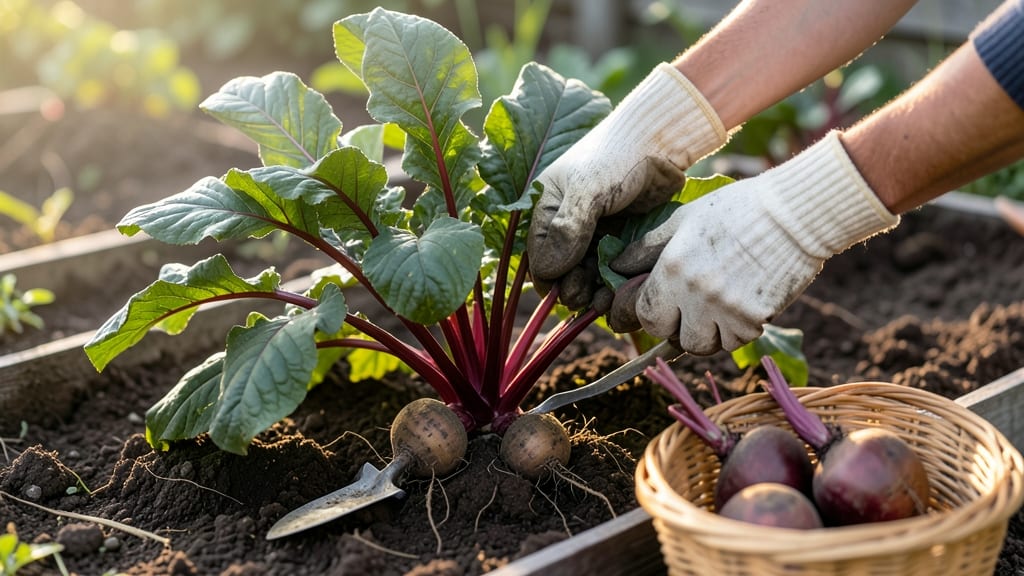
To pick beets from your garden at their sweetest, watch for roots that are 1-3 inches wide and a deep, vibrant color—this is when they’re packed with flavor and tenderness.
Harvesting beets at the wrong time can turn your sweet, earthy roots into tough, woody disappointments—but knowing these 3 simple finger tests lets you pick them at peak flavor, every time.
Start by checking the size: a beet ready for harvest should fit snugly between your thumb and index finger. Next, press gently—the skin should resist slightly, not give way like overripe fruit. Finally, look for deep, rich color, whether it’s ruby red, golden yellow, or striped purple.
In this guide, I’ll walk you through these 3 foolproof tests, plus how soil conditions and weather can shift your harvest timeline—so you never miss the window for the best-tasting beets of the season.


3 Finger tests to determine perfect beet harvest time
Knowing exactly when to harvest your beets can make the difference between a tender, sweet root and a tough, fibrous mess. While most gardeners focus on days-to-maturity or size, I’ve found the most reliable method is using simple finger pressure tests.
These tactile checks let you assess root size, tenderness, and flavor potential without guessing. The best part? You don’t need any special tools—just your hands and a little practice.
Beets typically reach harvest readiness between 55-70 days after planting, but environmental factors like soil temperature and moisture can shift this window. That’s why I rely on these three finger tests to fine-tune my timing.
Each test targets a different aspect of beet maturity: the thumb test for size, the index finger test for tenderness, and the pinky finger test for flavor development. Together, they give you a complete picture of when your beets are truly ready to pull.
- Thumb Test (Size Check): Gently press the soil around the beet with your thumb. If the root feels the size of a golf ball (1.5-2 inches), it’s ready for harvest. For baby beets, aim for a ping-pong ball (1 inch).
- Index Finger Test (Tenderness): Insert your index finger into the soil beside the beet. If the skin resists slight pressure but doesn’t feel hard, the beet is tender and sweet. If it feels soft, wait 3-5 days.
- Pinky Finger Test (Flavor): Pinch the beet’s shoulder (where the root meets the stem). If the skin gives slightly but doesn’t bruise, the sugars have fully developed. A hard pinch means it’s overripe.
🌱 Pro Tip: Perform these tests in the morning when soil is cooler and beets are firmer.
Let’s start with the thumb test, which is my go-to for assessing beet size. When I press the soil around the beet with my thumb, I’m looking for resistance that matches the diameter of a golf ball.
This usually means the root is about 1.5-2 inches wide, which is ideal for full-sized beets. For baby beets, I adjust my expectation to a ping-pong ball size (around 1 inch). The thumb test is especially useful in crowded gardens where visual inspection is tricky—just press and feel!
Next comes the index finger test, which evaluates tenderness. I slide my index finger into the soil beside the beet and gently press the root. If the skin resists but doesn’t feel rock-hard, the beet is at peak tenderness.
A soft, yielding feel means it’s underripe and still developing, while a hard, unyielding root suggests it’s past its prime. This test is crucial because overripe beets develop woody fibers that ruin the texture, no matter how sweet they might taste.
The pinky finger test is my favorite because it directly assesses flavor development. I pinch the beet’s shoulder—the transition zone between the root and the leafy top—using just my pinky finger.
If the skin gives slightly under pressure but doesn’t bruise, the beet’s sugars have fully concentrated, delivering that signature sweetness. A hard pinch, on the other hand, signals overmaturity. I’ve learned that beets left too long in the ground can become bitter, so this test helps me avoid that fate.
Timing your harvests with these finger tests ensures you’re always picking beets at their sweetest and most tender. But what if your garden conditions are less than ideal? For example, hot, dry weather can accelerate maturity, while cool, wet conditions might slow it down.
That’s why I recommend testing beets every 2-3 days during their final growth phase. Consistency is key—don’t wait until the last minute, or you might miss the perfect window.
One common mistake I see is relying solely on days-to-maturity from seed packets. While these provide a general guideline, they don’t account for your specific growing conditions. That’s where the finger tests shine—they give you real-time feedback tailored to your garden.
For instance, if your beets are maturing faster than expected, the thumb test will reveal their size before the calendar suggests they’re ready. Conversely, if growth stalls, these tests help you decide whether to wait or take a slightly underripe harvest.
For those growing multiple beet varieties, like both baby beets and full-sized ones, I recommend harvesting the smaller varieties first. Baby beets (like ‘Babybeat’ or ‘Little Ball’) are typically ready in 30-40 days, so I’ll use the pinky finger test to check their flavor first.
Once they’re harvested, I shift focus to the larger varieties, using the thumb and index finger tests to guide me. This staggered approach maximizes my garden’s productivity and ensures a steady supply of fresh beets.
Finally, remember that the leafy greens are edible too! If you’re harvesting beets for their roots, you can leave the greens attached until the last moment.
But if you’re growing beets specifically for their greens (which are packed with nutrients), you can harvest them earlier—around 30 days—using the same index finger test to check tenderness. Just be sure to leave at least 2-3 inches of stem on the root to encourage continued growth.
Mastering these three finger tests will transform your beet harvests from a gamble into a guaranteed success. No more woody roots or underripe disappointments—just perfectly timed, sweet, and tender beets straight from your garden.
Grab your gloves, head outside, and give these tests a try. Your taste buds will thank you! 🌱
How soil conditions and weather affect beet maturity timing
Beets are famously adaptable, but their maturity timing can swing wildly based on your garden's microclimate. Too much heat or drought? Your beets might bolt or develop woody textures faster than expected. Too much rain or cool soil?
They’ll linger in the underripe stage longer, leaving you with bland, watery roots. Understanding these environmental triggers lets you adjust your harvest schedule for perfect results every time.
For example, in hot, dry climates, beets often mature in just 45-50 days—sometimes even earlier—while cooler, wetter regions might need the full 60-70 days. The key is monitoring soil moisture and air temperatures to predict when your beets will hit their sweetest window.
⚠️ callout warning
Start by checking your soil temperature—beets thrive when soil stays between 60-75°F (15-24°C). If your soil runs cooler (common in spring or fall), your beets will grow slower, and you’ll need to wait closer to 60-70 days for harvest.
Use a soil thermometer to track conditions, especially if you’re in a northern climate with shorter growing seasons.
Dry soil is another maturity accelerator. When moisture drops below 40% soil saturation, beets prioritize root development over leaf growth, leading to smaller but sweeter roots that mature faster. However, this can also trigger bolting—when beets send up flower stalks prematurely.
To prevent this, water deeply 2-3 times per week during dry spells, aiming for 1-1.5 inches of water per week.
Conversely, overly wet conditions slow beet growth, causing roots to stay small and waterlogged. If your garden gets heavy rain, mulch with straw or shredded leaves to improve drainage and create a more consistent moisture balance.
This helps maintain steady growth and prevents uneven maturity across your beet patch.
Adjust your harvest schedule by weekly checks during peak growing months. In hot summers, pick beets every 5-7 days starting at 45 days. In cooler springs or falls, stretch your harvest out to 7-10 days between pickings.
Always use the finger pressure test—if the skin resists slight pressure, it’s ready. If it feels soft, wait a few days.
Pro tip: Plant succession crops every 2-3 weeks to stagger maturity. This way, you’ll always have fresh beets ready to harvest, regardless of weather fluctuations or soil conditions. 🌱