
Picking
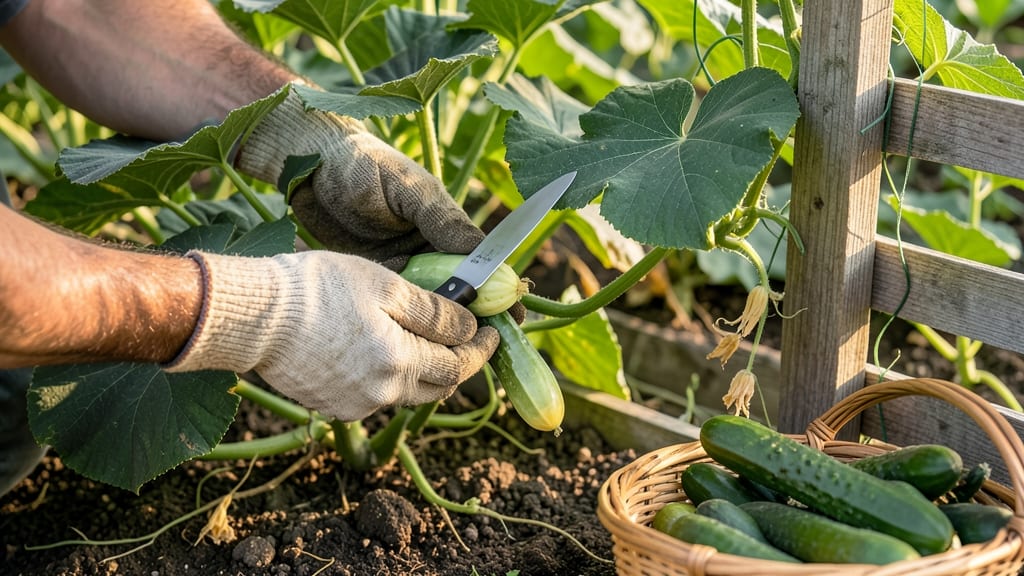
Harvest cucumbers from your garden when they reach 6-8 inches for slicing varieties, or check for firmness and color cues—because waiting too long turns crisp fruit into bitter, seedy disappointments.
Picture this: you’ve nurtured your 🥒 plants all season, only to pick a cucumber that’s tough, watery, and full of seeds. That’s the cost of ignoring the three key size checks that separate garden-fresh flavor from store-bought blandness.
Size isn’t the only clue—texture, color, and even the stem’s readiness play a role. A cucumber that snaps cleanly at the stem or yields slightly when pressed is begging to be harvested, while a pale, uneven one is still maturing.
In this guide, I’ll break down the exact visual cues to watch for, how to adjust for your climate zone, and why harvesting at the right moment keeps your plants producing like crazy all summer.


3 Key cucumber size checks for perfect harvest timing
Harvesting cucumbers at the right size makes all the difference between a crisp, sweet vegetable and a mealy, seedy disappointment. I’ve learned through years of gardening that variety-specific sizing is the secret weapon—what’s perfect for slicing won’t work for pickling, and heirlooms need extra attention.
Let’s break down the three essential size checks every gardener should master to ensure peak flavor and texture.
First, understand that cucumber varieties have vastly different ideal harvest sizes. A slicing cucumber like 'Straight Eight' should be harvested at 6-8 inches, while pickling varieties like 'Boston Pickling' are best at 3-4 inches.
Heirlooms often need even more precision—some like 'Lemon Cucumber' thrive at 4-6 inches but turn bitter if left longer. Always check your seed packet for variety-specific guidelines before your plants even sprout.
| Variety Type | Ideal Size | Color Cue | Stem Check |
|---|---|---|---|
| Slicing (e.g., 'Straight Eight') | 6-8 inches | Deep green | Yellows at base |
| Pickling (e.g., 'Boston Pickling') | 3-4 inches | Bright green | Still green at base |
| Heirloom (e.g., 'Lemon Cucumber') | 4-6 inches | Yellow/green | Softens slightly |
| All Varieties | Firm texture | Consistent hue | Snaps cleanly |
Your first size check should be length measurement. Use a ruler or tape measure to verify cucumbers against their variety’s ideal range. For slicing types, aim for 6-8 inches—any shorter and they’re underripe; any longer and they’ll start developing that unpleasant bitter taste.
Pro tip: Measure from the stem end to the blossom end (the opposite end where the flower was) for accuracy. If you’re growing bush varieties, they often produce smaller fruits, so adjust your expectations accordingly.
Next, examine the stem separation point. When a cucumber is ready, the stem should detach easily with a slight twist or gentle pull—this indicates the plant has fully nourished the fruit. For slicing cucumbers, look for a yellow or white stem end, which signals ripeness.
Pickling cucumbers should still have a green stem end at harvest, as they’re picked before full maturity. If the stem resists or tears, the cucumber needs more time on the vine—but don’t wait too long, or you’ll miss the window.
Color is your third critical visual cue. A ripe cucumber should have a consistent, vibrant hue matching its variety. Slicing types like 'Marketmore' should be deep green, while heirlooms like 'Armenian' turn yellow or white when ready.
Avoid cucumbers with uneven coloring or yellow patches—these are signs of overripeness or uneven growth. I once ignored a batch of 'Straight Eight' cucumbers because they turned slightly yellow, only to discover they were woody and seedy—a lesson I won’t repeat!
Don’t overlook the texture test, which is often the most reliable indicator. Gently press the cucumber near the middle—it should feel firm but yield slightly, like a ripe avocado. If it’s rock-hard, it’s underripe; if it’s mushy or spongy, it’s past its prime.
For pickling varieties, aim for a slightly softer texture since they’re harvested before full maturity. This check is especially important in hot climates, where cucumbers can overripe quickly in the heat.
Timing your harvests also depends on the time of day. I’ve found that morning harvests yield the crispest cucumbers because they’ve had the night to hydrate fully. Avoid picking in the midday heat, as the fruits can become limp and lose flavor.
If you must harvest later in the day, wait until late afternoon when temperatures drop slightly. This small adjustment can make a huge difference in post-harvest quality.
One common mistake I see is harvesting by size alone. While length is important, it’s not the only factor. For example, a 7-inch cucumber might still be underripe if it’s pale or has a hard texture.
Always combine size, color, stem check, and texture for the most accurate assessment. I keep a small notebook by my garden to track which cucumbers pass all four checks—it’s become an invaluable reference for future seasons.
For heirloom varieties, pay extra attention to flavor development. Some, like 'Tyria Gherkin', are best when harvested at 4-5 inches because they develop a sweet, tangy flavor at this stage. Others, like 'Diva', can be left slightly longer for a milder taste.
Taste-testing a small sample is the best way to determine the perfect harvest window for heirlooms. Just be sure
How to avoid common harvesting mistakes that ruin flavor
Even experienced gardeners often make harvesting mistakes that turn crisp cucumbers into bitter, seedy disappointments. The most common error? Waiting too long for perfect size while ignoring flavor cues like skin texture and stem color.
Over-mature cucumbers develop woody cores and shriveled flesh, making them inedible. I’ve learned the hard way—my first harvest of heirloom cucumbers tasted like rubber because I focused only on length.
Another frequent mistake is harvesting inconsistently, which confuses plants and reduces yields. Cucumbers produce best when you pick frequently—every 2-3 days during peak season—to encourage continuous flowering. I once skipped harvests for a week, and my vines stopped producing entirely.
Even variety-specific cues get overlooked—pickling cucumbers need harvesting at 1-2 inches, while slicing types wait until 6-8 inches.
🚨 callout warning 🚨
⚠️ 3 Harvesting Mistakes That Kill Flavor
- Ignoring stem color: Green stem ends mean underripe cucumbers—wait until they turn yellow or white (for slicing types).
- Overlooking texture: Bumpy skin or soft spots signal over-maturity. Press gently—if it yields like a stress ball, it’s past prime.
- Heat/drought stress: In 90°F+ temps, harvest earlier (5-6 inches) to avoid bitterness from concentrated cucurbitacin.
💡 Pro Tip: Use a sharp knife or pruners to avoid damaging vines—tugging can bruise fruit and attract pests.
Extreme conditions like drought or heatwaves demand extra attention. When temperatures exceed 85°F, cucumbers grow faster but develop harsher flavors due to stress. I adjust my harvesting window in summer, picking smaller cucumbers (4-5 inches) to avoid bitterness.
Always check the soil moisture—wilting leaves mean the plant is struggling, and any cucumbers left on the vine will suffer. A mulch layer helps retain moisture and keeps roots cooler during peak heat.
Variety-specific traits often get sidelined, but they’re critical. Bush cucumbers like 'Bush Champion' produce smaller fruit that’s best harvested at 3-4 inches, while vining types like 'Straight Eight' can wait until 8-10 inches.
I once grew lemon cucumbers and harvested them at 3 inches for their signature sweetness—ignoring this would’ve ruined their unique flavor. Always check seed packets or plant tags for harvest guidelines tailored to your variety.
One overlooked cue is the seed development. When cucumbers reach peak flavor, their seeds turn white (for slicing types) or stay small and firm. Dark, fully formed seeds mean the cucumber is overripe and likely bitter.
I use a flashlight to inspect seeds when in doubt—it’s a quick way to confirm readiness without cutting into the fruit. For pickling cucumbers, harvest when seeds are still tiny and translucent for the best crunch.
Finally, harvesting frequency affects future production. I’ve found that picking every 2-3 days during peak season (June-August) keeps plants productive. If you’re overwhelmed, prioritize healthy vines—focus on harvesting from the most vigorous plants first.
And always use clean tools to prevent disease spread. A 10% bleach solution (1 part bleach to 9 parts water) sanitized between plants works wonders for keeping your harvest disease-free.