Fertilization
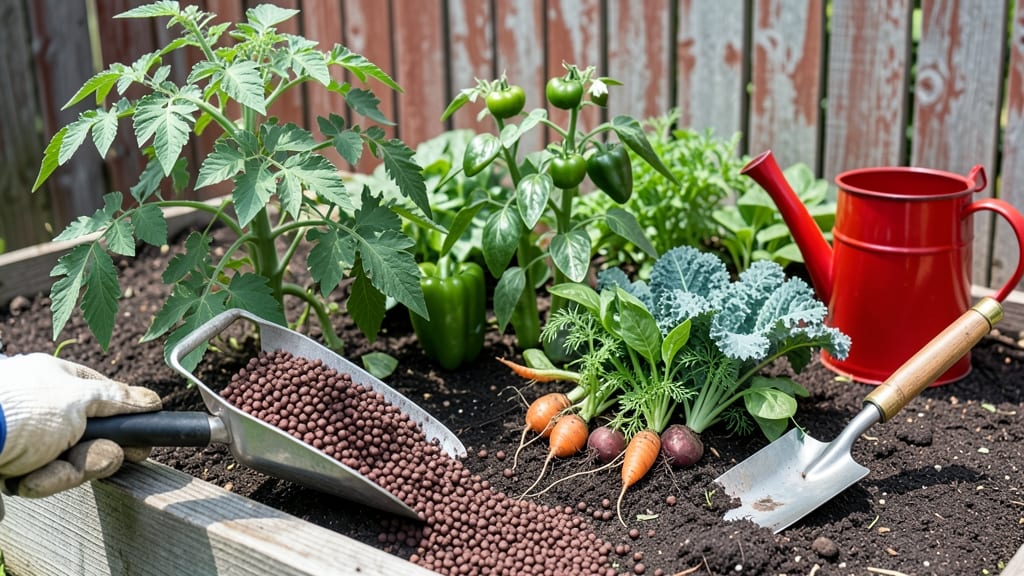
To apply fertilizer to your vegetable garden at the right times means the difference between lush, productive plants and stunted growth that never quite reaches its potential.
Picture this: you’ve spent weeks preparing your soil, carefully selecting seeds, and nurturing young seedlings—only to watch them wilt or produce half-sized tomatoes because you missed the critical fertilizer windows.
Timing isn’t just about throwing down a bag of nutrients; it’s about syncing with your plants’ needs at each growth stage.
Soil-test results are your first clue, revealing whether your garden needs a pre-planting boost or a mid-season top-up. But even with the data, most gardeners still guess when to feed—often overdoing it early or skipping it entirely when plants are hungry.
Here’s how to get it right, from seedling to harvest.
You’ll learn the exact growth-stage schedule for common vegetables, how to read soil-test numbers like a pro, and the simple tricks to avoid wasting fertilizer (or money) while keeping your garden thriving all season.

Optimal fertilizer application timing based on soil-test results for vegetable gardens
Interpreting your soil-test results is the first step to creating a fertilizer schedule that maximizes nutrient uptake for your vegetable garden. Most home tests reveal three key metrics: pH levels, nitrogen (N), phosphorus (P), and potassium (K).
These numbers determine not just what you fertilize with, but when to apply fertilizer for the best results. For example, low pH (below 6.0) means you'll need to amend soil before planting, while low nitrogen (below 50 ppm) signals the need for a quick pre-planting boost.
Soil tests also reveal whether your garden needs organic matter or synthetic amendments. Organic fertilizers like compost or manure release nutrients slowly, making them ideal for pre-planting applications 4-6 weeks before sowing.
Synthetic fertilizers, on the other hand, provide immediate nutrients and are best applied during active growth stages. The key is matching your fertilizer type to your soil's current state and your plants' nutrient demands at different growth phases.
For pre-planting applications, focus on phosphorus and potassium to establish strong root systems. A balanced fertilizer like 5-10-10 applied 2-4 weeks before sowing seeds or transplanting seedlings gives plants a head start.
My favorite method is mixing compost into the top 6 inches of soil while tilling, which also improves soil structure. This timing ensures nutrients are available from the moment seeds germinate or seedlings establish roots.
Once your vegetables are actively growing, switch to a higher-nitrogen fertilizer like 10-5-5 or fish emulsion to promote leafy growth. Apply this every 3-4 weeks during the early-season growth phase, typically from late spring through early summer.
For example, leafy greens like lettuce and spinach respond well to frequent light feedings, while root vegetables like carrots and beets need less nitrogen once they start forming edible parts.
Mid-season is the time to fine-tune your approach based on what your plants are producing. Fruiting vegetables like tomatoes, peppers, and cucumbers need a phosphorus boost during flowering to develop strong fruits. Use a low-nitrogen, high-phosphorus fertilizer like 3-12-6 when you see flower buds forming.
For heavy feeders like corn or squash, a balanced liquid fertilizer applied every 2 weeks keeps them thriving until harvest.
Don't overlook post-harvest soil health. After pulling out your last crop of the season, apply a slow-release organic fertilizer or cover crop seeds to replenish nutrients. This fall application ensures your soil is ready for next year's planting.
I've found that adding worm castings in autumn improves soil microbial life, which naturally breaks down organic matter into plant-available nutrients over winter.
One common mistake is applying fertilizer when plants show nutrient deficiency symptoms. By then, it's often too late. Instead, use your soil-test results to create a preventative schedule.
For instance, if your test shows low potassium, plan to apply a potassium-rich fertilizer during the late summer fruiting stage of your tomatoes to prevent blossom-end rot. Proactive timing based on soil data leads to healthier plants and higher yields.
Remember that weather conditions also affect fertilizer timing. Heavy rains can leach nutrients from soil, so avoid applying fertilizer within 24 hours of rain. Similarly, high temperatures can cause nitrogen volatility, making early morning applications ideal.
Always water thoroughly after fertilizing to help nutrients penetrate the soil and reach plant roots.
Start by testing your soil in early spring, then adjust your fertilizer schedule based on the results. With the right timing, your vegetable garden will thrive from seedling to harvest—no guesswork required! 🌱
Critical growth stages for fertilizing vegetables: when to feed for best yields
Fertilizing vegetables at the right time is like giving your plants a perfectly timed energy boost—they need it most when they're growing fastest or producing the most. Miss these windows, and you'll end up with stunted growth, poor yields, or even plant stress.
The key is understanding how each growth stage demands different nutrients, from root development to fruit production.
For example, leafy greens like spinach and lettuce need a gentle push early on, while tomatoes and peppers require heavy feeding during flowering and fruiting. Even root vegetables like carrots and beets have specific needs.
Let's break down the exact stages where fertilizer makes the biggest difference—and how to adjust for your favorite crops.
- 1 Pre-Planting: Apply a balanced fertilizer (like 10-10-10) or compost 2-4 weeks before planting. This ensures nutrients are available for seedling emergence. For heavy feeders like tomatoes, work in aged manure or bone meal for extra phosphorus.
- 2 Seedling Stage (2-4 weeks): Use a low-nitrogen fertilizer (like 5-10-10) to encourage root growth without burning tender shoots. Leafy greens can handle a light side-dressing of compost tea here.
- 3 Flowering Stage: Switch to a high-phosphorus fertilizer (like 3-10-5) to support bloom development. Peppers and tomatoes need this most—apply when first flowers appear and repeat every 2 weeks.
- 4 Fruiting Stage: Use a balanced or potassium-rich fertilizer (like 5-5-10) to boost fruit production. Cucumbers and squash respond well to foliar sprays of seaweed extract during this phase.
- 5 Post-Harvest: Feed with compost or slow-release fertilizer to replenish soil. Avoid high-nitrogen feeds—this encourages leafy growth over storage crops like potatoes or carrots.
Pro tip: Always water fertilizer in deeply to prevent root burn. For container gardens, use half-strength liquid fertilizer every 2 weeks during the growing season. And remember—organic matter like compost is your best long-term solution for maintaining healthy soil between feedings.
Timing matters just as much as what you feed your plants. For example, tomatoes need a phosphorus boost when flowers form, while lettuce benefits from nitrogen early on but can suffer if overfed later.
Pay attention to your plants' color and growth patterns—yellowing leaves might mean too much nitrogen, while stunted flowers signal a phosphorus deficiency.
Start with a soil test to tailor your approach, but don't stress over perfection. Even a rough schedule of pre-planting, flowering, and fruiting feedings will give you healthier plants and bigger harvests.
The more you garden, the more you'll notice subtle cues that tell you exactly when your plants need that extra boost.