How To
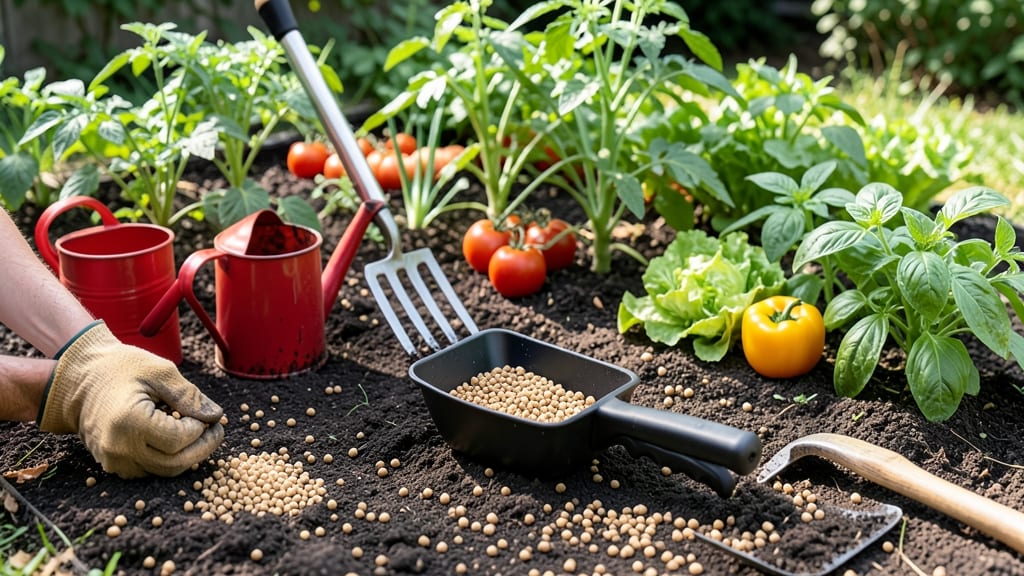
To fertilize a vegetable garden properly, follow a schedule that matches your crops' growth stages—too little stunts them, and too much burns their roots.
Wondering why your 🥬 isn’t thriving despite your best efforts? The answer might be in your fertilization timing. Science shows that leafy greens, fruiting plants, and root crops all need different feeding cycles, and getting it wrong can mean the difference between a bumper harvest and a sad, stunted garden.
Most gardeners overcomplicate it by sticking to one rule for everything, but the truth is simpler: fast-growing crops like lettuce need frequent, light feedings, while heavy feeders like tomatoes thrive on deeper, less frequent doses.
Below, I break down the exact schedule by plant type, seasonal adjustments, and how to spot when you’re over- or under-doing it.
You’ll learn how often to fertilize—from pre-planting boosts to mid-season maintenance—and when to skip it entirely to avoid common mistakes that waste money and harm your soil.

Science-backed fertilization frequency by vegetable type: fast-growing vs. slow-growing crops
Fertilizing your vegetable garden isn't a one-size-fits-all task—different crops have unique nutrient needs based on their growth speed and development stages. Fast-growing leafy greens like spinach and lettuce thrive with frequent, light feedings, while slow-growing root crops such as carrots and potatoes benefit from gradual, balanced nutrition.
Understanding these differences ensures your plants get exactly what they need without wasting resources or harming growth.
Science shows that soil nutrient depletion happens at different rates depending on the crop. For example, fruiting plants like tomatoes and peppers deplete phosphorus faster, while nitrogen-loving greens like kale and Swiss chard require more frequent top-ups.
Organic fertilizers like compost or manure release nutrients slowly, while synthetic fertilizers provide an immediate boost but can burn roots if overapplied.
Your fertilization schedule should align with each plant's growth phases. Fast-growing crops need frequent feedings every 2-4 weeks, while slow growers may only need fertilization every 6-8 weeks. Below, I’ve broken down the ideal schedules for common vegetable types, including organic and synthetic options.
| Vegetable Type | Growth Speed | Fertilizer Type | Frequency | Key Nutrient |
|---|---|---|---|---|
| Leafy Greens (Lettuce, Spinach, Kale) | Fast | High-Nitrogen (10-5-5) or Compost | Every 2-3 weeks | Nitrogen (N) |
| Root Crops (Carrots, Potatoes, Beets) | Slow-Medium | Balanced (5-10-10) or Bone Meal | Every 6-8 weeks | Phosphorus (P) |
| Fruiting Plants (Tomatoes, Peppers, Cucumbers) | Medium-Fast | High-Potassium (5-10-10) or Banana Peel Tea | Every 4-6 weeks | Potassium (K) |
| Legumes (Beans, Peas, Peanuts) | Fast | Low-Nitrogen (5-10-10) or Fish Emulsion | Every 4 weeks (light feed) | Phosphorus (P) |
| Alliums (Onions, Garlic, Leeks) | Slow | Balanced (10-10-10) or Kelp Meal | Every 8 weeks | Nitrogen (N) & Potassium (K) |
For fast-growing crops like lettuce and radishes, I recommend using a high-nitrogen fertilizer (like blood meal or fish emulsion) every 2-3 weeks. These plants grow quickly and need a steady supply of nitrogen to produce lush foliage.
However, be cautious—over-fertilizing can lead to leafy growth at the expense of roots or even nutrient burn.
Slow-growing vegetables, such as squash or corn, benefit from a more gradual approach. Start with a balanced fertilizer (like 10-10-10) at planting, then switch to a low-nitrogen, high-phosphorus fertilizer (like bone meal) every 6-8 weeks. This supports root development and flowering without overstimulating growth too early in the season.
Organic fertilizers like compost, worm castings, or manure teas release nutrients slowly, making them ideal for slow-growing crops. They improve soil structure over time and reduce the risk of salt buildup, which can harm plant roots.
For faster results, synthetic fertilizers can be used, but always follow the label instructions to avoid overapplication.
Timing is just as critical as the type of fertilizer. For spring planting, apply a starter fertilizer at the time of sowing to give seedlings a strong foundation. During the summer months, focus on light feedings every 4-6 weeks to maintain production without stressing the plants.
In fall, reduce or stop fertilizing 4-6 weeks before the first frost to allow plants to harden off naturally.
One common mistake I see in gardens is over-fertilizing fruiting plants like tomatoes and peppers. These crops need a balance of nutrients, but too much nitrogen can lead to excessive foliage and fewer fruits.
Instead, opt for a high-potassium fertilizer (like banana peel tea or wood ash) to encourage fruit production and disease resistance.
To maximize your garden's potential, test your soil at the beginning of the season. This helps you understand which nutrients are lacking and adjust your fertilization plan accordingly. For example, if your soil is deficient in phosphorus, focus on bone meal or rock phosphate for root and fruiting crops.
Remember, every garden is unique, so keep an eye on your plants' growth patterns and adjust your schedule as needed. With the right fertilization strategy, you’ll enjoy a bountiful harvest of healthy, thriving vegetables all season long.
Signs your vegetable garden needs fertilizer (and when to adjust your schedule)
Your vegetable garden silently communicates when it needs extra nutrients—you just have to know what to look for. Yellowing leaves, stunted growth, or poor flowering are classic red flags that your plants are hungry.
These signs often appear when soil nutrients are depleted faster than they’re replenished, especially during peak growing seasons like late spring and summer. Understanding these visual cues helps you adjust your fertilization schedule before problems escalate.
For example, nitrogen deficiency causes older leaves to turn pale yellow, while phosphorus shortages may lead to weak roots and delayed flowering. Potassium issues often show as brown leaf edges or poor fruit development.
Each nutrient plays a critical role, and recognizing these symptoms early lets you act fast with targeted fertilizers or soil amendments. Testing your soil’s pH and nutrient levels at home (using simple test kits) can also reveal exactly what your garden needs before symptoms appear.
⚠️ PROS-CONS-BOX: How Often to Fertilize Your Vegetable Garden ⚠️
Fertilizing Frequency
- Balanced growth: Regular feeding ensures steady nutrient supply
- Higher yields: Proper fertilization boosts fruit/vegetable production
- Prevents deficiencies: Stops yellowing or stunted growth before it starts
- Seasonal timing: Aligns with plant's active growth phases
- Over-fertilizing: Can burn roots or cause salt buildup in soil
- Environmental impact: Excess nutrients may runoff into waterways
- Cost: Frequent synthetic fertilizers add up over time
- Timing mistakes: Fertilizing late in season can encourage tender growth before frost
Adjusting your fertilization schedule depends on the type of vegetables you’re growing. Leafy greens like lettuce and spinach benefit from frequent, nitrogen-rich feedings every 3-4 weeks, while root crops such as carrots and potatoes prefer phosphorus-heavy fertilizers applied at planting. Fruiting plants like tomatoes and peppers need balanced nutrients every 4-6 weeks but may require extra potassium as they mature. Pay attention to your plants’ growth stages—young seedlings need gentle feeding, while established plants can handle more robust nutrition.
If you notice leaf curl, spotted leaves, or weak stems, it’s time to test your soil. Home test kits (available at garden centers) measure pH and nutrient levels in minutes. For example, a pH below 6.0 may require lime, while levels above 7.0 might need sulfur.
Once you identify the deficiency, apply a targeted fertilizer—like fish emulsion for nitrogen or bone meal for phosphorus—and monitor your plants for improvement within 2-3 weeks. Remember, overcorrecting can be just as harmful as neglecting your garden’s needs.
Timing is everything when it comes to fertilization. Spring feeding jumpstarts growth, while summer applications maintain production during heat stress. Avoid fertilizing late in the season (after mid-August in most climates), as this can encourage tender new growth vulnerable to frost.
Instead, focus on compost and organic matter in fall to replenish soil for next year. By tuning into your garden’s signals and adjusting your schedule accordingly, you’ll enjoy healthier plants and bountiful harvests all season long.
🌱 Start by observing your plants weekly—catching early signs of nutrient stress means quicker fixes and happier vegetables!