
Planting
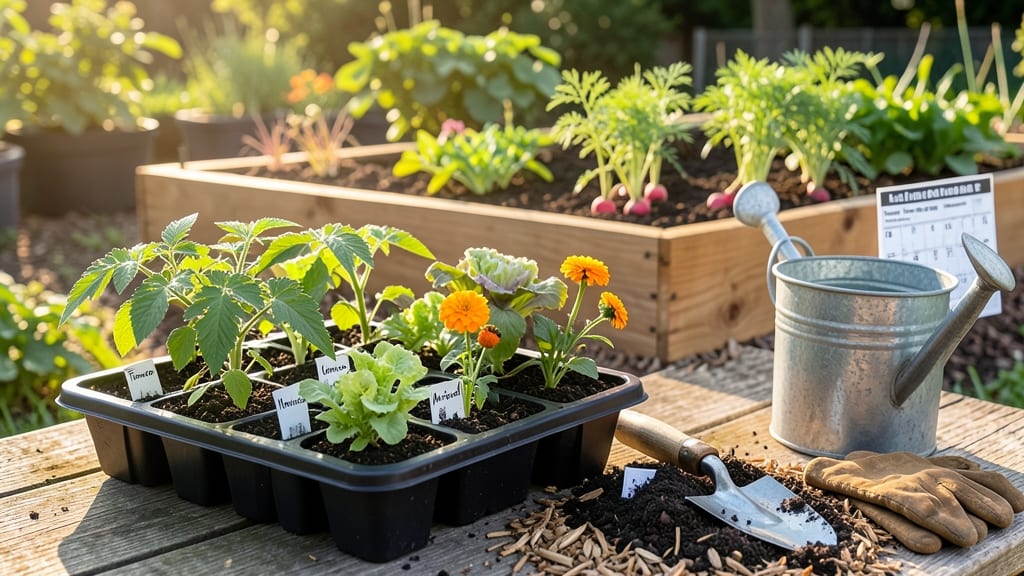
Planting your garden in Maryland at the right time means the difference between a thriving harvest and a missed opportunity—cool-season crops need to go in 4-6 weeks before last frost, while warm-season plants wait until 2-3 weeks after.
Maryland’s unpredictable spring weather can turn your gardening dreams into a guessing game—but timing your plantings right means the difference between a bountiful harvest and a sad, wilted disappointment.
Whether you’re in USDA Zone 7a-8a, coastal Baltimore, or the Piedmont hills, the key is knowing when to start seeds indoors, when to transplant, and how to adjust for regional microclimates.
In this guide, I’ll walk you through the exact planting windows for your 🌱 General Garden Vegetables, from lettuce to tomatoes, plus pro tips to avoid common mistakes and extend your growing season.
Maryland’s USDA Zone 7b planting calendar: last frost dates and heat-tolerant vegetable timelines
Maryland’s USDA Zone 7b offers a 165-day frost-free season, but those dates can shift dramatically between March 15 and April 15 for the last spring frost. Getting your planting schedule wrong means wilted seedlings or stunted harvests—so let’s break it down by crop type to maximize your garden’s potential.
Whether you’re growing cool-season greens or heat-loving tomatoes, timing is everything.
For cool-season crops like lettuce, spinach, and peas, you can start sowing 4-6 weeks before your last frost date. These hardy plants thrive in 50-65°F soil temperatures and can even handle light frosts.
Meanwhile, warm-season crops such as tomatoes, peppers, and cucumbers need to wait until the soil warms to 60°F+, typically 2-3 weeks after your last frost. This timing ensures they avoid transplant shock and grow vigorously.
Here’s a quick reference for Maryland’s last frost dates and ideal planting windows to keep your garden on track:
| Crop Type | Planting Window | Soil Temp Requirement | Days to Maturity | Notes |
|---|---|---|---|---|
| Cool-Season Crops | March 15 - April 15 (4-6 weeks before last frost) | 40-65°F | 30-90 days | Lettuce, spinach, peas, broccoli |
| Warm-Season Crops | April 30 - May 15 (2-3 weeks after last frost) | 60°F+ | 50-120 days | Tomatoes, peppers, cucumbers, beans |
| Heat-Tolerant Crops | June 1 - July 15 (after soil warms) | 70°F+ | 60-100 days | Okra, sweet potatoes, southern peas |
| Fall Crops | August 1 - September 1 (60-75 days before first frost) | 50-65°F | 30-80 days | Kale, radishes, carrots, turnips |
If you’re aiming for a zero-frost-risk harvest, focus on heat-tolerant varieties like okra and sweet potatoes, which thrive in Maryland’s summer heat. These crops can be planted as late as June 1 and still produce well into September or October, depending on your microclimate.
For example, Baltimore’s coastal areas often stay warmer longer than inland regions like Frederick, so adjust your schedule accordingly.
For fall planting, start seeds indoors in July for crops like kale and broccoli, then transplant them outdoors by August 1. This gives them enough time to mature before the first frost, which typically hits mid-November in Maryland.
Use row covers to extend your growing season by 2-4 weeks if you’re eager to keep harvesting into late fall.
Pro tip: Use a soil thermometer to monitor temperatures before planting warm-season crops. Soil that’s too cold can stunt growth, while too-hot soil (above 90°F) may cause seedling stress.
Aim for 60-70°F for most vegetables. If your soil is still chilly in early May, consider using black plastic mulch to warm it up faster.
Don’t forget about succession planting! For crops like lettuce and radishes, sow new seeds every 2-3 weeks to ensure a continuous harvest. This strategy works especially well for cool-season crops that bolt (go to seed) quickly in Maryland’s heat.
By staggering plantings, you’ll enjoy fresh greens from spring through early summer.
Finally, keep an eye on your local weather forecasts and historical frost data. While April 15
How to adjust planting times for Maryland’s microclimates: coastal vs. Piedmont vs. mountain regions
Maryland’s diverse geography creates three distinct microclimates—coastal, Piedmont, and mountain—that can shift your planting schedule by 2-4 weeks. If you live near the Chesapeake Bay, warmer coastal breezes let you start earlier, while mountain gardeners in Garrett County may need to wait until late May for warm-season crops.
Understanding these regional differences helps you avoid late frosts or stunted growth from cool soil temperatures.
For example, Baltimore’s coastal zone (USDA 7b-8a) often sees its last frost by March 25, while Frederick in the Piedmont (USDA 7a) can experience frost as late as April 15.
Meanwhile, Deep Creek Lake’s mountain region (USDA 6b) may not be frost-free until May 10. These variations mean your neighbor’s tomato seedlings might thrive while yours struggle—or vice versa.
To fine-tune your schedule, use a soil thermometer ($15 at garden centers) to confirm when soil reaches 60°F for warm-season crops like peppers and cucumbers. Coastal areas hit this mark by mid-April, while Piedmont regions may not reach it until late April.
For cool-season crops like kale or spinach, plant 4-6 weeks before your region’s average last frost date.
Pro Tip: Bookmark the Maryland Frost-Free Date Calculator (UMD Extension) to input your ZIP code and get hyper-local frost predictions. This tool accounts for elevation shifts (every 1,000 feet adds 3-5°F of chill) and urban heat islands (cities like Baltimore stay 5°F warmer than rural areas).
If you’re unsure about your microclimate, observe your garden’s natural indicators. For instance, dandelions blooming in early March signal coastal warmth, while daffodils appearing in late April hint at Piedmont conditions. Mountain gardeners often rely on cherry blossoms (late April) as a cue to start warm-season transplants.
For container gardening, coastal areas can plant herbs like basil by April 1, but Piedmont gardeners should wait until April 15.
Extend your growing season with seasonal adjustments: Use black plastic mulch in coastal areas to warm soil faster, or straw mulch in mountains to insulate roots. For fall crops, mountain regions can plant spinach by August 15 (earlier than coastal areas), thanks to cooler nights.
Always check the 7-day forecast before planting—even a 28°F night can kill tender seedlings.
Remember, Maryland’s microclimates aren’t static. Urban sprawl, climate change, and local topography shift frost dates yearly. Keep a gardening journal to track your region’s trends, and adjust your schedule by 3-5 days annually based on your observations.
With these tweaks, you’ll maximize your harvest—no matter where you garden in Maryland! 🌱