
Tools
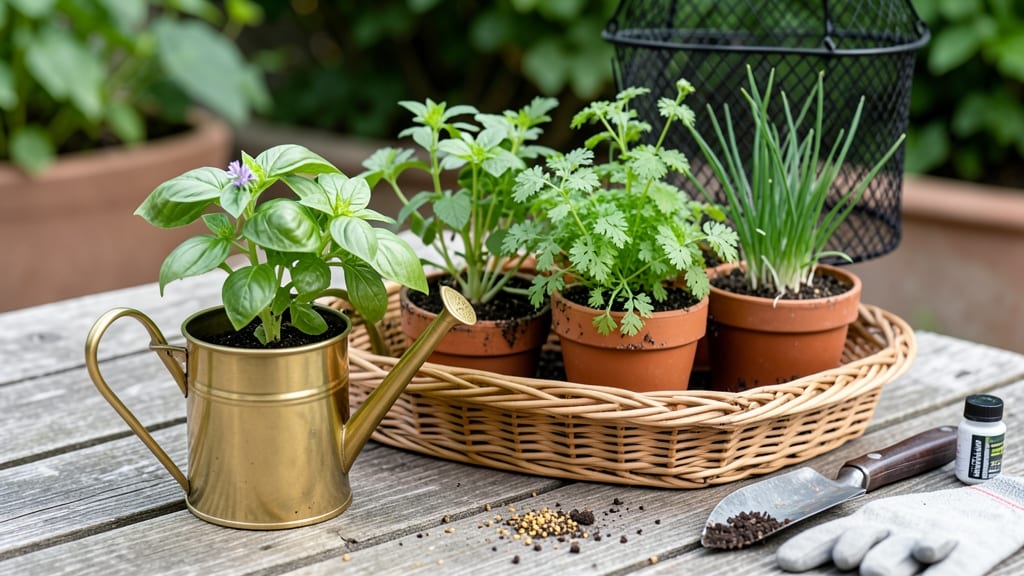
A to-go garden maximizes small spaces by stacking plants vertically, using containers, and square-foot grids to grow high-value crops like leafy greens, herbs, and compact vegetables in tight areas.
This approach lets you grow more food in less space by making the most of vertical real estate—think trellises for beans or hanging baskets for strawberries. 🌱 Containers are especially useful for urban gardeners or renters, since they're portable and can be moved to follow sunlight.
The key is choosing fast-growing, space-efficient plants that yield well without needing much room to spread.
Square-foot gardening takes this further by dividing beds into a grid, letting you plant multiple crops in the same square. For example, you could fit 16 radishes in one square foot while leaving room for lettuce around them.
The magic happens when you combine these techniques—vertical for climbing plants, containers for herbs, and grids for root vegetables—creating a multi-layered growing system that works even in balconies or patios.
💡 In This Article
- Vertical and Square-Foot Gardening Techniques for Small-Yield Crops
- Best Container and Portable Garden Setups for Mobile Growers
Vertical and square-foot gardening techniques for small-yield crops
Vertical gardening transforms limited spaces into productive layers by training plants to grow upward instead of outward.
This technique relies on trellises, cages, or hanging pockets to support vining plants like pole beans, cucumbers, and even compact varieties of squash. 🌿 The key is selecting plants with strong stems or using lightweight materials like bamboo stakes or spiral trellises that won't overwhelm small areas.
For example, a 4-foot-tall trellis can support 12-15 feet of cucumber vines in the same space that would only fit 1-2 feet of bush varieties on the ground.
Square-foot gardening takes efficiency further by dividing planting beds into a 1-foot-by-1-foot grid, allowing you to maximize root zones for each plant.
The system uses a mel's notebook-style planting chart to determine how many plants fit per square—like 16 radishes, 4 onions, or 1 tomato plant—while accounting for their mature size. This method works especially well with fast-growing, high-yield crops like leafy greens and herbs, which can be harvested multiple times.
The science behind it is simple: by spacing plants precisely, you eliminate wasted space while ensuring each plant gets enough nutrients and sunlight.
For small-yield crops, the combination of vertical and square-foot techniques creates a powerhouse system.
Imagine a 3-foot-by-3-foot raised bed divided into 9 squares: you could dedicate one square to 9 lettuce plants, another to 16 radishes, and a third to a single compact strawberry plant with a vertical trellis for support.
This setup not only saves space but also allows for intercropping, where fast-growing crops like radishes are planted alongside slower ones like carrots, ensuring no square sits empty during the growing season.
One often-overlooked detail is the weight distribution in vertical setups. Heavy plants like tomatoes or melons need sturdy support—think metal cages or thick wooden framesfabric pockets or hanging baskets.
The material choice matters too: plastic containers hold moisture longer, while fabric pots allow roots to breathe better, reducing the risk of rot in humid conditions. For square-foot beds, using high-quality compost mixed with vermiculite ensures proper drainage while providing nutrients.
To make this work in tight spaces, consider the sunlight exposure at different heights. Tall plants like sunflowers or pole beans should face south (in the Northern Hemisphere) to maximize light, while shorter plants like herbs or lettuce can thrive in partial shade.
A rotating trellis system—where you adjust the angle of the trellis throughout the day—can help even out sunlight distribution for vining plants. This attention to detail ensures every inch of your "to-go garden" is used efficiently, whether you're on a balcony, patio, or windowsill.
For those with limited mobility or who move frequently, modular setups are a game-changer. Stackable containers or foldable trellises let you reconfigure your garden as needed, while self-watering systems (like wicking beds or drip irrigation) reduce maintenance.
The result? A high-yield, low-effort garden that adapts to your lifestyle—whether you're a city dweller, a renter, or someone who loves the flexibility of a portable growing system. 🌱