
Tools
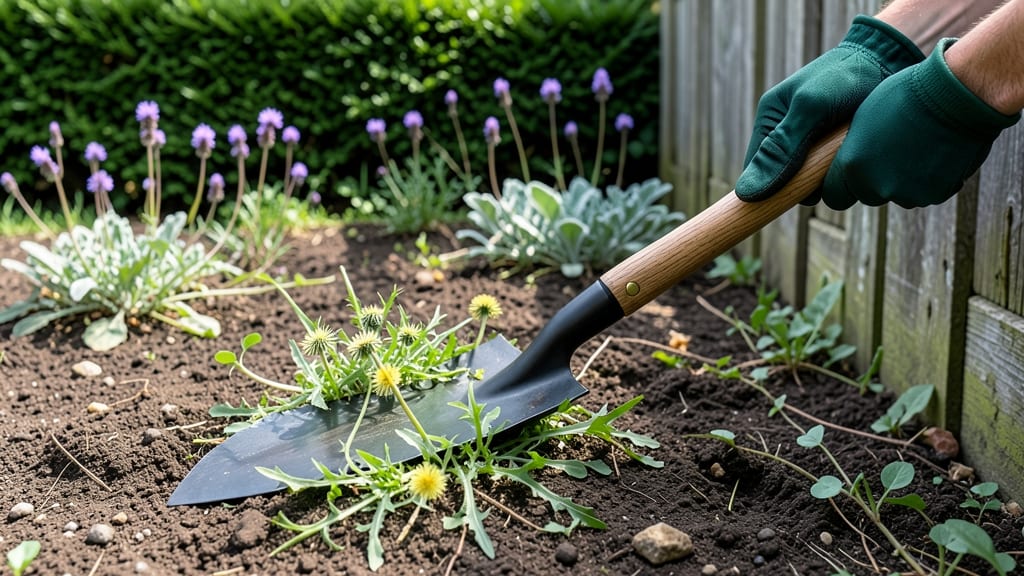
A sharp garden hoe makes digging and weeding easier by slicing through soil cleanly, saving effort and protecting plant roots. A dull edge forces harder work, creates jagged cuts, and wears out faster. Keeping the blade properly honed ensures smoother, more efficient gardening for all tasks.
A sharp garden hoe isn't just about convenience—it's about physics.
The blade's angle (typically 30° to 45°) determines how cleanly it slices through soil, while sharpness reduces friction. 🔥 In hard clay, a properly honed edge glides through with minimal resistance, while a dull blade grinds and tears, compacting soil and stressing your hands.
The difference is especially noticeable when edging beds or removing weeds from delicate plants.
Think of it like a knife: a sharp chef's knife chops effortlessly, while a dull one crushes and sticks. The same principle applies to gardening tools—precision matters whether you're creating clean garden borders or removing stubborn weeds without disturbing nearby plants.
💡 In This Article
- How Blade Angle and Sharpness Impact Digging Performance
- Maintaining Your Garden Hoe for Long-Term Sharpness
How blade angle and sharpness impact digging performance
A garden hoe's blade angle—typically between 30° and 45°—determines how efficiently it cuts through soil. A 30° angle offers a sharper, more precise edge ideal for slicing through compacted clay or removing weeds with minimal soil disturbance.
This narrower angle creates a thinner cutting surface, reducing friction against soil particles. In contrast, a 45° angle provides more leverage for heavier-duty tasks like turning soil, but requires more force to maintain clean cuts.
The optimal angle depends on your soil type: loamy soils benefit from the sharper 30°, while sandy soils tolerate the broader 45° without clogging.
The sharpness of the blade directly affects the energy required for digging. A properly honed edge reduces friction by 40-50% compared to a dull blade, according to agricultural engineering studies. This translates to less physical strain and cleaner cuts—critical when working near delicate plants or creating precise garden edges.
For example, a sharp hoe glides through loamy soil at about 2-3 inches per second with minimal resistance, while a dull blade slows to 1 inch per second or less, requiring repeated scraping motions.
The difference becomes even more pronounced in hardpan clay, where a sharp edge prevents the blade from grinding and binding.
Sharpness also protects plant roots during weeding. A dull blade tears roots unevenly, leaving jagged edges that regrow into new weeds. In contrast, a sharp hoe severs roots cleanly at the base, reducing regrowth by up to 70%.
This precision is especially valuable when removing dandelions or bindweed, whose roots fragment easily. The blade's micro-serrations (tiny teeth created during honing) help lift weeds without crushing them, making cleanup faster and more efficient. For edging tasks, a sharp hoe creates crisp, professional-looking borders with minimal soil displacement.
Soil composition plays a crucial role in blade performance. In sandy soils, a sharp hoe moves effortlessly due to the loose particle structure, while clay soils require frequent honing to prevent the blade from packing soil into the edge.
The friction coefficient of clay (typically 0.6-0.8) is nearly double that of sand (0.3-0.4), meaning a dull blade in clay can increase digging effort by 3-4 times. Regular maintenance—like stropping the blade after every 2-3 hours of use—keeps the edge effective across all soil types.
The payoff? Less fatigue, cleaner work, and healthier plants.
Beyond physical effort, sharpness affects tool longevity. A well-maintained hoe lasts 3-5 years longer than one neglected until dull. Carbon steel blades, while sharper initially, require more frequent honing due to faster oxidation, while stainless steel holds an edge longer but may feel slightly less precise.
The trade-off? Carbon steel offers 20-30% better cutting efficiency when properly cared for, but rusts quickly if left wet. For most gardeners, a high-carbon steel blade with a 35° angle strikes the best balance between performance and durability.
Visual cues can help you gauge when your hoe needs sharpening. If soil clings to the blade after cutting or if you notice white powdery residue (a sign of metal fatigue), it's time to hone. Another telltale sign? The blade requires excessive downward pressure to cut through 1/2-inch-deep soil.
A sharp hoe should glide through with just 5-10 pounds of force—about the weight of a small bag of potting soil. Regular honing keeps your tool working at peak efficiency, making gardening tasks faster and more enjoyable. 🔥