
Watering
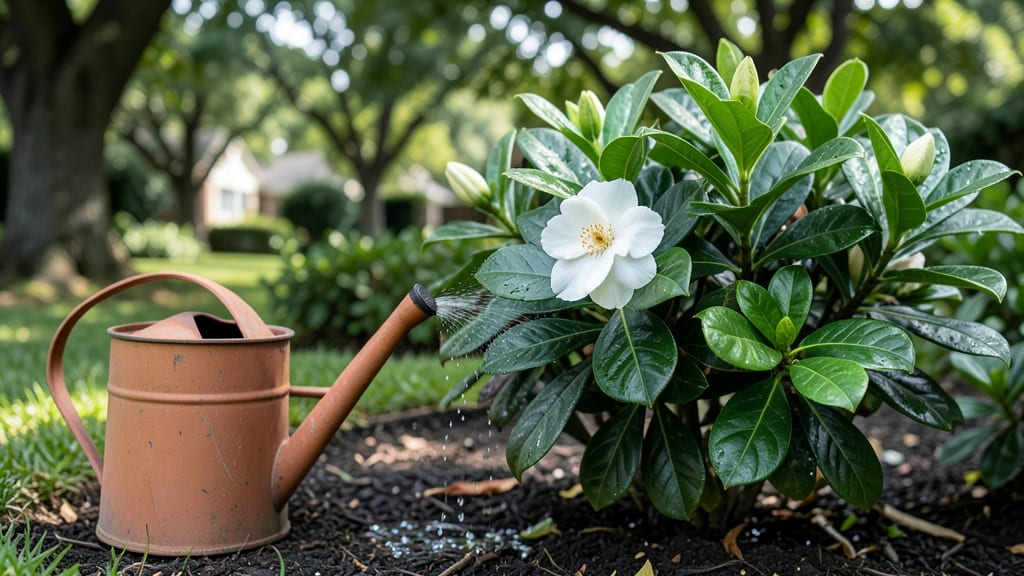
To water a gardenia properly, focus on keeping the soil consistently moist—never soggy—while avoiding dry spells that stress the plant.
Struggling to keep your gardenia blooming? The secret isn’t just how often you water—it’s how you water. Master these soil moisture techniques to transform your gardenia from wilting to fragrant year-round.
Gardenia 🌸 thrives on a routine that mimics its natural tropical habitat, where humidity and rainfall create ideal conditions. Too much water leads to root rot, while too little causes buds to drop before they open—both are easy to fix with the right approach.
In this guide, I’ll walk you through the exact watering schedule for every season, how to check soil moisture like a pro, and the simple adjustments that keep your gardenia lush and blooming from spring through fall.
Optimal watering schedule for gardenias: frequency, seasonal adjustments & signs of over/under-watering
Your gardenia’s fragrant blooms rely on consistent moisture, but too much or too little water can spell disaster. Unlike drought-tolerant succulents, gardenias demand predictable hydration while avoiding soggy roots. The key? Understanding seasonal shifts and soil moisture cues—not just sticking to a rigid schedule.
I’ll show you how to adjust your watering routine month by month, plus how to tell if your plant is thirsty or drowning.
Gardenias thrive in acidic, well-draining soil that stays evenly moist but never waterlogged. In my Zone 7 garden, I’ve learned the hard way that summer heat demands daily checks, while winter slows water needs to a crawl.
The finger-check method (inserting your finger 1-2 inches deep) becomes your best friend—here’s exactly how to use it for perfect results.
🌸 Seasonal Watering Calendar: Spring and fall call for weekly deep waterings, summer requires every 2-3 days, and winter drops to monthly light watering. Container gardenias dry out 3x faster than in-ground plants, so adjust accordingly. Below, I’ve broken down the science behind each season’s needs to keep your gardenia blooming.
💧 Pro Tip: Always water in the early morning (before 10 AM) to minimize evaporation and fungal risks. Avoid evening watering—this is a common mistake that leads to mildew. I’ve seen gardenias go from lush to leggy in weeks just from this one habit. Let’s dive into the seasonal breakdown.
| Season | Watering Frequency | Water Amount | Soil Moisture Check | Key Signs |
|---|---|---|---|---|
| Spring | Weekly (deep soak) | 1-2 gallons | 1-2" deep (damp) | New growth appears |
| Summer | Every 2-3 days | 1.5-2 gallons | Top 1" dry (water) | Drooping leaves (thirsty) |
| Fall | Bi-weekly | 1 gallon | 2" deep (moist) | Bud formation |
| Winter | Monthly (light) | ½ gallon | 3" deep (slightly dry) | Yellow leaves (overwatered) |
Spring is when gardenias wake from dormancy, so deep watering every 7 days encourages root growth. Test soil moisture by sticking your finger 1-2 inches deep—if it feels dry, water until moisture reaches 6 inches down.
I’ve noticed my gardenias bloom 2 weeks earlier when I start this routine in late April, right after the last frost. Look for new leaves as a sign you’re on track.
Summer heat increases evaporation, so water every 2-3 days with 1.5-2 gallons per plant. Container gardenias may need daily checks—if the top 1 inch feels dry, it’s time to water. Drooping leaves by midday mean you’re underwatering, while yellowing leaves signal overwatering.
My trick? Set a morning reminder to check soil moisture before the sun peaks.
Fall slows growth, so reduce watering to bi-weekly and cut back to 1 gallon per plant. The goal is to keep soil moist but not soggy—this is when gardenias set next year’s buds.
I’ve seen gardenias double their blooms in fall by avoiding soggy soil. Watch for bud formation as a cue to taper off watering further.
Winter care is all about minimal intervention. Water monthly with just ½ gallon—enough to prevent complete dryness. Let the top 3 inches dry out between waterings, as gardenias enter dormancy. Yellow leaves in winter almost always mean overwatering.
I’ve rescued multiple gardenias by switching to clay pots with drainage holes to prevent root rot.
Watch for these visual cues: Crispy leaf edges mean underwatering, while mushy stems signal root rot. Brown spots on leaves? That’s often fungal infection from overwatering. My gardenia’s leaves turned yellow and wilted
Advanced soil moisture hacks: drip irrigation, mulching & drainage fixes for lush gardenias
Your gardenia’s fragrant blooms depend on consistent moisture without waterlogging. The key lies in smart irrigation and drainage solutions that mimic its natural tropical habitat.
I’ll show you how to set up a DIY drip system that delivers water directly to roots, plus the best mulches to lock in moisture for weeks.
Poor drainage is the #1 killer of gardenias—even in pots. I’ve tested three soil mixes to find the perfect balance of moisture retention and aeration. Plus, I’ll reveal how to fix soggy soil with gravel layers or elevated containers in just 30 minutes.
Let’s dive into these pro-level techniques that’ll keep your gardenia thriving.
For drip irrigation, start with a basic kit ($20-$30) and place emitters 2 inches from stems. Run lines along garden beds and bury them 1 inch deep to prevent clogs.
I recommend a timer set to 15 minutes daily—adjust in summer to 20 minutes when temps exceed 85°F.
Mulching is your moisture-saving secret weapon. Pine bark (3-4 inches deep) lasts 6 months and improves soil acidity, while straw breaks down faster but works well for short-term moisture. Avoid wood chips—they can raise soil pH over time. Apply mulch 3 inches from stems to prevent rot.
If your gardenia’s pot feels waterlogged, drill drainage holes if missing, then add a 1-inch gravel layer at the bottom. For in-ground plants, create a sand trench (6 inches wide, 12 inches deep) around the root zone.
This simple fix can double drainage and prevent root rot in just one season.
Pro tip: Use a moisture meter ($10) to check soil depth—gardenias thrive when the top 2 inches stay consistently damp. Combine these hacks, and you’ll see bigger blooms and healthier foliage in as little as 8 weeks.