
Watering
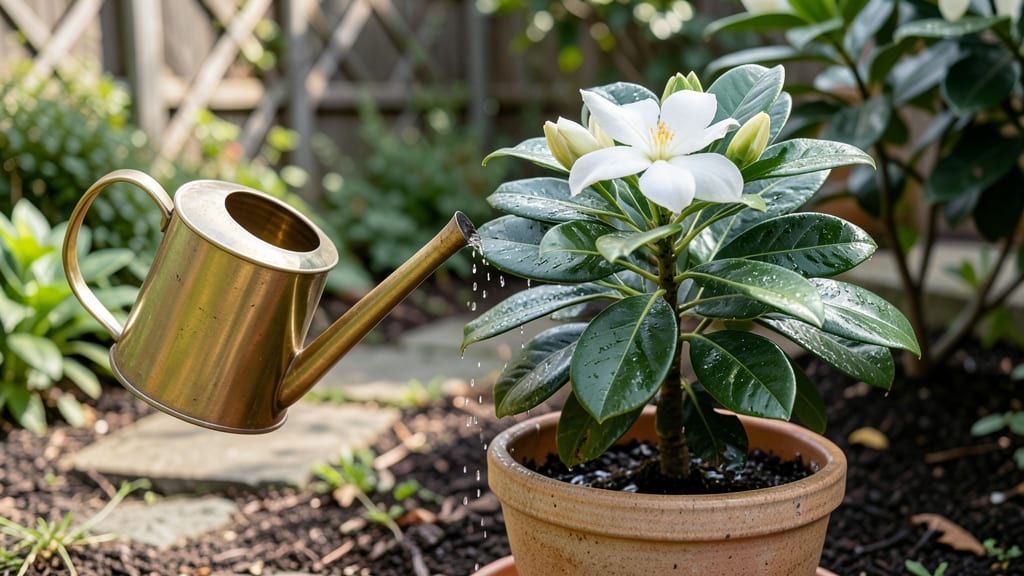
To water a gardenia plant properly, focus on keeping the soil consistently moist but never soggy — think of it like a damp sponge, not a swamp.
Struggling to keep your gardenia blooming? The secret isn’t just how often you water—it’s how you water. Overdo it, and you’ll drown the roots; underdo it, and those fragrant flowers will vanish faster than summer heat.
Gardenia 🌸 thrive in acid-loving soil and need more attention in summer heat, but even in cooler months, cutting back too much can stress the plant. The key is checking soil moisture before watering—stick your finger an inch deep, and if it feels dry, it’s time to hydrate.
In this guide, I’ll walk you through the exact watering schedule by season, how to spot over- or under-watering, and even advanced tricks like using rainwater or mulch to keep your gardenia thriving all year.
The perfect watering schedule for gardenia plants by season
Gardenia plants thrive when watered with precision—too much can suffocate roots, while too little stunts their fragrant blooms. The key lies in understanding seasonal shifts and soil moisture cues. Unlike drought-tolerant succulents, gardenias demand consistent moisture but hate soggy conditions.
I’ve learned the hard way that early morning watering prevents fungal diseases, while evening sessions invite mildew. Let’s break down the ideal schedule for each season to keep your gardenia lush and blooming.
Spring is when gardenias wake from dormancy, signaling increased water needs. Aim for deep watering every 3-5 days, ensuring moisture reaches the root zone. Test soil moisture by sticking your finger 2 inches deep—if it’s dry, it’s time to water.
Mulch helps retain moisture and regulate soil temperature, reducing evaporation. Avoid overhead watering to prevent leaf diseases, which are more common as humidity rises.
Summer demands the most attention, especially in hot climates. Gardenias may need daily watering during heatwaves, but always opt for deep soaks in the morning. The goal is to replicate natural rainfall patterns, encouraging roots to grow deeper.
If your gardenia is potted, check soil moisture daily—containers dry out faster. Increase humidity around the plant by grouping it with other foliage or using a pebble tray filled with water.
Fall marks a gradual slowdown in growth, so adjust your watering to every 5-7 days. Monitor leaf color and soil moisture closely—yellowing leaves often signal overwatering, while crispy edges mean thirst.
Reduce fertilizer applications as growth slows, but keep the soil consistently moist to support root development. This is also the time to prune dead blooms and prepare for winter.
Winter care is all about restraint. Gardenias in USDA Zone 6a or colder may enter dormancy, requiring water only every 10-14 days. Check soil moisture before watering—dormant plants need far less.
If your gardenia is in a pot, move it to a sheltered location to protect roots from freezing temperatures. Overwatering in winter is a common mistake that leads to root rot, so err on the side of caution.
| Season | Watering Frequency | Best Time to Water | Soil Moisture Check | Humidity Tips |
|---|---|---|---|---|
| Spring | Every 3-5 days | Early morning | 2 inches deep | Group with foliage |
| Summer | Daily or every 2 days | Morning (before 10 AM) | 1-2 inches deep | Use pebble trays |
| Fall | Every 5-7 days | Morning | 2-3 inches deep | Reduce fertilizer |
| Winter | Every 10-14 days | Mid-morning (if needed) | 3 inches deep | Move to sheltered spot |
Morning watering is non-negotiable for gardenias. Watering in the evening leaves foliage damp overnight, creating the perfect conditions for powdery mildew and other fungal issues. I’ve seen gardenias go from vibrant to wilting in days when nighttime watering became a habit.
If you must water in the evening, do so only in emergencies and ensure the plant has time to dry completely before nightfall.
Soil type plays a huge role in watering success. Gardenias prefer well-draining, acidic soil with a pH between 5.0 and 6.5. If your soil drains poorly, amend it with peat moss or perlite to improve aeration.
A quick test: Grab a handful of soil—if it clumps tightly when squeezed, it’s too dense. Amend it before planting or repotting to prevent waterlogged roots. Raised beds are ideal for gardenias, as they offer better drainage and warmer soil in
5 Signs your gardenia is thirsty (or drowning) and how to fix it
Your gardenia plant might look like it’s thriving, but subtle clues—like drooping leaves or yellowing foliage—often signal watering troubles. The tricky part? Both overwatering and underwatering cause similar symptoms, but the fixes couldn’t be more different. Let’s decode the signs and save your fragrant shrub before it’s too late.
First, check the soil moisture by sticking your finger about 1 inch deep. If it feels dry, your gardenia is thirsty. If it’s soggy or smells musty, you’ve overdone it.
The key is balance—gardenia roots need consistent moisture but hate sitting in water. Let’s break down the 5 red flags and how to correct them.
- 💧 1. Wilting Leaves: Droopy foliage in the morning? Underwatered. If leaves stay limp all day, it’s thirsty. Water deeply until it drains from the bottom.
- 🌿 2. Yellowing Leaves: Bright yellow leaves with green veins? Overwatered. Let the top 2 inches of soil dry out before watering again.
- ⚠️ 3. Moldy Soil: White or gray fuzz on soil? Root rot from overwatering. Repot in fresh, well-draining soil and reduce watering.
- 🪴 4. Dry, Crispy Edges: Brown leaf edges? Underwatered or low humidity. Increase watering and mist leaves occasionally.
- 🌧️ 5. No New Blooms: Fewer flowers than usual? Both overwatering and underwatering stress the plant. Adjust watering and fertilize lightly in spring.
If your gardenia’s leaves are yellowing with green veins, it’s a classic sign of overwatering. Root rot thrives in soggy soil, cutting off oxygen to the roots.
To fix it, repot your gardenia in a container with drainage holes and use a mix of peat moss and perlite to improve aeration. Let the top 2 inches of soil dry out completely before watering again.
On the flip side, wilting leaves that perk up after watering mean your gardenia is thirsty. Gardenias love moisture but hate soggy roots—aim for consistent dampness, not saturation.
Water deeply in the morning to let excess moisture evaporate during the day. For potted gardenias, check soil moisture every 2-3 days in summer or 5-7 days in cooler months.
For outdoor gardenias, mulch around the base with organic matter like pine bark to retain moisture and regulate soil temperature. This helps prevent both overwatering and underwatering by keeping roots in an ideal environment.
If your gardenia’s leaves feel dry or crispy, it’s a cry for help—boost humidity by placing the pot on a pebble tray with water.
Remember, gardenias thrive in partial shade and humid conditions. If your plant’s leaves are drooping but the soil is damp, it might need more shade or airflow.
Trim back any crowded branches to improve circulation, and avoid placing it near AC vents or drafty windows, which dry out the air too quickly.