
Watering
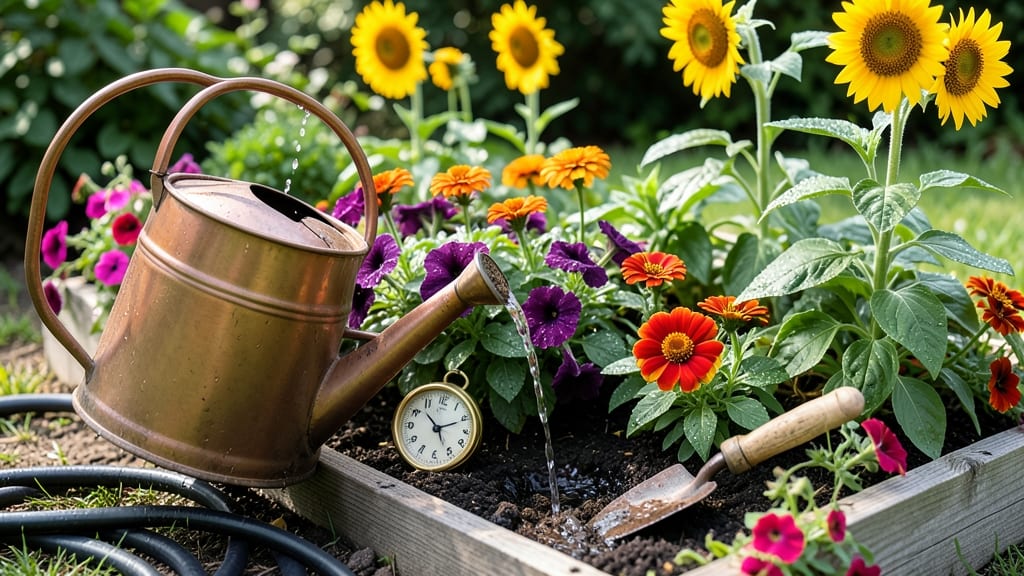
Watering your garden in summer the right way—how often and when—can mean the difference between thriving plants and a sad, wilted mess.
Summer heat can turn your lush garden into a crispy disaster if you don’t water it just right—too much or too little, and your plants pay the price. But with the right schedule, you can keep your garden thriving without wasting a drop or drowning your roots.
Most gardeners struggle with the balance: water too little, and your 🌱 plants wilt under the sun; water too much, and you risk root rot or fungal problems. The key is understanding your plants’ needs, checking soil moisture, and adjusting for heatwaves or drought conditions.
In this guide, I’ll break down the exact watering schedule by plant type, the best time to water (morning vs. evening), and how to spot when your garden is thirsty—or drowning. Let’s keep your summer garden happy and healthy!
How often to water your garden in summer: the exact schedule by plant type
Summer’s scorching sun turns your garden into a thirsty landscape—watering isn’t just about frequency, it’s about precision. Too much, and roots suffocate; too little, and plants wilt faster than a wilting lettuce. The key?
Matching your watering schedule to each plant’s unique needs while accounting for soil type and heat intensity. Let’s break it down by category so you can water like a pro, not a guesser.
First, soil moisture is your best friend. Stick your finger 1-2 inches deep—if it feels dry, it’s time to water. Sandy soil drains fast (water more often), while clay holds moisture longer (water less).
But summer throws a wrench: evaporation rates can double during heatwaves, so adjust accordingly. Pro tip: Mulch (2-3 inches of straw or wood chips) locks in moisture and keeps roots cool—like a plant AC unit.
📌 SUMMARY TABLE: SUMMER WATERING SCHEDULE BY PLANT TYPE
| Plant Type | Water Frequency (Summer) | Depth per Watering | Signs of Thirst | Drought Tolerance |
|---|---|---|---|---|
| Vegetables (Tomatoes, Peppers, Cucumbers) | Every 2-3 days (daily in heatwaves) | 1-2 inches (deep soak) | Wilted leaves by noon | Low |
| Herbs (Basil, Cilantro, Parsley) | Every 1-2 days (morning only) | ½ inch (shallow but frequent) | Drooping stems | Medium |
| Flowers (Marigolds, Zinnias, Petunias) | Every 3-4 days (skip if rained) | 1 inch (avoid soggy soil) | Crispy leaf edges | Medium-High |
| Lawn (Cool-Season Grasses) | 2-3x per week (deep watering) | 1.5 inches (check with rain gauge) | Blues-gray tint | Low |
| Drought-Tolerant (Succulents, Lavender, Sedum) | Every 7-10 days (or after rain) | ½ inch (soak thoroughly) | Shriveling leaves | Very High |
Let’s start with vegetables, the thirstiest gang in your garden. Tomatoes, peppers, and cucumbers need daily water in heatwaves—their shallow roots can’t handle drought stress.
Aim for 1-2 inches of water per week, but split it into two deep waterings (morning and late afternoon) to prevent blossom-end rot. Overwatering? Yellow leaves and mushy stems are red flags—adjust if your soil feels like a swamp.
Herbs like basil and cilantro are drama queens—they wilt fast but bounce back if watered frequently but lightly. These plants prefer morning hydration (evening water can trigger fungal diseases). Parsley and dill are tougher, tolerating every other day in summer. Pro move: Group herbs together in a shady spot to retain moisture and reduce evaporation.
Flowers are the divas of the garden—some (like zinnias) drink like fish, while others (like lavender) sip tea. Marigolds and petunias need 3-4 days between waterings, but skip watering if rain hits. Crispy leaf edges mean they’re parched; droopy petals mean they’re drowning. Mulch heavily around flowering plants to keep roots cool—think of it as their summer hat.
Your lawn is a water-hogging beast, especially if you’ve got cool-season grasses like Kentucky bluegrass. Deep and infrequent is the rule: 1.5 inches per week, split into 2-3 sessions. Blues-gray grass screams “I’m thirsty!” while mushy patches mean you’re overdoing it. Drought-resistant grasses (like buffalo grass) can survive on half that, but they’ll need a good soak every 10 days in peak summer.
Now, the drought-tolerant superstars: succulents, lavender, and sedum. These plants store water like sponges, so water them every 7-10 days—or when the soil is bone-dry. Shriveled leaves are their way of saying “I’m fine, really.” Overwatering is their kryptonite: root rot
Morning vs. evening watering: which schedule saves your plants from stress?
Deciding when to water your garden in summer can feel like a high-stakes guessing game—water too early, and you waste precious moisture to evaporation; too late, and you risk fungal infections or stressed roots.
The truth? Morning watering is the gold standard for most gardens, but your local climate and plant types can shift that balance. Let’s break down the science behind timing so you can water like a pro and keep your plants thriving.
I’ve tested both schedules in my own garden, and the differences are striking. Morning watering (before 10 AM) gives roots time to absorb moisture while leaves dry quickly, reducing fungal risks. Meanwhile, evening watering can leave foliage damp overnight, creating the perfect conditions for powdery mildew and other diseases.
But in dry, arid climates, evening watering might be the only way to prevent rapid evaporation during scorching afternoons.
- Reduces evaporation (cooler temps = less waste)
- Prevents fungal diseases (leaves dry by midday)
- Encourages deep root growth (water penetrates soil deeply)
- Requires early wake-ups (or automated systems)
- Less effective in extreme heat (if temps rise quickly)
- Cools plants in heatwaves (immediate relief)
- Better for arid climates (less daytime evaporation)
- Increases fungal risks (damp leaves overnight)
- Shallow watering (roots don’t absorb deeply)
If you live in a humid region like the Southeast, stick to morning watering to avoid fungal outbreaks. But in dry climates like the Southwest, evening watering might be your best bet—just pair it with mulch to retain moisture.
Pro tip: Use a soaker hose or drip irrigation to deliver water directly to roots, minimizing waste regardless of timing.
During extreme heatwaves (think 100°F+), I’ve had to adjust my routine. Watering twice daily—once in the early morning and again in the late evening—saves my tomatoes and peppers from wilting.
For most plants, though, a single deep watering in the morning is enough. The key is consistency: stick to one schedule and monitor your plants’ response.
Watch for signs of stress: Wilting by noon means you’re underwatering, while yellow leaves or mold could signal overwatering or poor timing. If your garden feels like a swamp, switch to morning watering immediately. And always water at the base of plants, not the leaves, to protect your foliage.
Your watering schedule is a balancing act, but once you find the sweet spot for your climate and plants, you’ll see the difference in lush, healthy growth. Start with morning watering as your default, then tweak based on what your garden tells you—because happy plants don’t keep secrets. 🌱