
Watering
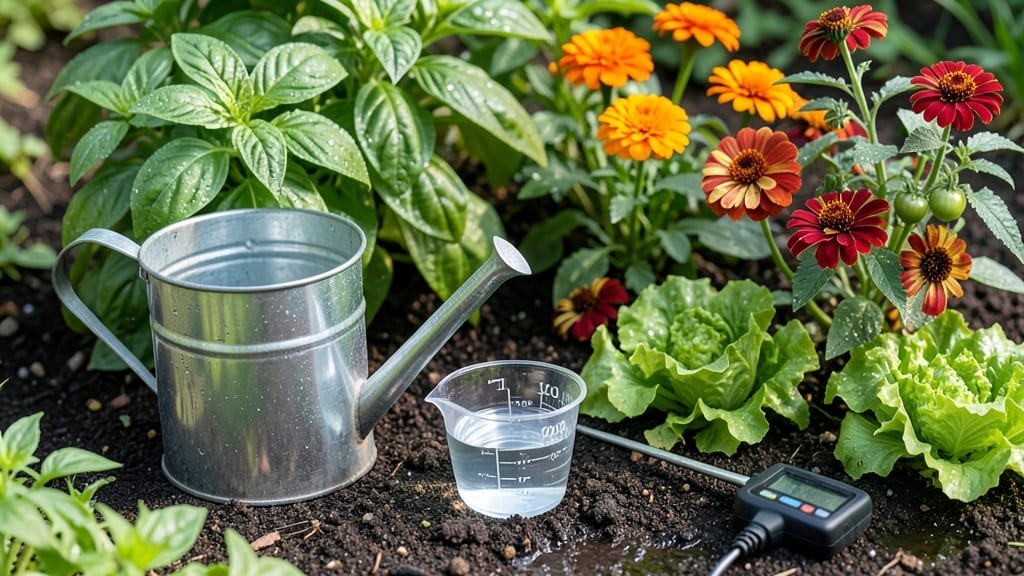
A garden needs how much water does a garden need per day—whether from rain, irrigation, or a mix—to thrive, but daily amounts depend on plant types, soil, and climate.
Overwatering or underwatering your garden can kill plants faster than pests or diseases—yet most gardeners guess their watering needs instead of calculating them scientifically.
Think about it: tomatoes and roses have wildly different thirst levels, and sandy soil drains faster than clay. Without the right approach, you’re either drowning roots or watching your plants wilt under stress.
Here’s how to dial in the perfect watering schedule for your General Garden 🌱, including seasonal adjustments, soil tests, and the 3 biggest mistakes that waste thousands of gallons.
Daily water requirements by plant type: the exact formula gardeners use
Watering your garden isn't a one-size-fits-all task—each plant type has unique hydration needs based on its biology and environment. Vegetables like tomatoes demand 1-2 inches of water weekly, while succulents thrive on just 1 inch every 2 weeks.
Understanding these differences prevents root rot from overwatering or wilting from dehydration. The key lies in matching your watering schedule to the plant's natural requirements and adjusting for local climate factors.
Most gardeners overestimate how much water their plants need daily. In reality, deep, infrequent watering encourages stronger root systems than shallow daily sprinkles. For example, herbs like basil need consistent moisture but hate soggy soil, while trees require 10-15 gallons weekly once established.
Let's break down the science-backed formula to calculate your garden's precise water needs.
🌱 Key Factors to Consider:
- Plant species (vegetables vs. flowers vs. trees)
- Soil type (sandy drains fast; clay holds moisture)
- Climate conditions (humidity vs. drought)
- Plant maturity (seedlings need more frequent watering)
This table provides a starting point, but your garden's needs may vary. For instance, sandy soil loses moisture 3x faster than clay, so you'll need to water more frequently. Similarly, container plants dry out quicker than in-ground varieties because they have less soil volume to retain water.
Always check soil moisture by sticking your finger 1-2 inches deep—if it's dry, it's time to water.
Seasonal adjustments are critical. During summer heatwaves, most plants need 20-30% more water than their baseline requirements. Conversely, in fall and winter, reduce watering by half unless you're growing winter crops like kale or Brussels sprouts.
Use a rain gauge to track precipitation—this helps you avoid overwatering during wet spells.
Mulching is your secret weapon for water conservation. A 2-3 inch layer of organic mulch (straw, wood chips) locks in moisture, reducing evaporation by up to 50%.
This means you'll water less frequently while keeping roots hydrated. For container gardens, use self-watering pots or add a moisture meter to avoid guesswork.
Watch your plants for visual cues that indicate their water needs. Wilting leaves signal thirst, while yellowing leaves often mean overwatering. Crispy leaf edges on herbs or vegetables?
That's a classic sign of underwatering. Adjust your schedule based on these signals—your plants will thank you with healthier growth and higher yields.
Pro tip: Group plants with similar water needs together in your garden layout. This makes watering more efficient and reduces waste. For example, place tomatoes and peppers near your drip irrigation system, while succulents can share a dry corner with minimal attention. This hydrozone gardening approach saves time and water.
Remember, morning watering is always best—it reduces evaporation and gives plants time to dry out before evening, preventing fungal diseases like powdery mildew. If you must water in the evening, avoid wetting foliage to minimize disease risk.
With this formula, you'll never over- or under-water again, ensuring your garden thrives year-round.
💧 Start experimenting with these guidelines today—your plants' health (and your water bill) will improve dramatically!
How to calculate your garden’s unique water needs (step-by-step)
Calculating your garden’s water needs isn’t about guessing—it’s about understanding soil composition, plant maturity, and local climate patterns. Most gardeners overwater by 30-50%, assuming more is always better.
But the right amount depends on whether you’re growing leafy greens (like lettuce) or root crops (like carrots), and whether your soil is sandy (dries fast) or clay-heavy (holds moisture longer).
Start by checking your soil moisture before watering. Stick your finger 2 inches deep—if it feels dry, it’s time. For mature plants, aim for 1 inch of water per week during dry spells, but adjust based on rainfall.
Young seedlings, however, need daily moisture to establish roots. The key is balancing frequency and depth to encourage deep root growth.
-
1Measure soil depth: Water until moisture reaches 6-8 inches deep for established plants, 3-4 inches for seedlings.
-
2Adjust for plant type: Vegetables (e.g., tomatoes) need 1-2 inches/week; perennials (e.g., lavender) thrive on 0.5 inches/week.
-
3Factor in weather: Subtract 0.25 inches of rainfall from your watering total. Use a rain gauge for accuracy.
-
4Test soil type: Sandy soil drains fast—water 2-3x/week; clay soil holds moisture—water 1x/week.
-
5Time it right: Water early morning (6-9 AM) to reduce evaporation and fungus risk. Avoid evening watering.
Use a turf meter or moisture probe to track soil moisture levels—these tools save water by preventing over-saturation. For example, my zucchini plants in loamy soil need 1.5 inches of water every 2 days in summer, but only 0.75 inches every 3 days in spring.
Adjust based on leaf wilting (underwatering) or yellowing leaves (overwatering).
Mulch plays a critical role in regulating moisture. A 3-inch layer of organic mulch (like straw or wood chips) can reduce watering needs by up to 30% by slowing evaporation.
I’ve seen roses and herbaceous perennials thrive with 50% less water after adding mulch. Pair this with drip irrigation to deliver water directly to roots, minimizing waste.
Seasonal shifts demand adjustments. In summer, increase watering by 20-30% due to heat, but reduce it in fall as plants prepare for dormancy. For instance, my tomato plants needed daily watering in July but only every 4 days by September.
Always monitor weather forecasts—a 3-day heatwave might require extra water, while 3 inches of rain could pause watering entirely.
Finally, group plants with similar water needs together. For example, pair basil and peppers (both need 1 inch/week) in one bed, while succulents and lavender (drought-tolerant) get half that amount. This zone-based watering saves time and ensures no plant is neglected.