
Watering
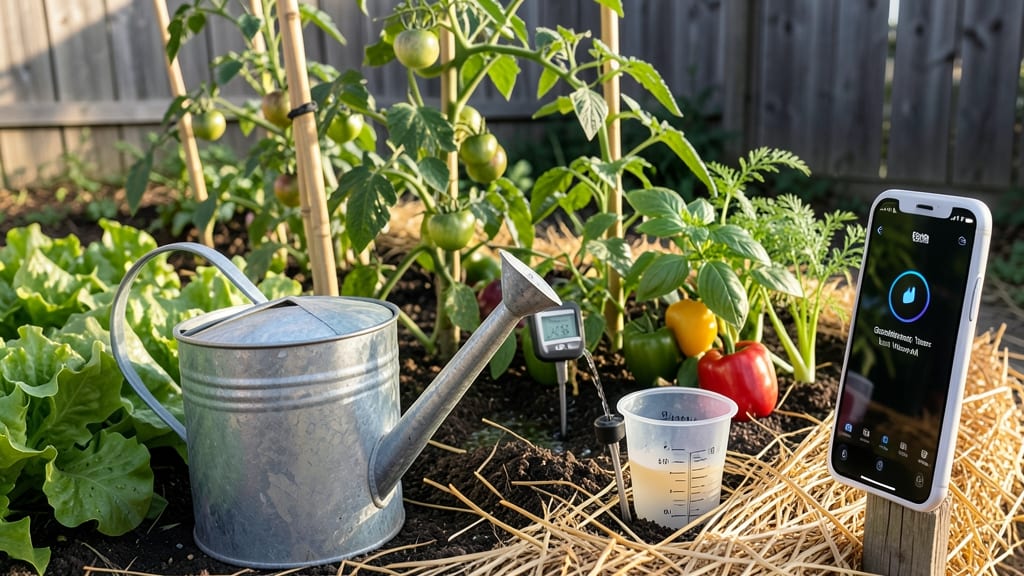
To water a vegetable garden properly, you need 1 to 2 inches of water per week—but timing, soil, and plant type turn that simple rule into an art.
Overwatering or underwatering your 🥬 can mean the difference between a thriving harvest and wasted effort—yet most gardeners guess rather than measure. Discover the exact watering schedule your plants actually need, based on science and plant type, to maximize growth and flavor.
Leafy greens like lettuce and spinach demand consistent moisture, while root crops such as carrots and potatoes prefer deeper, less frequent watering. Tomatoes and peppers, on the other hand, thrive with morning watering to prevent fungal diseases, but they hate soggy soil.
Below, I break down the science-backed watering schedule by plant type, how to check soil moisture like a pro, and how to adjust for your climate—so you can finally stop guessing and start growing like an expert.
Science-backed watering requirements by vegetable type (with exact inches & frequency)
Watering your vegetable garden isn't a one-size-fits-all task—each plant type has unique needs that directly impact flavor, yield, and even disease resistance. Leafy greens like lettuce and spinach prefer 1 inch of water weekly, while root vegetables such as carrots and beets thrive with 0.75–1 inch to prevent splitting.
Fruiting plants like tomatoes and peppers need 1.5–2 inches weekly to support heavy harvests, but herbs like basil only require 0.5–1 inch to avoid leaf scorch. Understanding these differences prevents wasted water and stunted growth.
Soil moisture targets are just as critical as frequency.
Aim for 1–2 inches of water per week during the growing season, but adjust based on rainfall and soil type. Sandy soils drain quickly and may need daily watering in summer, while clay soils hold moisture longer and can go 5–7 days between waterings.
Mulching with straw or wood chips helps retain moisture and reduces evaporation, cutting your watering needs by up to 30%. Always water deeply to encourage strong root systems rather than shallow, frequent sprinkles.
Seasonal adjustments are non-negotiable for a successful harvest. In spring, focus on establishing roots with consistent moisture—0.5–1 inch weekly—as plants transition from seedling to maturity.
Summer demands daily watering for fruiting plants during heatwaves, especially in containers, which dry out 3x faster than in-ground beds. Fall signals a gradual reduction in watering; taper off to 0.5 inch weekly as temperatures drop and plants prepare for dormancy.
Drought tolerance varies wildly among vegetables. Peppers and eggplants can handle short dry spells once established, while cucumbers and zucchini wilt dramatically within 24 hours of water stress. Always prioritize deep watering over frequent light sprinkles—aim for 6–8 inches deep to encourage roots to grow downward.
Use a soil moisture meter or your finger (insert 1–2 inches into soil; if dry, water) to avoid guesswork.
How to check soil moisture like a pro (avoid these 3 common mistakes)
Watering your vegetable garden feels like a guessing game—until you learn to read your soil. I’ve spent years perfecting my soil moisture checks, and the difference between overwatering and underwatering is shocking.
Most gardeners make the same 3 mistakes: watering on a schedule, ignoring soil type, or mistaking thirsty plants for dry soil. Let’s fix that with science-backed methods that actually work.
Start with the finger test, the simplest way to check moisture. Stick your index finger 2 inches deep into the soil near your plants. If it feels damp but not soggy, your veggies are happy.
If it’s dry, water deeply until moisture reaches 6 inches down. This method works for leafy greens like lettuce and root veggies such as carrots, which hate soggy soil.
For a deeper check, use the trowel test. Dig a small hole 4-6 inches deep with a hand trowel. Examine the soil—if it crumbles easily, it’s dry. If it sticks together but isn’t wet, it’s perfect.
If it’s muddy, you’re overwatering, and your tomatoes or peppers might develop root rot. This test is ideal for heavy clay soil, where water pools instead of draining.
⚠️ callout warning ⚠️
Yellowing leaves (especially lower ones), moldy soil, or wilted plants despite wet soil mean you’re drowning your garden. Root rot spreads fast—stop watering immediately and let the soil dry for 2-3 days. For severe cases, repot affected plants in fresh, dry soil and avoid watering until new roots form.
Fix: Improve drainage with perlite or sand, and water only when the top 1-2 inches feel dry.
For precision, invest in a moisture meter. These digital tools give real-time readings and are a game-changer for container gardens or sandy soil, where moisture evaporates fast. Place the probes 2-3 inches deep and aim for 40-60% moisture for most veggies.
Tomatoes and peppers prefer the drier end (30-40%), while cucumbers and zucchini thrive at 50-60%. Avoid cheap meters—they’re often inaccurate.
Timing matters just as much as how much you water. Always water in the early morning (6-9 AM) to reduce evaporation and fungal risks. Nighttime watering keeps foliage wet too long, inviting powdery mildew or blight.
For drought-prone areas, water deeply once a week instead of daily shallow sessions. This encourages roots to grow deeper, making your peppers and eggplants more resilient.
Pro tip: Mulch with straw or wood chips to lock in moisture and keep soil temps stable. I’ve seen mulched beds stay 30% moister for up to a week compared to bare soil.
Pair this with your finger or trowel test, and you’ll never guess again—just grow. Your tomatoes will thank you with juicier fruit, and your carrots will store better all winter.