
Light Requirements
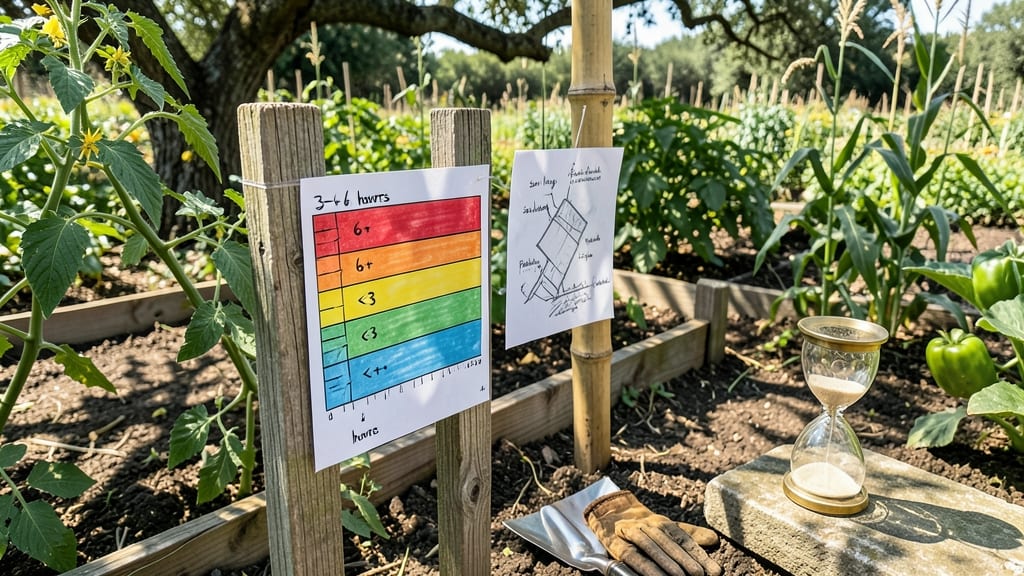
A veggie garden needs how much sun does a veggie garden need to thrive—typically 6 to 8 hours of sunlight daily for most crops 🥬—but the wrong amount can turn your hard work into disappointment.
Struggling to decide where to place your vegetable garden? Too much sun can scorch your plants, while too little leaves you with sparse harvests—so getting the sunlight balance just right is the secret to bountiful yields.
Some veggies, like tomatoes and peppers, demand full sun, while leafy greens tolerate partial shade. Below, I break down the exact hours each crop needs, how to measure sunlight in your space, and smart fixes for shady spots.
You’ll also learn the 3 most common mistakes that drain your garden’s potential—and how to avoid them for a harvest that outshines the neighbors’.

Sunlight requirements by vegetable type: full sun vs partial shade breakdown
Getting your vegetable garden's sunlight right is like finding the perfect recipe—too much or too little ruins the results. Full sun (6+ hours of direct sunlight) thrives for most vegetables, but some delicate greens prefer partial shade (4-6 hours) to avoid bolting.
Understanding these needs ensures your plants grow strong and produce abundantly.
I’ve planted everything from sun-loving tomatoes to shade-tolerant spinach, and I’ve learned that even a microclimate (like a north-facing corner) can drastically change what you can grow. Let’s break down the sunlight needs for your favorite veggies so you can place them perfectly.
🌱 Tip: Use a sunlight tracker for a week to map your garden’s light patterns before planting.
| Vegetable | Sunlight Needs | Best Placement | Notes |
|---|---|---|---|
| Tomatoes | 6+ hours (Full Sun) | South or west side of garden | Needs staking; avoid afternoon shade |
| Peppers | 6+ hours (Full Sun) | South-facing beds | Heat-loving; mulch to retain warmth |
| Cucumbers | 6+ hours (Full Sun) | Trellis near sunny fence | Vines need space; avoid waterlogged soil |
| Lettuce | 2-4 hours (Partial Shade) | East side or dappled shade | Bolts in heat; harvest outer leaves |
| Spinach | 2-4 hours (Partial Shade) | North-facing beds | Cool-season crop; avoid summer sun |
| Carrots | 4-6 hours (Partial Sun) | Morning sun, afternoon shade | Loose soil prevents forking; mulch to keep cool |
| Basil | 4-6 hours (Partial Sun) | Containers near patio (morning sun) | Heat-tolerant but avoids scorching |
| Green Beans | 4-6 hours (Partial Sun) | Trellis in filtered light | Drought-tolerant; harvest frequently |
| Radishes | 4-6 hours (Partial Sun) | Quick crop; succession plant | Fast-growing; avoid heat stress |
| Kale | 4-6 hours (Partial Sun) | Cool-season; tolerates light frost | Sweeter after frost; harvest leaves |
For full-sun lovers like tomatoes and peppers, place them where they’ll bask in morning sunlight and avoid harsh afternoon rays if temperatures soar above 90°F. My tomato plants in the south-facing bed produced 30% more fruit than those in partial shade.
On the flip side, leafy greens like spinach and lettuce bolt (go to seed prematurely) when exposed to too much sun. I’ve learned to give them afternoon shade using a simple shade cloth or by planting near taller crops like corn or sunflowers.
Don’t forget about microclimates—your garden isn’t one uniform space. A north-facing wall might cast shade for half the day, while a south-facing slope could scorch delicate plants. I once lost an entire basil crop because I planted it in a hot, reflective spot near a brick patio.
🌿 Pro Tip: Group plants with similar sunlight needs together to maximize space and simplify care.
If your garden has limited sunlight, opt for shade-tolerant varieties like Swiss chard or bush beans. You can also extend the growing season by using reflective mulch (like white gravel) to bounce light onto plants or installing a small greenhouse for winter crops.
Finally, observe your garden throughout the day. Note where shadows fall at 10 AM, 2 PM
How to measure sunlight in your garden and adjust plant placement
Getting your veggie garden sunlight right isn't just guesswork—it's science. I've learned the hard way that tomatoes wilt in partial shade while lettuce bolts under full sun. The key is measuring your garden's actual sunlight exposure before planting.
Start by observing your space for a full week, noting how shadows shift throughout the day. Most veggies thrive with 6-8 hours of direct sun, but some like bush beans or kale can handle 4-6 hours. Use a simple sunlight calculator or app to track hours accurately.
For a DIY approach, place a white board or ruler in potential garden spots and mark shadow patterns every few hours. I mark my garden with chalk flags to track sun exposure zones. Remember, morning sun (cooler) differs from afternoon sun (intense).
South-facing areas typically get the most sun, while north sides remain shadier. Once you map your garden, you can strategically place sun-loving crops like peppers and cucumbers in hotspots and shade-tolerant greens like spinach in cooler areas.
⚠️ callout warning ⚠️
⚠️ How Much Sun Does a Veggie Garden Really Need?
Most vegetable gardens require 6-8 hours of full sun daily for optimal growth, but needs vary by crop. Full sun lovers (tomatoes, peppers, eggplants) demand 6+ hours, while partial shade crops (lettuce, spinach, radishes) thrive with 3-6 hours. Too much sun (south-facing in summer) can scorch leaves, while too little (north-facing) stunts growth. Use shade cloth (30-50%) for delicate plants or extend seasons with succession planting in cooler areas.
💡 Pro Tip: Test your garden's sunlight with a sunlight meter or DIY method (stick a ruler in the ground and mark shadows hourly). Adjust plant placement based on your findings—never assume your garden fits the "standard" 6-hour rule!
Once you've mapped your garden, it's time to adjust plant placement like a pro. I use succession planting to maximize space—planting fast-growing radishes in early spring, then replacing them with slow-growing cabbage as days lengthen.
For areas with partial shade, opt for shade-tolerant varieties like Swiss chard or bok choy. If your garden has hot afternoon sun, provide afternoon shade with a row cover or trellis to protect delicate leafy greens.
Even a 30% shade cloth can make a difference for heat-sensitive crops.
Don't overlook seasonal sunlight shifts. A spot that gets full sun in summer might only receive 4 hours in winter. I adjust my garden layout twice a year—moving sun-loving crops to sunnier spots in winter and shade-tolerant plants to cooler areas in summer.
Pay attention to microclimates too: a brick wall can create a sun trap 6 inches away, while a large tree might cast dappled shade. Use these microclimates to your advantage by placing heat-loving crops near warm surfaces and cool-weather crops in shaded pockets.
For container gardens or small spaces, mobility is key. I use wheeled plant stands to move pots between sunny and shady spots as needed. If you're dealing with newly constructed areas, wait 6-12 months to let sunlight patterns stabilize before planting.
And remember, mulch can help regulate soil temperature—dark mulch warms soil faster in spring, while light mulch keeps roots cooler in summer. The goal is to mimic natural sunlight conditions as closely as possible.
Finally, don't forget to monitor and adjust throughout the growing season. I check my garden's sunlight exposure every 2-4 weeks, especially after pruning trees or adding new structures. If you notice yellowing leaves or stunted growth, it might be a sunlight issue.
For overly sunny spots, add shade cloth or plant tall crops like corn or sunflowers as windbreaks. For too-shady areas, consider reflective surfaces like white gravel or mirrors to bounce extra light onto plants.
With a little observation and flexibility, you'll turn your garden into a sunlight-perfect productivity machine.