
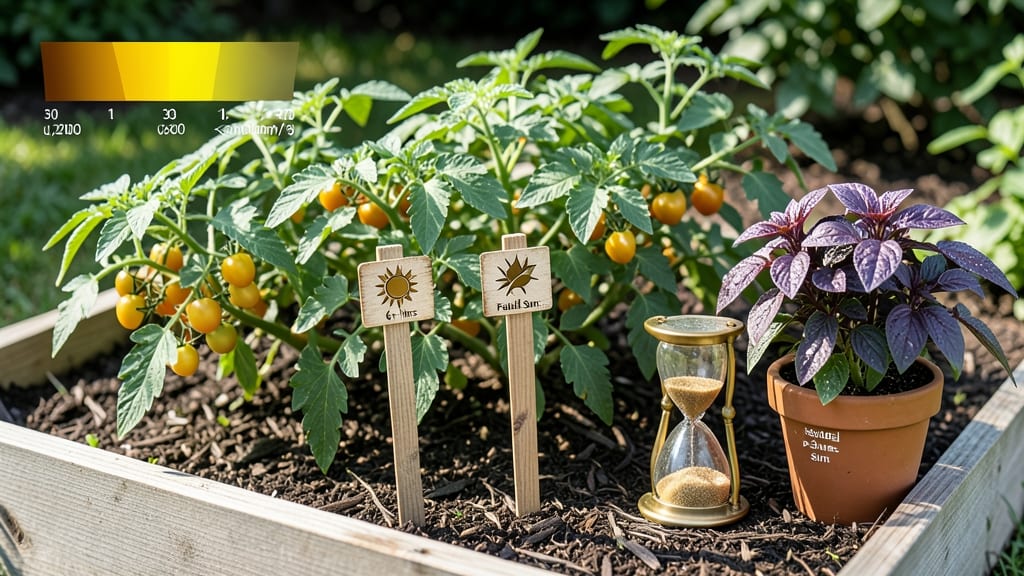
How Much Sun Does a Vegetable Garden Need: Crop-Specific Hours for Peak Yields

Light Requirements

How Much Sun Does a Vegetable Garden Need: Crop-Specific Hours for Peak Yields

A vegetable garden needs how much sun does a vegetable garden need to thrive, but many gardeners overlook how much their plants really need—and end up with stunted growth or wasted seeds.

Picture this: your tomatoes stay green forever, your lettuce bolts into bitter stalks, and your peppers produce half the yield they should. That’s not just bad luck—it’s sunlight deprivation, and the fix is simpler than you think.

Not all vegetables demand the same amount of light. Some, like carrots and spinach, can handle partial shade, while others, such as cucumbers and eggplants, will wilt without full sun.

Below, I’ll break down the exact hours your 🥬 vegetable garden needs, how to measure sunlight in your space, and how to tweak your setup for the best harvests—no guesswork required.

You’ll also discover how to spot sunlight mistakes before they ruin your crops, plus pro tips for maximizing light in shady spots or high-heat zones. Ready to turn your garden into a sun-powered success?

Light Requirement
Full Sun
Most vegetables need 6-8+ hours of direct sunlight daily for optimal growth and production.
🔆
Low Medium Bright Direct
🪟 Near a large South-Facing Window or in a sunniest outdoor spot

Sunlight requirements by vegetable type: full sun vs partial shade needs

Understanding how much sun your vegetables need is the first step to a thriving garden. Most vegetables thrive with 6-8 hours of direct sunlight daily, but some tolerate less. Tomatoes and peppers, for example, demand full sun, while leafy greens like spinach can handle partial shade.

Getting this balance right directly impacts flavor, growth speed, and yield.

In my experience, full sun (6+ hours) is non-negotiable for fruiting vegetables like cucumbers and eggplants. These plants need intense sunlight to produce the energy required for fruit development.

Meanwhile, partial shade (3-6 hours) suits crops like broccoli and cauliflower, which can bolt or become bitter in too much heat. Let’s break down the specifics for 15+ common vegetables.

Note: Sunlight requirements can shift slightly based on your climate zone and season. For instance, a high-desert garden might need adjustments compared to a humid coastal area. Always observe your plants’ responses and tweak as needed.

Vegetable Sunlight Needs Yield Impact of Too Little Sun Best For
Tomatoes 6-8+ hours (Full Sun) Poor fruit set, green tomatoes Saucers, slicers, heirlooms
Peppers (Bell, Jalapeño) 6-8 hours (Full Sun) Small, misshapen fruits Fresh eating, pickling
Cucumbers 6-8 hours (Full Sun) Bitter taste, weak vines Salads, pickles, slicing
Eggplants 6-8 hours (Full Sun) Stunted growth, few fruits Grilled, stir-fry, baba ganoush
Squash (Zucchini, Butternut) 6-8 hours (Full Sun) Small, deformed fruits Roasting, soups, grilling
Beans (Green, Pole) 6-8 hours (Full Sun) Slow growth, fewer pods Snacking, salads, stews
Broccoli 3-6 hours (Partial Shade) Bitter taste, bolting Steamed, roasted, raw
Cauliflower 3-6 hours (Partial Shade) Poor head formation Roasted, puréed, grilled
Lettuce (Leaf Varieties) 3-6 hours (Partial Shade) Bolting, bitter flavor Salads, wraps, sandwiches
Spinach 3-6 hours (Partial Shade) Slow growth, yellowing Sautéed, smoothies, salads
Carrots 3-6 hours (Partial Shade) Stunted roots, poor color Roasting, soups, snacks
Radishes 3-6 hours (Partial Shade) Pithy, slow growth Pickling, salads, snacks
Green Onions 3-6 hours (Partial Shade) Bitter taste, weak stems Cooking, garnishes, salads
Kale 3-6 hours (Partial Shade)

How to measure and adjust sunlight in your garden for maximum growth

Sunlight isn’t just light—it’s the fuel your vegetable garden runs on. Without the right amount, your tomatoes won’t ripen, your lettuce bolts prematurely, and your peppers stay small and bitter.

But how do you know if your garden is getting enough? The answer lies in measuring sunlight accurately and adjusting for your unique space.

Most gardeners assume they know their garden’s sunlight exposure, but shadows from trees, buildings, and even nearby plants can drastically alter how much light reaches your crops. Microclimates—small areas with different sunlight conditions—mean the north side of your yard might get half the sun of the south side.

Even seasonal changes, like spring vs. summer sun intensity, can shift your garden’s light exposure by 2-3 hours per day.

To optimize growth, start by mapping your garden’s sunlight. Grab a notebook and a timer, then observe each area for a full day.

Note when shadows appear and disappear—this will reveal which spots get full sun (6+ hours), partial shade (3-6 hours), or deep shade (less than 3 hours). For example, a spot that’s sunny from 10 AM to 2 PM might only qualify as partial shade, even if it feels bright.

🌱 5 Steps to Measure and Adjust Sunlight
  1. Step 1: Mark your garden into 4x4 ft grids with stakes or spray paint for precision.
  2. Step 2: Track shadows every 2 hours from sunrise to sunset for 3 days (cloudy days skew results).
  3. Step 3: Use a sunlight meter (or a free app like Sun Surveyor) to quantify light intensity in foot-candles.
  4. Step 4: Adjust for microclimates: North-facing areas get less sun; south-facing spots may need shade cloth in summer.
  5. Step 5: Rotate crops seasonally—what’s full sun in summer might be partial shade in winter.

Once you’ve mapped your garden, adjust for seasonal shifts. In spring, sunlight is weaker, so a spot that gets 6 hours in summer might only qualify as partial shade in May.

Use reflective surfaces, like white gravel or aluminum foil on raised beds, to bounce extra light onto shade-loving crops like spinach or kale. For summer, consider shade cloth (30-50% coverage) to protect heat-sensitive plants like peas or beans from wilting.

Don’t overlook vertical gardening to maximize sunlight. Trellises for cucumbers or pole beans lift plants above ground-level shade, while container gardens on wheels let you move crops to sunnier spots as the sun shifts.

Even a 1-hour difference in sunlight can mean the difference between bountiful harvests and struggling plants.

Pro tip: Plant tall crops like corn or sunflowers on the north side of your garden to act as natural windbreaks and light filters for shorter plants. And always water in the morning to avoid leaf burn from sunlight hitting wet foliage.

With these adjustments, you’ll turn your garden into a sunlight-powered productivity machine. ☀️

★★★★★4.9(2 reviews)
Categories Light Requirements