
Picking
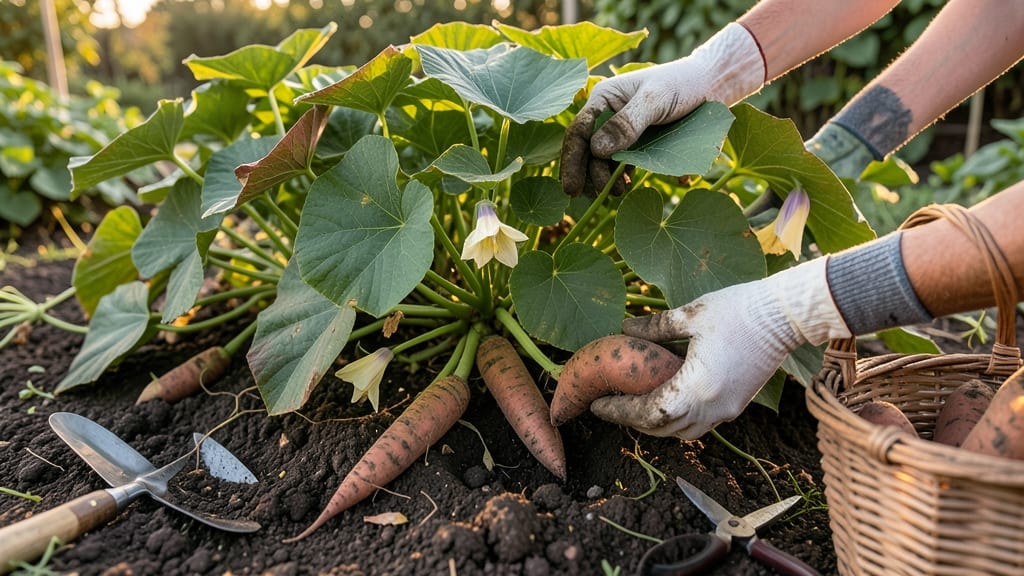
Sweet potatoes are ready to pick from the garden when their vines yellow and die back naturally — a sign that means 90 to 140 days of growth have paid off.
Picture this: you’ve nurtured your 🍠 plants all season, but they don’t ripen like tomatoes. One day, the leaves turn crispy and brown, and you’re left wondering, Did I wait too long? The truth is, timing is everything, and missing these cues can turn your harvest into tough, stringy tubers.
Most gardeners in USDA Zone 6a (like me) pull sweet potatoes in late September or October, but frost sensitivity means your exact window depends on your region. Too early, and the skins stay soft; too late, and the tubers turn woody.
Below, I’ll show you the skin slip test and vine yellowing method to nail the perfect harvest moment.
You’ll also learn how to avoid common mistakes — like digging too soon or storing them wrong — so your sweet potatoes stay sweet and last through winter. Let’s get started.


How to test sweet potato readiness: the skin slip & vine yellowing method
Sweet potatoes mature underground, so you can't judge their readiness by color or size alone. Instead, focus on two key indicators: the vine yellowing and the skin slip test. These methods help you determine when tubers have reached peak sweetness and texture.
The vine yellowing signals natural maturity, while the skin slip test confirms tuber firmness—both are essential for a successful harvest.
Timing your harvest correctly prevents two common mistakes: digging too early for small, watery tubers or waiting too long for wooden, fibrous roots. Most varieties mature between 90-140 days after planting, but exact timing depends on your USDA frost zone and the specific variety.
For example, early varieties like 'Beauregard' may be ready in 90-100 days, while late types like 'Jewel' can take up to 140 days.
⚠️ NON-NEGOTIABLE: Never harvest after the first frost, as cold temperatures turn sweet potatoes starchy and mealy. In USDA zones 7-11, aim to harvest between late September and November, while gardeners in zones 5-6 should pull tubers by mid-October to avoid frost damage.
| Sign | What to Look For | Action | Ready? |
|---|---|---|---|
| Vine Color | Leaves turn yellow-brown and dry out | Check skin slip test | ✅ Yes |
| Vine Color | Leaves remain green and healthy | Wait 1-2 weeks | ❌ No |
| Skin Slip Test | Skin doesn't slip when rubbed | Harvest immediately | ✅ Yes |
| Skin Slip Test | Skin slips easily with light pressure | Wait 3-5 days | ❌ No |
| Tuber Size | Tubers 3-6 inches long | Test skin slip | ✅ Likely |
| Tuber Size | Tubers smaller than 2 inches | Wait 2+ weeks | ❌ No |
To perform the skin slip test, gently rub a tuber between your thumb and forefinger. If the skin slips easily, the sweet potato isn't ready—wait 3-5 more days.
When the skin resists movement and feels firm, it's time to harvest. This test works best on tubers 3-6 inches long, which is the ideal size for most varieties.
Start checking vines for yellowing around 90 days after planting. Early signs include leaf edges turning brown and vines wilting slightly. By 100-120 days, most vines will completely dry and turn crispy, indicating peak maturity.
In USDA zone 10, where winters are mild, vines may yellow as early as August, while in zone 5, wait until late September.
For container-grown sweet potatoes, monitor vines closely since they mature faster in pots. Look for vine dieback and perform the skin slip test on 2-3 largest tubers to confirm readiness.
If you're unsure, dig up one tuber to test—this gives you a clear signal without risking the entire crop. Always use a garden fork to avoid damaging tubers during harvest.
Harvest on a dry, sunny day to allow tubers to cure properly before storage. After pulling, brush off excess soil but don't wash tubers—moisture speeds up rot. Cure sweet potatoes for 5-10 days in a warm (80-85°F), humid space to develop sweetness and thicken skins.
This step is crucial for long-term storage and flavor development.
Pro tip: Mark your planting date and set reminders for 90, 100, and 120 days later to stay on track. In short-season zones (5-6), opt for early-maturing varieties like 'Georgia Jet' (90 days) to ensure a harvest before frost.
For longer seasons (zones 8-11), late varieties like 'Bonita' (140 days) reward you with larger tubers.
If you miss the harvest window, don't panic—sweet potatoes can survive light frosts (down to 28°F) if vines are already yellowing. However, tubers may become woody and less sweet.
To protect your crop, cover plants with row fabric when nighttime temps drop below 50°F and harvest as soon as possible.
Sweet potato harvest timing by variety: early vs late maturing types
Sweet potato varieties mature at different rates, so timing your harvest depends on whether you're growing early or late-season types. In USDA Zones 5-7, early varieties like Beauregard need precise timing to avoid frost damage, while late types like Jewel can wait longer.
Let's break down when to harvest each type and how climate zones affect your schedule.
Early maturing varieties like Beauregard and Georgia Jet typically reach harvest in 90-110 days, while late types such as Jewel and Centennial take 120-140 days.
In warmer USDA Zones 8-11, you can extend harvest windows by 2-4 weeks, but always prioritize vine dieback and skin hardness over strict day counts.
Here's a quick reference for popular varieties and their ideal harvest windows:
| Variety | Days to Maturity | Best Harvest Window | USDA Zones | Climate Notes |
|---|---|---|---|---|
| Beauregard | 90-110 | Late August - Early October | 5-11 | Early frost risk in Zones 5-7 |
| Jewel | 120-140 | Mid-September - November | 6-11 | Longer harvest window in warm zones |
| Georgia Jet | 90-100 | Late August - Mid-October | 5-10 | Heat tolerant, great for short seasons |
| Centennial | 120-140 | Mid-September - November | 7-11 | Longer storage life, late frost protection |
In short-season zones (5-7), prioritize early varieties like Beauregard or Georgia Jet to avoid frost damage. Start harvesting when 50% of vines yellow and perform a skin slip test—if the skin slips easily, they're ready.
For longer seasons (8-11), late varieties like Jewel can wait until full vine dieback occurs, often extending harvest into November.
Adjust your timing if you're in a transition zone (7-8)—watch for first frost dates and harvest early varieties 2-3 weeks before the average frost date.
In USDA Zone 11, you can harvest year-round, but soil temperatures below 60°F slow tuber development, so aim for fall harvests when days are cooler.
Pro tip: If your growing season is too short for late varieties, try container growing or use row covers to extend the season by 2-3 weeks. Always harvest on a dry, sunny day to speed curing and prevent disease.