
Size
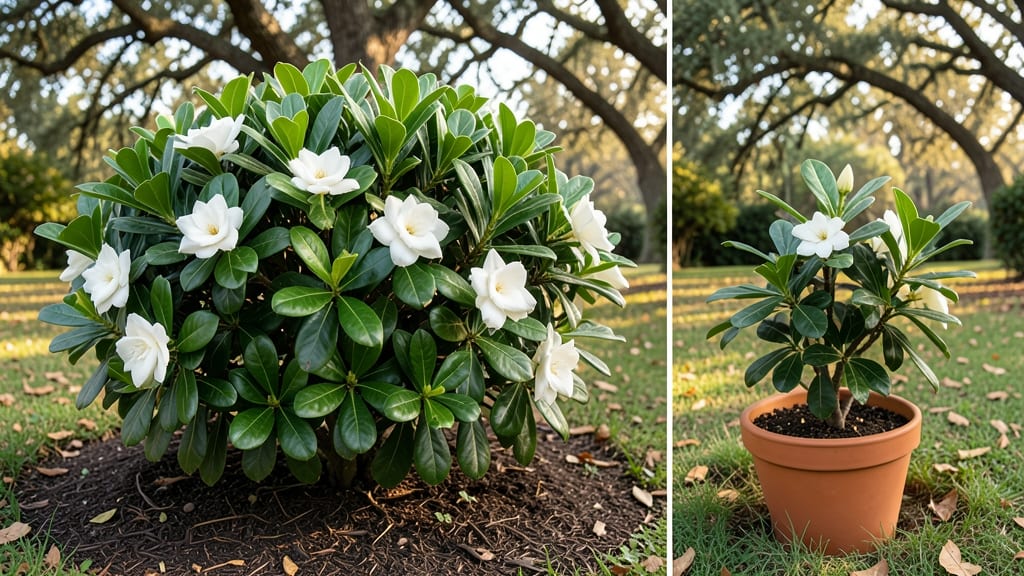
Gardenias grow anywhere from 1 foot to over 12 feet tall, depending on the variety and growing conditions — and knowing the right size for your space makes all the difference.
Picture this: a 6-foot fragrant shrub crowding your patio or a delicate 2-foot dwarf variety struggling in a shady corner. The wrong placement means lost blooms, stunted growth, or even plant stress. Yet most gardeners overlook how much these evergreens expand over time.
Some varieties, like the Gardenia jasminoides, reach 6-12 feet in ideal conditions, while others, such as the compact 'Kleim's Hardy,' stay under 3 feet. Sunlight, soil acidity, and pruning habits all play a role in whether your gardenia will stay small or stretch toward the sky.
Below, I break down the exact height ranges by variety, spacing tips to avoid overcrowding, and pruning tricks to keep your 🌸 gardenia at your desired size — whether you're aiming for a fragrant hedge or a container-friendly centerpiece.

Gardenia size by variety: height and spread measurements
If you're dreaming of adding gardenias to your landscape, size matters more than you might think! These fragrant evergreens range from dwarf shrubs under 3 feet to small trees reaching 12 feet tall.
Each variety grows at its own pace, so knowing the mature dimensions helps you plan spacing, pruning, and even container sizes. Let's explore the exact height and spread of the most popular gardenia cultivars so you can choose the perfect fit for your garden.
For quick reference, here’s a breakdown of how big gardenias grow by variety, including their height ranges, spread dimensions, and ideal growing conditions. This summary table will help you visualize which gardenia will thrive in your space, whether you have a small patio or a large backyard.
The 'Radicans' gardenia is my top pick for small gardens or containers, thanks to its compact size of just 1–2 feet tall. This variety thrives in 10-inch pots and even works as a bonsai specimen.
Its slow growth rate means you won’t need to prune it often, making it a low-maintenance choice for patio gardens or balconies. Just ensure it gets morning sunlight and acidic soil to keep it happy.
On the other end of the spectrum, 'Fortuniana' gardenias can grow into small trees, reaching heights of 10–12 feet with a spread of 8–10 feet. If you're aiming for a privacy screen or a tropical focal point, this variety is ideal—but be prepared for its
How growth habits affect gardenia placement in your yard
When planning your gardenia placement, remember that these fragrant shrubs aren't one-size-fits-all. Their growth habits dramatically influence where you should plant them—whether nestled against your patio or sprawling along a privacy hedge.
Understanding these patterns helps you avoid crowded spaces or underutilized corners while maximizing their stunning blooms and intoxicating scent.
Gardenias grow at different rates depending on sunlight exposure, variety, and pruning frequency. A sun-drenched gardenia can reach its mature size 20% faster than one planted in partial shade. Meanwhile, aggressive pruning can keep even large varieties contained, while neglect can turn a compact shrub into an unruly giant.
Let's explore how to match your garden's layout to your gardenia's growth potential.
- 🌳 Mature Height: 3-12 feet (varies by variety—dwarf types stay under 3 feet, while climbing varieties reach 12 feet).
- 📏 Spread: 4-8 feet wide at maturity; space 3-5 feet from structures to prevent root competition.
- ☀️ Sunlight Needs: Full sun (6+ hours) for fastest growth; partial shade (4-6 hours) slows expansion but preserves blooms.
- ✂️ Pruning Impact: Annual pruning after blooming can reduce height by 25-50% and encourage bushier growth.
- 🏡 Spacing Rules: Small gardens: 3-4 feet apart; large landscapes: 5-6 feet apart for airflow and light penetration.
For small gardens, prioritize dwarf varieties like 'Kleim's Hardy' or 'Radicans', which top out at 2-3 feet tall. Plant these 3-4 feet from walls to avoid root congestion and allow easy pruning access.
In larger yards, standard varieties like 'Veitchii' or 'Fortuniana' thrive when spaced 5-6 feet apart, creating natural privacy screens or focal points.
Sunlight placement is equally critical. Gardenias in full sun grow faster but may require more frequent pruning to control height. Those in partial shade (like morning sun with afternoon shade) produce fewer but longer-lasting blooms.
If your yard has limited sun, opt for climbing varieties like 'Gardenia jasminoides Radicans'—they'll grow along trellises or fences instead of spreading outward.
Pruning isn't just for shaping—it's a tool to control size. After your gardenia finishes blooming (typically in late summer), trim back 1/3 of the oldest growth to encourage new, bushier stems.
For large landscapes, this keeps gardenias from outgrowing their space, while in small gardens, it prevents them from overwhelming patios or walkways. Always use sterilized shears to avoid disease transmission.
Pro tip: Mark your gardenia's mature size on a planting map before installing. This helps you visualize how it will interact with other plants, structures, and sunlight patterns over time. For example, a 6-foot-tall gardenia planted 5 feet from a window will eventually block light—plan accordingly!
With the right placement, your gardenia will thrive for decades, filling your yard with fragrance and beauty.