
Watering
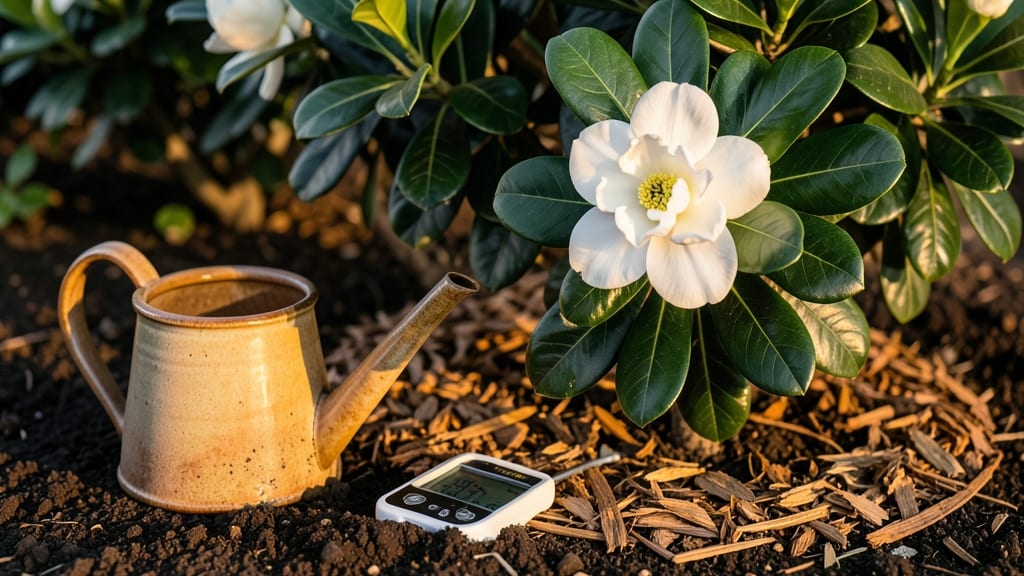
Mastering your gardenia’s water requirements is the secret weapon for those lush, fragrant blooms 🌸 — but get it wrong, and you’ll watch its leaves yellow or its flowers refuse to open.
Struggling to keep your gardenia blooming? The secret might be hiding in its soil moisture—not too wet, not too dry, but just right for those intoxicating white flowers. Too much water drowns the roots, while too little stresses the plant before it even thinks about flowering.
In this guide, I’ll break down exactly how often to water your gardenia, how to tell if you’re overdoing or underdoing it, and the best tricks for keeping the soil consistently moist without turning it into a swamp.
Whether you’re growing yours in a pot or in the ground, these tips will help you avoid the most common mistakes.
You’ll learn how to adjust your watering schedule by season, spot the early warning signs of trouble, and even use mulch to keep moisture levels perfect. Let’s get your gardenia thriving!
How often to water gardenias for optimal blooming
Getting your gardenia to produce those fragrant white blooms year after year starts with mastering its watering schedule. Unlike drought-tolerant succulents, gardenias thrive on consistent moisture—but too much water can drown their roots just as quickly as too little.
The key is finding that sweet spot between hydration and aeration, which changes dramatically with seasons and climate zones.
I’ve learned through trial (and a few overwatered disasters) that gardenias in containers dry out faster than those planted in-ground, while humid climates like Florida require less frequent watering than dry desert regions.
Even the time of day you water matters—morning watering prevents fungal diseases, while evening water can leave leaves damp overnight, inviting problems.
Let’s break down the seasonal watering schedule you need to follow, tailored to your USDA hardiness zone. Whether you’re in Zone 7 with hot summers or Zone 9 with mild winters, these guidelines will keep your gardenia blooming beautifully.
In spring, your gardenia is waking up from dormancy, so I aim to water every 3-4 days to encourage new growth. The goal is to keep the top 1-2 inches of soil moist—think of a damp sponge, not a soggy one.
If your gardenia is in a container, check the soil daily in hot weather because pots dry out 3x faster than in-ground plants.
When summer arrives, especially in Zones 8-10, I switch to daily watering or every other day. The key here is to water deeply in the morning—this mimics natural rainfall patterns and prevents fungal issues like powdery mildew.
Avoid evening watering, as damp leaves overnight create the perfect environment for leaf spot diseases.
As fall approaches, I gradually reduce watering to every 5-7 days. This helps the plant prepare for winter dormancy without shocking it. In cooler climates (Zones 7-8), you might even skip watering entirely if rain is frequent.
Always check the soil first—if it’s still moist, wait a few more days.
Winter care is all about minimal intervention. In Zones 9-10, I water every 2-3 weeks only if the soil feels bone-dry. For Zones 7 or colder, let the soil dry out more between waterings—this mimics natural winter conditions.
If your gardenia is in a container, move it to
Signs your gardenia is overwatered or underwatered (and how to fix it)
Your gardenia’s glossy leaves and fragrant blooms are its pride, but watering mistakes can turn them yellow or wilted. Gardenias crave consistent moisture but hate soggy roots or dry spells. Let’s decode the visual clues your plant uses to scream for help—and how to rescue it fast.
First, check the soil texture. Stick your finger 1-2 inches deep—if it feels damp like a wrung-out sponge, you’re overdoing it. But if it’s bone-dry or crumbles like powder, your gardenia is thirsty. Yellowing leaves with mushy stems?
That’s overwatering. Drooping leaves with crispy edges? Underwatering for sure.
⚠️ WARNING: GARDENIA WATER ZONE ⚠️
If your gardenia’s leaves turn yellow but stay firm, it’s likely overwatered. The roots suffocate, starving the plant. Stop watering immediately and let the top 2 inches of soil dry out before watering again.
For root rot, trim affected roots with sterilized shears and repot in well-draining mix (50% peat, 30% perlite, 20% sand).
On the flip side, underwatered gardenias show brown leaf tips and wilting flowers. Revive it by giving a deep watering until water drains from the pot’s bottom.
Then, mulch the soil with 2 inches of pine bark to lock in moisture. Group plants together to boost humidity—they thrive in 60-70% humidity!
For container gardenias, check drainage holes—clogged holes = overwatering.
If your plant’s blooms drop early, it’s stressed. Adjust watering based on the weather: daily in summer, every 5-7 days in fall, and bi-weekly in winter. Morning watering prevents fungal diseases like powdery mildew, which loves damp leaves.
Pro tip: Use a moisture meter for accuracy—gardenia roots need even moisture, not soggy or dry extremes. Adjust your schedule seasonally: summer heat means more frequent watering, while winter chill slows water needs. With the right balance, your gardenia will reward you with lush blooms all season! 🌸