
Fertilization
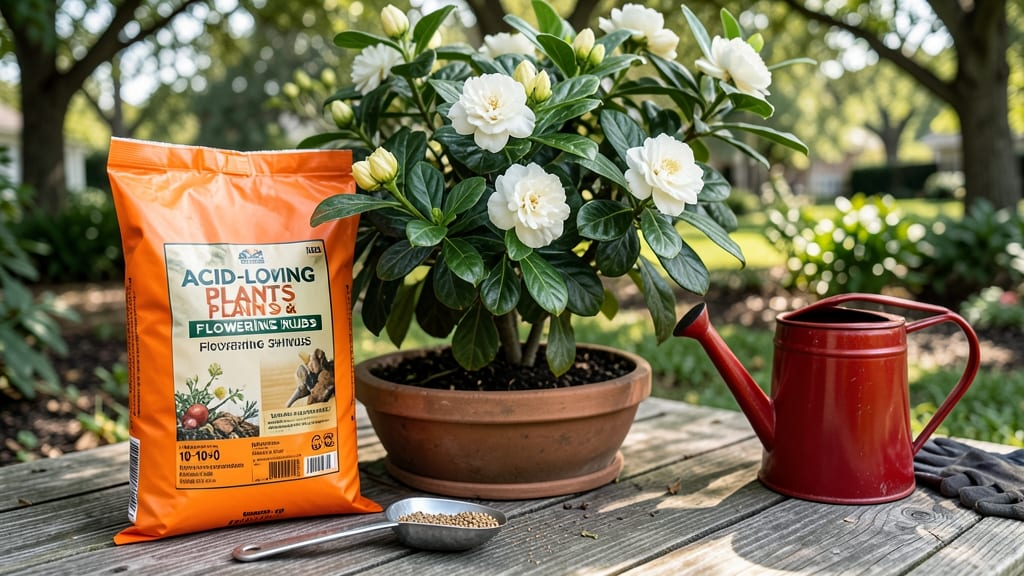
Mastering the gardenia fertilizer ratio is the game-changer between a shrub with pretty leaves and one that perfumes your yard with 🌸 blooms.
Struggling to get your gardenia blooms to burst with that intoxicating fragrance? The secret often lies in mastering the perfect gardenia fertilizer ratio—a precise balance that transforms lush foliage into a cascade of fragrant flowers.
Too much nitrogen and you’ll end up with leafy monsters instead of blooms, while too little phosphorus leaves your plant starving for the energy it needs to produce those signature white flowers. The right mix makes all the difference.
In this guide, I’ll break down the ideal N-P-K ratios, when to feed your gardenia, and how to spot the signs of over- or under-fertilizing so you can keep your plant thriving all season long.
Optimal N-P-K ratio for gardenia blooms: what the numbers really mean
If your gardenias are putting all their energy into lush green leaves but refusing to bloom, you’re likely feeding them the wrong fertilizer ratio. Gardenias are finicky about nutrients—they crave a delicate balance where phosphorus (P) takes center stage, not nitrogen (N).
Too much N, and you’ll get foliage overload. Too little P, and those fragrant blooms will stay hidden.
The magic lies in understanding the N-P-K numbers on fertilizer labels. These three digits represent the percentage of nitrogen, phosphorus, and potassium by volume. For gardenias, the ideal ratio shifts depending on the season, but the gold standard is a low-nitrogen, high-phosphorus blend like 6-12-6 or 8-3-9.
This ensures your plant focuses on flower production rather than leafy growth.
Here’s the breakdown of what each number means for your gardenia’s health:
| Nutrient | Role in Gardenias | Ideal Ratio Range | Signs of Deficiency |
|---|---|---|---|
| Nitrogen (N) | Promotes leafy growth | Low: 5-8% | Yellowing leaves, stunted growth |
| Phosphorus (P) | Encourages blooming and root development | Moderate-High: 10-15% | Purple stems, delayed flowering |
| Potassium (K) | Boosts disease resistance and flower quality | Moderate: 6-10% | Weak stems, poor bloom color |
Many gardeners make the mistake of grabbing a generic 10-10-10 fertilizer, thinking it’s balanced. While it works for some plants, gardenias need that phosphorus push to trigger blooms.
A 6-12-6 ratio, for example, delivers twice as much phosphorus as nitrogen, which is perfect for coaxing those creamy white flowers to appear.
Seasonal adjustments are key. In spring, when your gardenia is waking up from dormancy, a balanced ratio like 8-3-9 helps rebuild roots and prepare for blooming. By summer, when flowers are forming, switch to a higher-phosphorus blend like 5-10-5 to support bud development.
Avoid fertilizing in fall and winter—your plant needs this time to rest.
Over-fertilizing is a common pitfall. Too much fertilizer—especially nitrogen—can lead to burned roots, yellow leaves, and a plant that looks healthy but refuses to bloom. Always water thoroughly after applying fertilizer to help nutrients reach the roots without damaging foliage.
And never fertilize when your gardenia is stressed, such as after transplanting or during extreme heat.
Pro tip: If your gardenia’s leaves are turning yellow with green veins, it’s a classic sign of nitrogen overload. Flush the soil with water to leach out excess salts, then switch to a low-nitrogen fertilizer for a few months.
For purple-tinged stems, your plant is begging for more phosphorus—time to adjust your ratio!
Interpreting fertilizer labels can be confusing, but focus on these three rules: lower N for blooms, higher P for flowers, and moderate K for strength. Look for labels that say "bloom booster" or "acid-loving plant"—these are designed for plants like gardenias.
And if you’re using organic fertilizers, like bone meal or fish emulsion, check the NPK ratios on the package to ensure they align with your gardenia’s needs.
Remember, gardenias thrive on consistency. Stick to a monthly feeding schedule during the growing season, and always pair fertilization with deep watering. With the right N-P-K ratio, your gardenia will reward you with abundant, fragrant blooms that fill your garden with a heavenly scent. 🌸
Best fertilizer types for gardenias: organic vs. synthetic options compared
Choosing the right fertilizer for your gardenias can feel overwhelming with so many options. Organic fertilizers like fish emulsion and bone meal offer natural nutrients, while synthetic formulas provide precise NPK ratios tailored for blooming shrubs.
Each has unique benefits for your fragrant gardenias, but the wrong choice can lead to leaf burn or stunted growth.
For organic gardeners, fish emulsion (5-1-1 ratio) is a powerhouse for root development and foliage health, while bone meal (3-15-0) delivers phosphorus to fuel abundant blooms. Synthetic options like 8-3-9 acid-loving plant formulas offer balanced nutrition with consistent results.
The key lies in understanding how each type interacts with your gardenia's acidic soil needs and growth cycle.
🌿 Gardenia Fertilizer Ratio Comparison
🐟 Fish Emulsion (5-1-1)
- ✅ Pros: Boosts root growth, improves soil microbes, low salt risk
- ✅ Ratio: 1 tbsp per gallon of water, apply every 4-6 weeks
- ✅ Cost: $15-$25 per gallon (lasts 1-2 seasons)
🦴 Bone Meal (3-15-0)
- ✅ Pros: High phosphorus for blooms, slow-release, improves soil structure
- ✅ Ratio: 1 tbsp per plant, mix into soil at planting or spring
- ✅ Cost: $10-$18 per pound (lasts 3+ seasons)
🧪 Synthetic 8-3-9
- ✅ Pros: Precise NPK balance, fast results, acid-safe formula
- ✅ Ratio: 1 tbsp per plant, every 4-6 weeks during growing season
- ✅ Cost: $12-$20 per pound (lasts 1 season)
⚠️ Common Mistakes
- ❌ Over-fertilizing: Leads to leaf burn and stunted blooms
- ❌ Wrong pH: Synthetics can raise soil pH above 6.5
- ❌ Skipping organic matter: Even with synthetic feeds, compost is essential
I recommend starting with a synthetic 8-3-9 formula for immediate results, especially if your gardenias are young or struggling to bloom. Mix equal parts into the soil during spring planting, then follow up with fish emulsion every 6 weeks to maintain vigor.
For established plants, alternate between bone meal at planting time and a balanced organic fertilizer like composted manure to build long-term soil health.
Cost-effectiveness matters too. While organic options like bone meal may seem pricier upfront, they last longer and improve soil structure year after year. Synthetic fertilizers offer convenience and faster blooms, but require careful monitoring to avoid salt buildup.
I've found that combining both—using synthetic for quick phosphorus boosts and organic for steady nutrition—gives my gardenias the best of both worlds.
Pro tip: Always water your gardenias thoroughly after fertilizing to prevent root burn. For potted gardenias, reduce fertilizer amounts by half to avoid over-concentrating nutrients in the limited soil volume. The right gardenia fertilizer ratio isn't just about numbers—it's about understanding your plant's unique needs at each growth stage.
🌸 Remember, gardenias thrive on consistency. Whether you choose organic or synthetic, stick to your chosen fertilizer type throughout the growing season to avoid confusing your plants. With the right balance, you'll be rewarded with those coveted fragrant blooms that make all the effort worthwhile!