
Tools
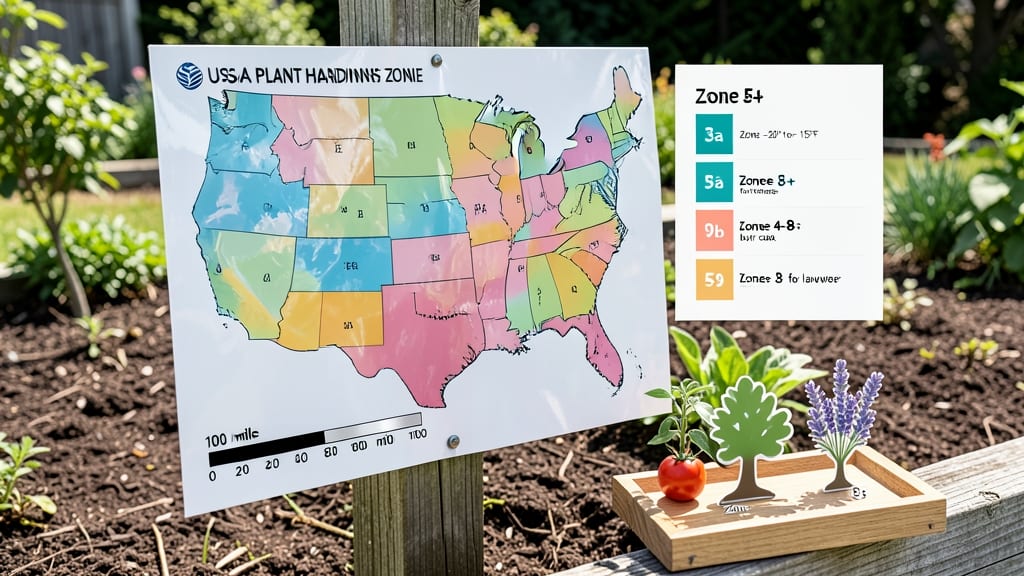
Using a garden zone map by zip code instantly shows your USDA Plant Hardiness Zone, which predicts which plants can survive winter temperatures in your area. This system helps you select perennials, trees, and seasonal crops that will flourish with minimal care.
This zone system divides the U.S. into 13 main regions based on average annual minimum temperatures, with each zone further split into 'a' and 'b' subzones for precision.
For example, a Zone 5b can handle down to -15°F, while Zone 6a stops at -10°F. 🌱 Knowing your zone ensures you're not wasting time or money on plants that'll freeze in your first winter.
Many gardeners also cross-reference with local microclimates—like a sunny south-facing wall—that can extend suitable growing conditions.
For instant lookups, the USDA Plant Hardiness Zone Map is the gold standard, but tools like PlantMaps or the Proven Winners app offer interactive features. These platforms let you zoom in by ZIP code, see color-coded zone boundaries, and even filter plants by your specific zone.
I always double-check urban areas, since city heat islands can push zones up by 1-2 degrees compared to surrounding rural zones.
💡 In This Article
- How USDA Plant Hardiness Zones Define Your Garden Climate
- Top Tools for Instant Garden Zone Lookup and Plant Selection
How USDA Plant Hardiness zones define your garden climate
The USDA Plant Hardiness Zone Map divides North America into 13 zones (1-13) based on the average annual minimum winter temperature in a given area. Each zone represents a 10°F range, with subzones 'a' and 'b' adding 5°F precision.
For example, Zone 6a (-10°F to -5°F) is colder than Zone 6b (-5°F to 0°F), which directly impacts which perennials will survive. This system was first developed in the 1960s and updated in 2012 to reflect climate shifts, with the latest 2023 version accounting for 1.5°F warmer averages nationwide.
Here's how it works: The map uses 30 years of temperature data (currently 1991-2020) to calculate zone boundaries.
These temperatures determine a plant's cold hardiness—the lowest temperature it can withstand without damage. 🌡️ For instance, a hydrangea in Zone 5b (down to -15°F) will freeze, while the same plant thrives in Zone 6a (down to -10°F).
The science involves measuring the last average frost date and first hard freeze of winter, which creates a "growing season window" unique to each zone.
Microclimates add another layer of complexity. A south-facing wall can create a Zone 7 microclimate in an otherwise Zone 6 area, while a frost pocket in a valley might drop temperatures 5-10°F colder than official records.
Urban areas often experience heat islands that push zones up by 1-2 degrees—think of a rooftop garden in Brooklyn feeling more like Zone 7b than the surrounding Zone 6a. This is why gardeners in cities sometimes plant Zone 8 perennials that wouldn't survive in nearby rural zones.
Beyond winter survival, zones also influence summer heat tolerance. The American Horticultural Society's Heat-Zone Map (1-12) complements USDA zones by showing how plants handle summer heat. A Zone 7a area might have Heat Zone 8 conditions (90-100°F summers), which affects drought-resistant plants like lavender or rosemary.
The combination of both maps helps gardeners select plants that thrive year-round in their specific climate.
Zones shift over time due to climate change. Since the 1990s, many areas have moved into warmer zones—some by as much as half a zone.
For example, parts of New England that were Zone 5b in 1990 are now Zone 6a. This means plants that once struggled in those areas now survive with minimal protection.
However, sudden cold snaps can still damage tender plants, so understanding your zone's historical temperature extremes is crucial for long-term planning.
For practical application, think of zones as a starting point, not an absolute rule. I've seen gardeners in Zone 5 successfully grow Zone 6 perennials by using mulch, cold frames, or windbreaks to create microclimates.
The key is testing plants in your specific conditions—what works in one part of Zone 7a might fail just 10 miles away due to local topography or soil drainage. 🌱