
Fertilization
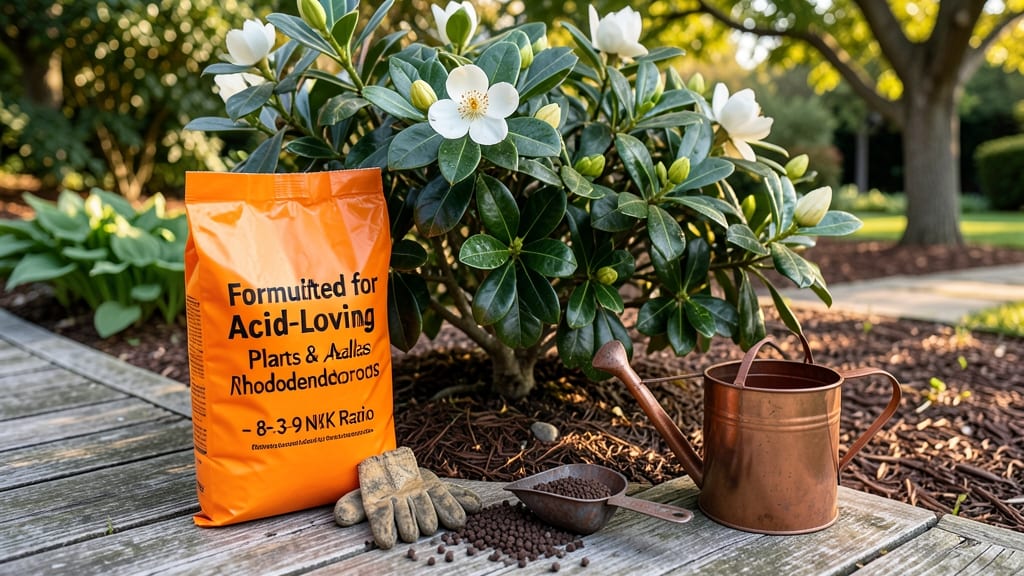
The right fertilizer for gardenia tree 🌸 is the game-changer between a lush, fragrant shrub and one that barely blooms.
Struggling to keep your gardenia tree blooming with vibrant, glossy leaves? The secret lies in the right fertilizer—one that mirrors its natural soil preferences and avoids common over-fertilization mistakes.
Gardenia trees thrive when their soil stays acidic and rich in micronutrients like iron and magnesium. Most store-bought fertilizers won’t cut it because they lack the acidic balance these plants crave, leading to yellow leaves or sparse blooms.
Below, I’ll walk you through the best organic and synthetic options, how to apply them without burning roots, and even DIY recipes using kitchen scraps like coffee grounds. Let’s get your gardenia tree thriving again!

Best pH-balanced fertilizers for gardenia trees: acid-loving plant essentials
Your gardenia tree thrives when its soil pH stays between 4.5 and 6.0, mimicking its natural tropical habitat. Without the right acid-loving fertilizer, you’ll see weak blooms, yellow leaves, and stunted growth—even if you’re watering perfectly.
The key? Choosing a fertilizer packed with iron, magnesium, and nitrogen while avoiding alkaline additives that lock out essential nutrients.
Gardenia trees demand more than generic feed—think azalea or camellia fertilizer, which are formulated for ericaceous plants like yours. These blends deliver slow-release nutrients tailored to acid-loving plants, preventing the leaf burn that over-fertilization causes.
But here’s the catch: synthetic fertilizers work fast, while organic options (like composted pine bark) build soil health over time.
🌱 Did You Know? Gardenias absorb nutrients best when soil pH is 5.0–6.0. Below 4.5? Your plant can’t access iron, leading to yellow leaves with green veins (a classic deficiency sign). Above 6.0? Phosphorus and zinc become unavailable, stunting blooms.
| Fertilizer Type | Key Nutrients | pH Adjustment | Application Tips | Best For |
|---|---|---|---|---|
| Synthetic (Azalea/Camellia) | High iron, magnesium, low nitrogen | Maintains pH 4.5–6.0 | Every 4–6 weeks; dilute to half-strength | Fast results, container plants |
| Organic (Composted Pine Bark) | Slow-release micronutrients | Lowers pH naturally over time | Mix 2–3 inches into soil annually | In-ground plants, soil health |
| Liquid (Fish Emulsion + Chelated Iron) | Iron, nitrogen, phosphorus | Neutral pH; use with acidic soil | Monthly spray or soil drench | Deficiency correction, potted plants |
| Slow-Release Granules (Osmocote) | Balanced NPK (14-14-14) | Neutral; pair with sulfur | Apply spring/fall; water in | Low-maintenance feeding |
For organic gardeners, composted pine bark or leaf mold are game-changers—they lower soil pH while adding organic matter. But here’s the trick: test your soil first! A simple pH test kit (under $10) reveals if your gardenia’s soil is too alkaline.
If it’s above 6.5, mix in elemental sulfur (1 lb per 100 sq ft) to acidify gradually over 2–3 months.
Synthetic fertilizers like Miracle-Gro Azalea or Jobe’s Acid-Loving Plant Food are my go-to for quick fixes. They’re packed with chelated iron to prevent chlorosis (those ugly yellow patches).
But never use lawn fertilizer—it’s alkaline and will shock your gardenia’s roots. Pro tip: Always water thoroughly before and after applying fertilizer to prevent root burn.
Micronutrients like magnesium and manganese are just as critical as nitrogen. A deficiency shows up as interveinal chlorosis (yellowing between leaf veins). If you spot this, a Epsom salt spray (1 tbsp per gallon of water) can boost magnesium levels fast.
For manganese, use a chelated fertilizer—it’s more bioavailable in acidic soil.
Seasonal timing matters too. Feed your gardenia heavily in spring (when new growth starts) and lightly in summer (to encourage blooms). Skip fall and winter—your plant is dormant, and fertilizer can burn roots or promote weak growth. Think of it like a slow-release meal instead of a greasy fast-food binge!
Container gardenias need extra attention. Since potted soil dries out faster, I fertilize every 3–4 weeks in growing season, using a water-soluble acid fertilizer. Flush the soil with water monthly to prevent salt buildup, which can raise pH and block nutrients.
And always use pots with drainage holes—soggy roots are a garden
Step-by-step guide: how to apply gardenia tree fertilizer without burning roots
Your gardenia tree thrives when fed the right nutrients, but timing and technique matter just as much as the fertilizer itself. Gardenias are acid-loving plants that need a balanced approach—too much fertilizer can burn roots or cause yellow leaves, while too little means fewer blooms.
Let’s break down the seasonal schedule and dilution ratios that keep your gardenia healthy and fragrant.
Spring is the best time to kickstart growth with a light feed of acidic fertilizer. Use a 6-6-6 or 8-3-9 NPK blend specifically formulated for acid-loving plants like gardenias, azaleas, or camellias.
Dilute it to half-strength to avoid shocking the roots as they wake up from dormancy. Apply this every 4-6 weeks until early summer, when blooming peaks.
⚠️ WARNING: Over-Fertilizing Signs & Fixes ⚠️
Summer calls for a reduced nitrogen focus to encourage blooming over leafy growth. Switch to a lower-nitrogen fertilizer (e.g., 4-6-8 NPK) and apply it every 6-8 weeks.
Always water the soil thoroughly before and after applying fertilizer to help nutrients absorb evenly and prevent root burn. Early morning applications minimize evaporation and fungal risks.
Fall and winter are dormant periods for gardenias—skip fertilizing entirely. These months let the plant rest and store energy for next year’s blooms. If you notice new growth in late fall, a very light feed (1 tbsp diluted fertilizer) may support it, but avoid heavy applications.
Over-fertilizing now can lead to winter dieback.
For potted gardenias, follow the same schedule but adjust quantities: use half the recommended dose since containers dry out faster and roots have less room to absorb nutrients. Always water until it drains from the bottom to prevent salt buildup.
If your gardenia’s soil feels crusty or dry, it’s a sign of over-fertilization—rinse the pot thoroughly and amend the soil with peat moss or pine bark to restore acidity.
Pro tip: Mix a 1-inch layer of pine needles or oak leaves into the soil annually to naturally acidify it. This mimics the gardenia’s native habitat and reduces the need for synthetic fertilizers.
Pair your feeding schedule with regular pruning after blooming to maintain shape and airflow—healthy circulation means fewer pest issues and better nutrient uptake.