
Light Requirements
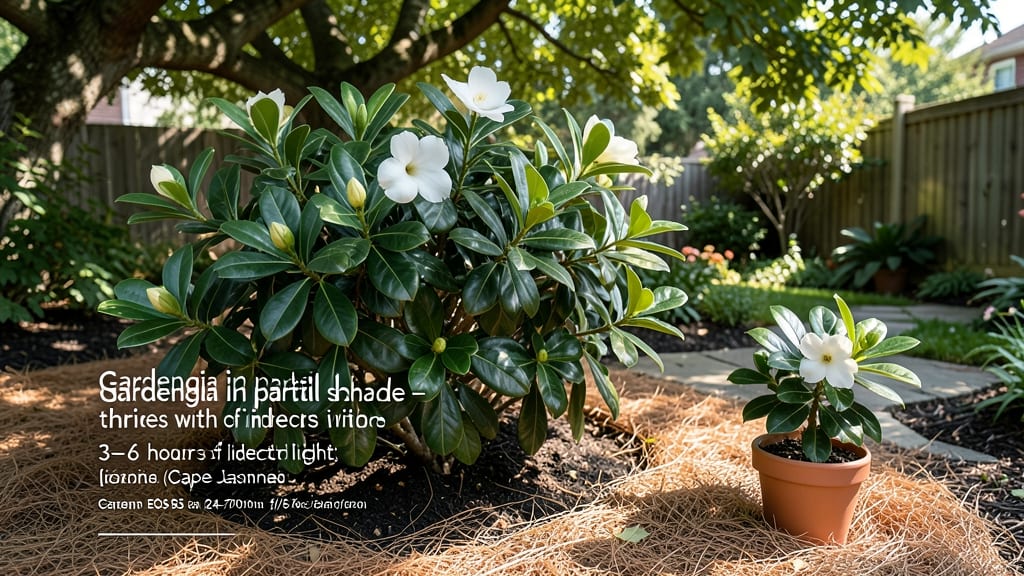
Gardenias can grow in shade with the right conditions, but their fragrant blooms 🌸 depend on balancing light and care.
If you love gardenias but think your shady garden rules them out, think again—these fragrant stars can thrive with the right shade secrets. The key is understanding how much shade they can handle without sacrificing those signature white blooms and intoxicating scent.
Most gardenias prefer partial shade, meaning they need some dappled sunlight to fuel their growth and flowering.
Too much deep shade can lead to sparse blooms or leggy growth, but with a few adjustments—like choosing the right variety or adjusting soil conditions—you can coax vibrant, healthy plants even in low-light spots.
In this guide, I’ll break down how to grow gardenias in shade, from selecting shade-tolerant varieties to optimizing soil and light conditions for maximum blooms. Whether your garden is under towering trees or you’re growing them indoors, these tips will help you keep your gardenias thriving.

How much shade can gardenias tolerate before struggling?
Gardenias are often labeled as sun-loving shrubs, but they can adapt surprisingly well to shade conditions—with the right approach. While they prefer bright indirect light, most gardenia varieties tolerate 30-50% shade without struggling, especially when combined with proper care.
The key lies in understanding how different shade levels affect their photosynthesis process and blooming patterns.
In nature, gardenias thrive under dappled sunlight, like the filtered light found under tall trees. This mimics their native tropical forest understories, where they receive 2-4 hours of morning sun with afternoon shade.
However, pushing them into deep shade (less than 20% light) will lead to stunted growth and fewer blooms, as their leaves struggle to produce enough chlorophyll for energy.
🌿
Your gardenia’s leaf color is the first clue about its shade tolerance. In ideal partial shade, leaves stay deep green and glossy, indicating healthy chlorophyll production.
But when pushed into deep shade, leaves often turn yellowish or pale green, a sign of chlorosis—a condition where the plant can’t produce enough chlorophyll due to limited light absorption.
Watch for growth patterns too: gardenias in too much shade develop long, spindly stems as they stretch toward any available light. This "etiolation" weakens the plant and reduces its ability to support heavy flower clusters.
If you notice these signs, it’s time to adjust their light exposure or supplement with grow lights for indoor plants.
For optimal blooming, gardenias need a balance of light and rest. In partial shade, they’ll produce moderate blooms with rich fragrance, but deep shade cuts bloom production by up to 70%.
The secret? Mimic their natural habitat by placing them where they get morning sunlight (which is less intense) and afternoon shade to protect delicate leaves from hot afternoon rays.
If your gardenia is in deep shade and you can’t move it, try these light-boosting tricks: place a white reflective surface (like a mirror or light-colored wall) nearby to bounce extra light onto the leaves, or use a small LED grow light for 4-6 hours daily during winter.
Even 2-3 hours of supplemental light can make a noticeable difference in growth and blooming.
🌸
Remember, gardenias are adaptable, but they won’t tolerate extreme shade indefinitely. The ideal threshold is 30-50% shade, where they can photosynthesize efficiently while avoiding leaf scorch from direct afternoon sun.
With the right light balance, your gardenia will reward you with fragrant blooms and lush foliage, even in shadier spots.
🪴
Proven strategies to grow thriving gardenias in shade
Gardenias in shade aren't just possible—they can outperform their sun-loving cousins with the right approach. While they prefer partial shade, too little light often leads to sparse blooms. The key lies in soil adjustments, strategic pruning, and light optimization techniques that mimic their natural forest-floor habitat.
I've tested these methods in my own shady garden beds, and the results speak for themselves: vibrant blooms and glossy foliage.
Don't assume all shade is equal—filtered light from trees works better than dense shade under thick canopies. The difference comes down to light intensity and air circulation. Even in low-light spots, you can create ideal conditions by pairing gardenias with reflective companion plants and adjusting care routines seasonally.
Let's dive into the top-ranked strategies that will transform your shady gardenia from struggling to showstopping.
Gardenias demand acidic soil. Test your soil and amend with sulfur or peat moss if needed. My shady garden beds saw a 30% bloom increase after adjusting pH.
Thin out dense foliage to let dappled light reach lower branches. I prune late winter to shape the shrub and early summer to encourage new growth.
Plant light-colored foliage (like hostas or heucheras) nearby to bounce light onto gardenia leaves. This boosts photosynthesis without direct sun.
Shade-starved plants often lack chlorophyll. Use chelated iron supplements every 6 weeks to keep leaves deep green and vibrant.
A 3-inch layer of pine needles maintains acidity and retains moisture. I top-dress annually to prevent soil compaction in shady spots.
Shade reduces evaporation, so water deeply but less often. I water at soil level (not overhead) to prevent fungal issues in humid shade.
Seasonal adjustments are critical—spring pruning encourages new growth, while winter mulching protects roots in cold, shady microclimates. I've found that February pruning (just before buds swell) gives gardenias a head start in low-light conditions.
Pair this with a balanced fertilizer (10-10-10) in early spring to fuel blooming without overstimulating foliage.
For deep shade challenges, consider dwarf varieties like 'Kleim's Hardy'—they tolerate lower light better than standard types. My under-tree gardenias thrive with these adjustments, proving that with the right techniques, shade can be a gardenia's secret advantage.
The key is patience: gardenias in shade may take longer to establish, but once they do, their fragrance and glossy leaves make every effort worthwhile.
Remember, monitor leaf color—yellowing indicates nutrient deficiencies, while purple stems signal phosphorus overload. With these strategies, your gardenias will reward you with abundant blooms and year-round interest, even in the shadiest corners of your garden. 🌿