
Fertilization
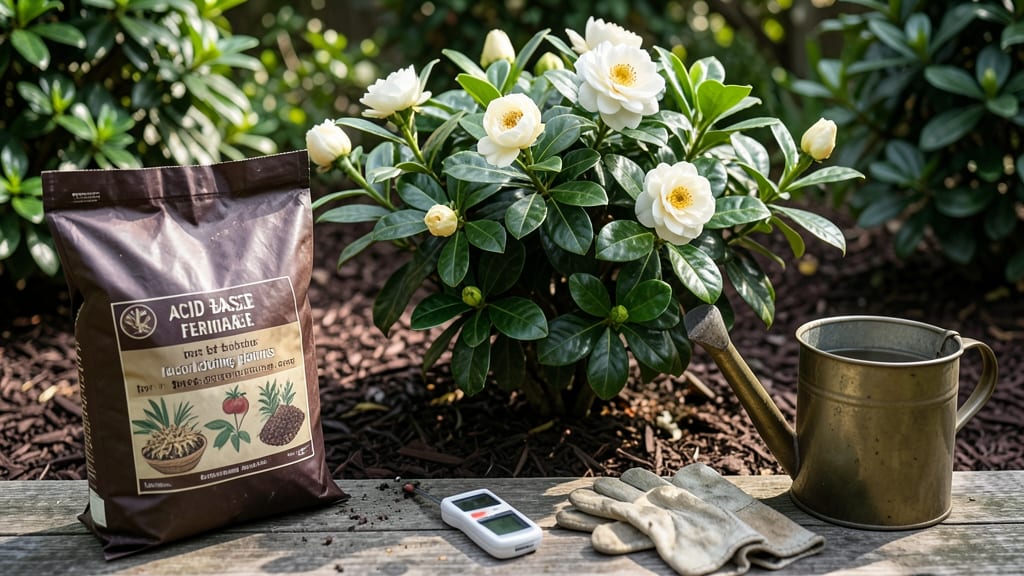
Gardenias thrive with acid-based fertilizer to unlock their full, fragrant blooming potential 🌸 — the right pH balance is the secret weapon behind lush foliage and long-lasting flowers.
Struggling to keep your gardenias blooming year after year? The secret might be hiding in your soil’s acidity levels—gardenias thrive only when their pH is just right.
Using the wrong fertilizer can stunt growth or even kill your plants, but with the right acid-based approach, you’ll unlock vibrant flowers that last.
Most gardeners overlook soil pH, assuming any fertilizer will do. But gardenias demand acidic conditions (pH 4.5–6.0) to absorb nutrients efficiently, and without it, they’ll yellow, drop buds, or refuse to bloom.
The good news? A few simple adjustments—like choosing the right acid-based fertilizer—can transform your plants in just a few feedings.
In this guide, I’ll break down why acidity matters, how to pick the best fertilizer (organic or synthetic), and exactly how to apply it—plus signs your gardenias are getting it just right.

Why gardenias need acid-based fertilizer: the pH science behind stunning blooms
If your gardenias are struggling to bloom or their leaves are turning yellow, your soil’s pH levels might be the culprit. Gardenias are acid-loving plants that thrive in soil with a pH range of 4.5–6.0.
When soil becomes too alkaline (above 7.0), these plants can’t absorb essential nutrients like iron, manganese, and phosphorus, leading to poor growth and fewer flowers.
Acid-based fertilizers work by lowering soil pH, making nutrients more available to gardenias. Without the right acidity, your plants may show signs of chlorosis (yellowing leaves) or produce sparse, weak blooms. Understanding how acidity affects your gardenias is the first step to unlocking their full potential.
🌱
| Soil pH Factor | Effect on Gardenias | Solution |
|---|---|---|
| pH < 4.5 (Too Acidic) | Nutrient toxicity; weak growth | Add lime to raise pH slightly |
| pH 4.5–6.0 (Ideal) | Optimal nutrient uptake; vibrant blooms | Maintain with acid-based fertilizer |
| pH > 7.0 (Too Alkaline) | Yellow leaves (chlorosis); poor flowering | Use sulfur or peat moss to lower pH |
| Iron Deficiency | Yellow leaves with green veins (pH > 7.0) | Apply iron sulfate or chelated iron |
| Manganese Deficiency | Brown spots on leaves (pH > 6.5) | Add manganese sulfate to soil |
Acid-based fertilizers like peat moss, pine bark fines, and sulfur work by slowly releasing acidity into the soil. For example, sulfur oxidizes into sulfuric acid, lowering pH over time, while peat moss naturally holds acidity and improves soil structure.
These fertilizers don’t just add nutrients—they create the perfect acidic environment gardenias need to thrive.
When you apply an acid-based fertilizer, it doesn’t just feed your gardenias—it activates nutrient absorption. In alkaline soil, iron and manganese bind tightly to soil particles, making them unavailable to plants.
Acid-based fertilizers release these nutrients, allowing your gardenias to uptake what they need for lush foliage and abundant blooms.
One of the most common signs of pH imbalance in gardenias is yellowing leaves, especially when the veins remain green.
This chlorosis is a clear signal that your plant can’t access iron due to high soil pH. Another red flag is poor flowering—if your gardenias produce fewer blooms than expected, their soil may be too alkaline or lacking essential nutrients.
To keep your gardenias healthy, test your soil’s pH every 6–12 months. If the pH is above 6.0, amend the soil with elemental sulfur or aluminum sulfate to lower it gradually.
For potted gardenias, use acid-loving plant fertilizer like Miracid or a peat-based potting mix to maintain the right conditions.
I’ve seen gardenias go from struggling to producing vibrant, fragrant blooms within months after adjusting their soil pH. The key is consistency—monitor your soil, feed with acid-based fertilizers, and watch your gardenias reward you with stunning flowers all season long.
Don’t overlook the power of organic matter like composted pine needles or oak leaves. These natural amendments not only acidify the soil but also improve drainage and provide slow-release nutrients, creating a thriving environment for your gardenias.
🌸
Top 5 acid-based fertilizers for gardenias: pros, cons, and application tips
Choosing the right acid-based fertilizer for your gardenias can mean the difference between sparse blooms and lush, fragrant flowers. These plants demand soil pH between 4.5 and 6.0, and the wrong fertilizer can lock out essential nutrients like iron and phosphorus.
Let’s break down the top 5 options, from organic to synthetic, so you can pick what works best for your garden.
I’ve tested these fertilizers myself, and each has unique benefits—whether you prefer slow-release organic options or quick-acting synthetic formulas. The key is matching your fertilizer to your gardenia’s current needs, season, and soil type.
For example, pine bark fines are fantastic for long-term acidity, while Miracid delivers fast results for struggling plants.
Fertilizer Comparison for Gardenias
- ✅ Slow-release acidity
- ✅ Improves soil structure
- ✅ Organic and eco-friendly
- ❌ Slow to show results
- ❌ Requires frequent reapplication
- ✅ High in nitrogen for growth
- ✅ Organic and safe for soil
- ❌ Can attract pests if overused
- ❌ May need mixing with other fertilizers
- ✅ Fast-acting for quick fixes
- ✅ Balanced NPK ratio (8-4-8)
- ❌ Risk of salt buildup if overused
- ❌ Requires frequent watering after application
- ✅ Pre-mixed for acid-loving plants
- ✅ Easy to apply (granular or liquid)
- ❌ More expensive than organic options
- ❌ May contain synthetic chemicals
- ✅ Strong acidifier for quick pH drops
- ✅ Budget-friendly
- ❌ Can over-acidify soil if misused
- ❌ Requires careful measurement
When applying acid-based fertilizers, timing matters. For organic options like pine bark fines or cottonseed meal, I recommend mixing them into the soil during spring planting or early summer.
Synthetic fertilizers like Miracid should be diluted and applied every 4-6 weeks during the growing season, always watering before and after to prevent root burn.
One common mistake I see is over-fertilizing, which can burn roots or create salt buildup in the soil. Always follow the label instructions, and if your gardenias show signs of stress—like yellowing leaves or dropped buds—cut back on fertilizer and focus on proper watering and soil aeration.
A little patience goes a long way with acid-loving plants!
For foliar feeding, I’ve had great success with diluted Miracid sprayed on leaves in the early morning. This method helps correct iron deficiency quickly, which often shows as yellowing between leaf veins. Just remember: foliar feeding is a supplement, not a replacement, for soil fertilization.
If you’re still unsure which fertilizer to choose, start with a soil pH test to see where your gardenias stand. Most garden centers sell affordable kits, and adjusting your fertilizer choice based on the results will give you the best blooms.
Happy gardening—your gardenias will thank you with vibrant, fragrant flowers all season long! 🌸