
Container Gardens
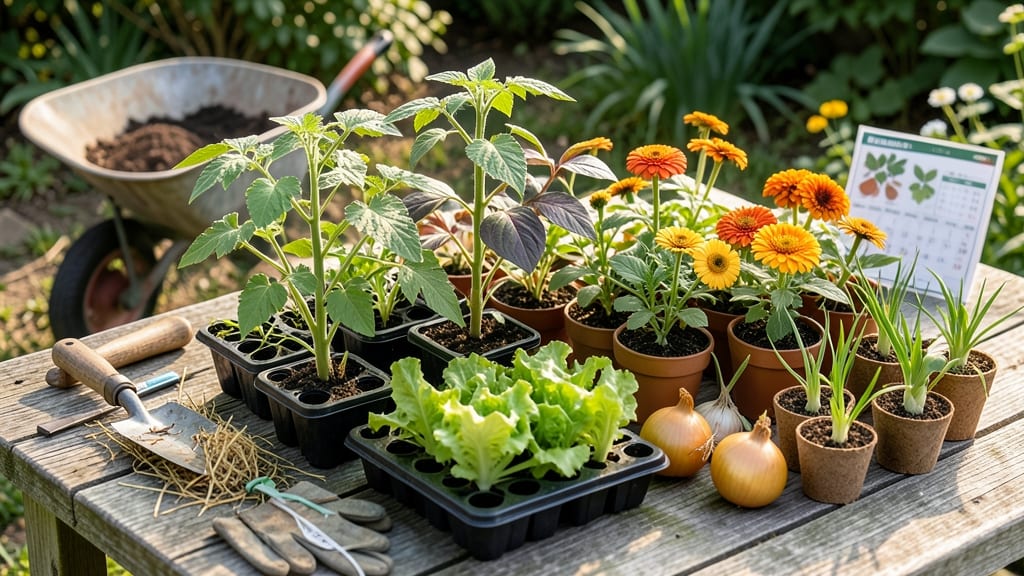
To plant gardens in Ohio, aim for mid-April to early May when soil warms to 50°F—but don’t let the calendar fool you, because Ohio’s spring is famously sneaky.
One year, I planted my tomato seeds in early April, only to watch them wilt under a surprise frost. The key isn’t just the date—it’s the soil temperature and your local microclimate.
Urban gardens near heat-absorbing pavement warm faster than rural fields, while valleys hold cold longer. Master these rules, and you’ll avoid the heartbreak of stunted plants or wasted seeds.
This guide breaks down Ohio’s USDA Zones 5-7, the exact soil temps for seeds vs. transplants, and how to adjust for your yard’s unique conditions—whether you’re in Toledo’s windy plains or Cincinnati’s sheltered hills. No more guessing games, just reliable growth from seed to harvest.
You’ll learn when to start cool-season crops like peas (as early as March in raised beds) and warm-season favorites like peppers (wait until late May), plus how to stretch your growing season with row covers and succession planting. Ready to turn Ohio’s unpredictable spring into your advantage?
Ohio planting zones by soil temperature: exact timing for seeds, transplants & vegetables
Ohio spans USDA Zones 5-7, but soil temperatures—not just air temps—dictate when to plant. Cold northern Ohio (Zone 5) and milder southern Ohio (Zone 7) have 3-4 week differences in planting windows.
For example, Toledo’s last frost often hits by April 15, while Cincinnati averages May 1—a critical detail for warm-season crops like tomatoes.
Soil thermometers are your best tool. Most seeds need 40-60°F soil to germinate, but transplants like tomatoes and peppers require 60-70°F to thrive.
In Ohio, this means waiting until late April to early May for most regions. Cool-season crops like peas and spinach can handle 35-45°F and often go in as early as March under frost cloth.
Here’s how Ohio’s three key regions differ in planting timing:
- Northern Ohio (Zone 5): Last frost April 15-May 1, soil warms slowly
- Central Ohio (Zone 6): Last frost April 20-May 10, moderate warming
- Southern Ohio (Zone 7): Last frost April 25-May 15, faster soil warming
| Plant Type | Soil Temp Threshold (°F) | Planting Window (Zone 5) | Planting Window (Zone 7) | Notes |
|---|---|---|---|---|
| Peas & Spinach | 35-45°F | March 15-April 15 | March 1-March 30 | Tolerates frost; direct sow |
| Lettuce & Kale | 40-50°F | March 20-April 30 | March 10-April 15 | Succession plant every 2 weeks |
| Tomatoes & Peppers | 60-70°F | May 10-June 1 | April 20-May 15 | Use transplants; wait for warm soil |
| Cucumbers & Squash | 55-65°F | May 15-June 10 | April 25-May 10 | Wait until night temps stay above 50°F |
| Beans & Corn | 50-60°F | May 1-April 30 | April 15-May 1 | Direct sow after last frost |
For transplants, wait until soil is consistently above 50°F for leafy greens or 60°F for fruiting plants. Use a soil thermometer—air temps can fool you! For example, a 50°F air temp might hide 40°F soil, delaying germination by weeks.
In Zone 6 (Columbus), this often means holding off on tomatoes until mid-May, even if April feels warm.
Ohio’s microclimates add another layer. A south-facing slope in Cincinnati might warm 2 weeks earlier than a shady backyard in Toledo. Test your soil in morning sun—that’s where roots will be.
If your garden sits in a low spot, plant 2 weeks later than the average date to avoid frost damage.
Pro tip: Use black plastic mulch to warm soil 5-10°F faster in early spring. Lay it down 2 weeks before planting warm-season crops like peppers. In northern Ohio (Zone 5), this trick lets you plant tomatoes by May 1 instead of waiting until June.
Just remove the mulch after planting to avoid overheating.
Don’t forget fall planting! Many Ohio gardeners overlook this. Spinach, kale, and radishes thrive when sown 6-8 weeks before first frost (typically October 1-November 1). Soil temps drop slower than air temps, so these crops often survive light frosts.
In Zone 7 (Cincinnati), you might even get a second crop of peas in late September.
For perennials like asparagus and strawberries, timing is everything. Plant asparagus crowns in early spring (March-April) when soil reaches 50°F, but avoid transplanting strawberries after July—they need 6-8 weeks to establish roots before winter. In Zone 6 (Columbus), this means June planting for fall-bearing varieties.
Track your local frost dates using the National Weather Service or Old Farmer’s Almanac. In Ohio, Toledo’s last frost averages April 15, while Cincinnati’s is May 1.
Adjust your planting window by 2 weeks earlier if you use row covers or cold frames, but never risk it with tender annuals like basil or eggplant.
Remember: Soil temperature > air temperature for planting success. A 50°F soil
Microclimate hacks: how to plant earlier or later in Ohio’s urban vs. rural gardens
Ohio’s urban heat islands can push soil temperatures up by 10°F or more compared to rural areas, creating perfect conditions for earlier plantings of heat-loving crops. Meanwhile, rural gardens with windbreaks or north-facing slopes often stay cooler, allowing extended growing seasons for frost-sensitive plants.
Understanding these microclimates lets you adjust planting times by weeks—sometimes even months—without risking frost damage.
For example, my urban backyard in Columbus hits 60°F soil temps by mid-April, while my friend’s rural farm near Zanesville waits until early May. That 3-week difference means I can plant tomatoes and peppers weeks ahead—but only if I use row covers or raised beds to protect young seedlings.
The key? Monitor your specific microclimate with a soil thermometer and adjust accordingly.
My urban gardeners can leverage raised beds filled with dark compost to warm soil faster, while rural gardeners might use black plastic mulch to extend fall harvests. For example, I planted basil in late March in my south-facing raised bed—something impossible in my neighbor’s shady backyard.
The trick? Combine microclimate knowledge with soil prep like mulching or row covers to maximize your growing window.
Don’t overlook windbreaks either. A hedge or fence can add 2-3°F warmth to your garden, letting you plant cold-sensitive crops like tomatoes or peppers 1-2 weeks earlier. I installed a living windbreak with shrubs last year, and my eggplant seedlings thrived in April instead of May.
Even a temporary bamboo fence can make a difference for small urban plots.
For late-season extensions, focus on cool-season crops like kale or spinach in rural areas with north-facing slopes. These spots stay cooler longer, letting you harvest greens until Thanksgiving. Meanwhile, urban gardeners can use row covers to protect broccoli or cabbage through light frosts.
The key is matching your microclimate to the hardiness of your crops—not just following a generic calendar.
Start by mapping your garden’s microclimates with a soil thermometer and sunlight tracker. Note where heat lingers (paved areas, brick walls) and where cool pockets form (shady corners, low spots). Then adjust your planting schedule accordingly—your Ohio garden’s success depends on it! 🌱