
Aphids
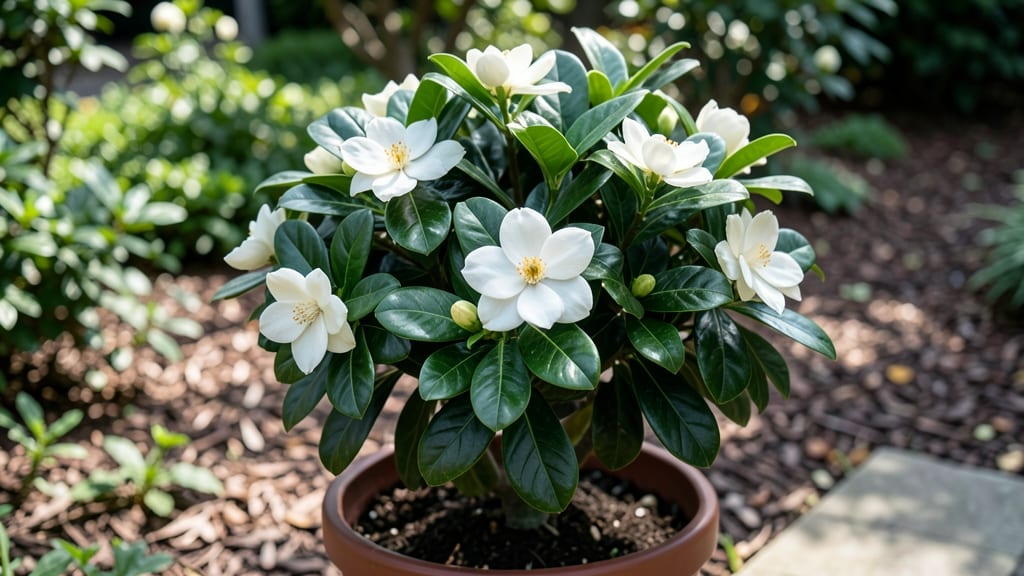
Understanding gardenia height and width is the first step to pruning, planting, and designing around these fragrant shrubs — because the wrong spacing can mean fewer blooms and more pests.
Picture this: a 6-foot-tall gardenia 🌸 crowding your patio or a dwarf variety struggling in a too-large pot. Size matters for airflow, sunlight, and even how much you’ll need to prune to keep it shaped.
The good news? Most gardenias fall into three clear categories — dwarf, semi-dwarf, and standard — each with its own care needs.
In this guide, I’ll break down the mature dimensions of popular varieties, how spacing affects their health, and when to prune for that perfect, bushy form. You’ll also discover how sunlight and soil play into keeping your gardenia at its best size — without sacrificing those intoxicating blooms.
Ready to match your gardenia’s growth habit to your space? Let’s dive into the numbers, pruning tips, and design tricks that make all the difference.

Gardenia variety height and width growth charts by type
Choosing a gardenia variety isn’t just about fragrance—it’s about space planning. Some gardenias stay compact enough for containers, while others need room to stretch their glossy leaves and tower like small trees.
I’ve grown Gardenia jasminoides for years, and I’ve learned the hard way that spacing matters for airflow and blooms!
Below, I’ve broken down the mature dimensions of the most popular gardenia types, including dwarf varieties perfect for small gardens. These charts will help you decide where to plant (or prune!) for that perfect gardenia shape.
| Variety | Mature Height | Mature Width | Growth Habit | Pruning Needs |
|---|---|---|---|---|
| Gardenia jasminoides (Standard) | 4-6 ft | 3-5 ft | Upright, multi-stemmed | Light pruning after blooming |
| Gardenia jasminoides 'Kleim's Hardy' (Dwarf) | 1.5-3 ft | 2-3 ft | Compact, bushy | Minimal pruning; shape in spring |
| Gardenia augusta (Wild Gardenia) | 6-10 ft | 5-8 ft | Tree-like, sprawling | Heavy pruning to control size |
| Gardenia radicans (Cape Jasmine) | 8-12 ft | 6-10 ft | Vining, climbing | Prune to direct growth; train on trellis |
| Gardenia jasminoides 'Veitchii' (Semi-Dwarf) | 3-5 ft | 3-4 ft | Bushy, rounded | Light shaping in early spring |
If you’re planning a garden layout, the Gardenia jasminoides standard type needs at least 5 feet of space to thrive. Its upright growth makes it ideal for hedges or as a specimen plant in borders.
Meanwhile, the dwarf varieties like 'Kleim's Hardy' are perfect for container gardening or small patios.
The wild gardenia (Gardenia augusta) is the giant of the group—think of it as a small tree. It’s stunning but needs regular pruning to keep it from shading out nearby plants.
I once let one grow unchecked, and it became a jungle monster in my backyard! Now, I prune it back in late winter to encourage new growth.
For vertical gardening, the Cape Jasmine (Gardenia radicans) is a game-changer. It loves to climb, so train it on a trellis or fence. Just be prepared for aggressive growth—this one can reach 12 feet if left unchecked!
Prune it back in early summer to maintain its shape and encourage more blooms.
Pruning isn’t just about size—it’s about airflow and health. Overgrown gardenias are prone to fungal diseases because dense foliage traps moisture. Always use sterilized shears and prune just above a leaf node.
For standard types, aim to remove 1/3 of the oldest growth every few years to keep them bushy and blooming.
Pro tip: Dwarf varieties need less aggressive pruning. A light trim in early spring is enough to shape them without stressing the plant. I’ve seen gardeners over-prune these, and it leads to fewer blooms the next season. Less is more!
Before you plant, check your garden’s sunlight. Most gardenias thrive in morning sun and afternoon shade, but their size affects how much shade they cast. A 6-foot gardenia can block light from nearby plants, so plan accordingly.
If you’re in a small space, opt for a dwarf variety and place it near a sunny window or patio.
Remember, gardenias grow slowly—don’t rush to prune! Patience pays off with healthier plants and more fragrant blooms. Whether you’re growing a towering Gardenia augusta or a compact 'Kleim's Hardy', knowing their mature size helps you create a garden that’s both beautiful and manageable.
How to prune gardenias based on their natural growth habits
Pruning gardenias isn’t just about shaping their lush foliage—it’s about preserving their natural growth habits while encouraging healthier blooms and stronger stems. The key lies in understanding how your gardenia’s height and width influence when and how you trim.
For example, a standard gardenia (4-6 ft tall) needs different pruning than a dwarf variety (1.5-3 ft), and timing matters just as much as technique.
Most gardeners make the mistake of pruning at the wrong time, often cutting back too late in summer or over-pruning in fall, which can stunt new growth.
Instead, focus on spring and early summer when your gardenia is actively growing. This ensures you’re shaping the plant without sacrificing its blooming potential or stressing its roots.
⚠️ Critical Height & Width Rules for Pruning
Never prune more than 1/3 of a gardenia’s height or width in a single session—this applies to both dwarf (1.5-3 ft) and standard (4-6 ft) varieties. Over-pruning triggers shock, reducing blooms by up to 50% for the season. For sprawling types, prioritize airflow and sunlight penetration by thinning dense areas rather than shearing.
Pro Tip: Use sharp, sterilized pruners to avoid tearing branches, which invites disease—especially critical for tropical gardenias in humid climates.
Start by inspecting your gardenia’s growth pattern. If it’s taller than its width (common in standard varieties), focus on topping back the center stems to encourage bushier growth. For wider-than-tall gardenias (like Gardenia radicans), prune the outermost branches to maintain a balanced shape.
Always cut just above a leaf node or bud to promote new growth in the right direction.
Your tools matter just as much as your technique. Use bypass pruners for clean cuts on thicker stems (1/4 inch or larger) and hand pruners for finer branches.
Sterilize tools with rubbing alcohol before and after pruning to prevent bacterial or fungal infections, which are common in gardenias with dense foliage. For large-scale pruning (e.g., a 6 ft tall gardenia), consider loppers with extended handles for safety and precision.
Timing is everything: Spring pruning (March-April) is ideal for shaping and removing dead or crossing branches, while light summer pruning (June-July) keeps the plant tidy without disrupting blooming cycles.
Avoid pruning in fall or winter, as new growth won’t harden off before cold weather, leaving your gardenia vulnerable to frost damage. For container gardenias, prune after flowering to maintain compact size and encourage next year’s blooms.
Watch for these common pruning mistakes that can harm your gardenia: pruning too close to the trunk (removes growth points), leaving stubs (invites disease), or ignoring dead wood (weakens the plant).
Instead, step back and visualize the shape you want—gardenias respond well to open, airy structures that allow sunlight to reach the center. With the right approach, your gardenia will thrive, blooming abundantly while staying within its natural height and width limits.